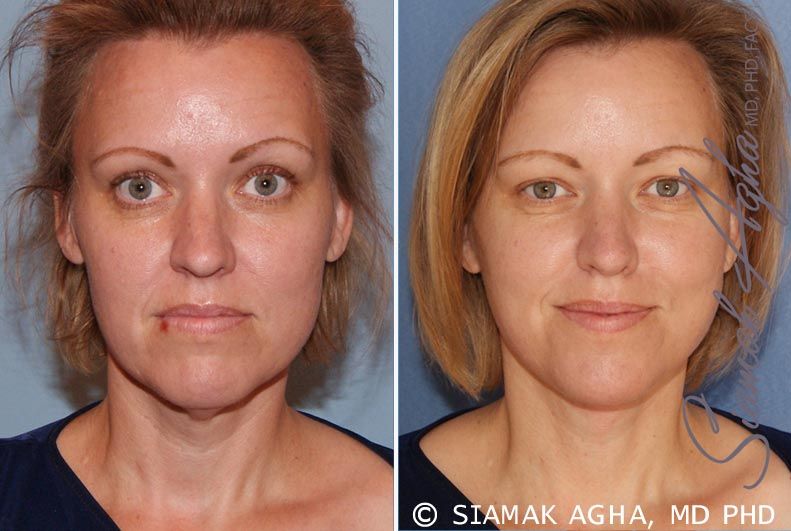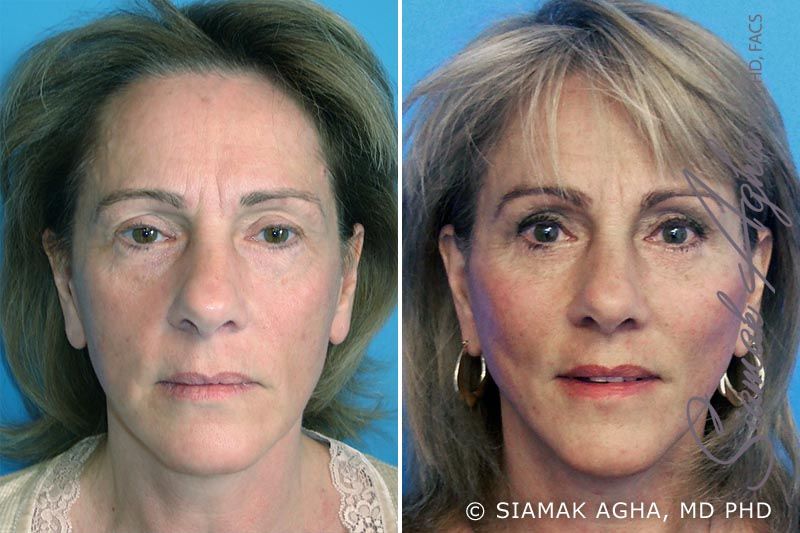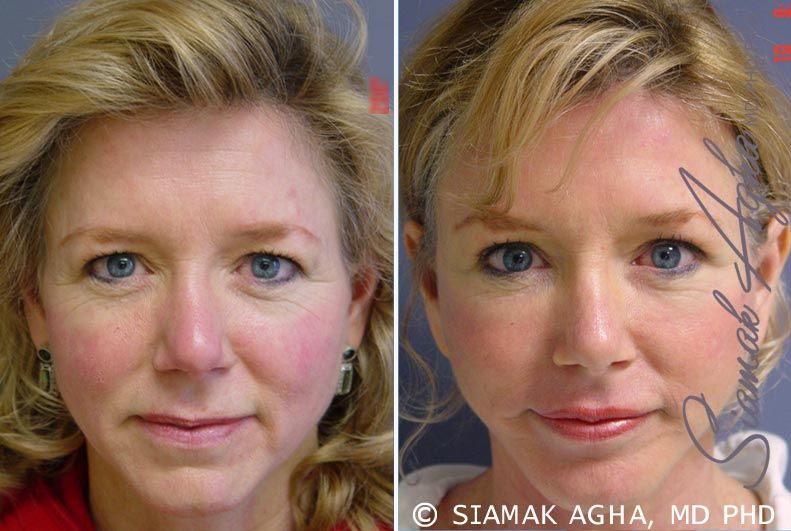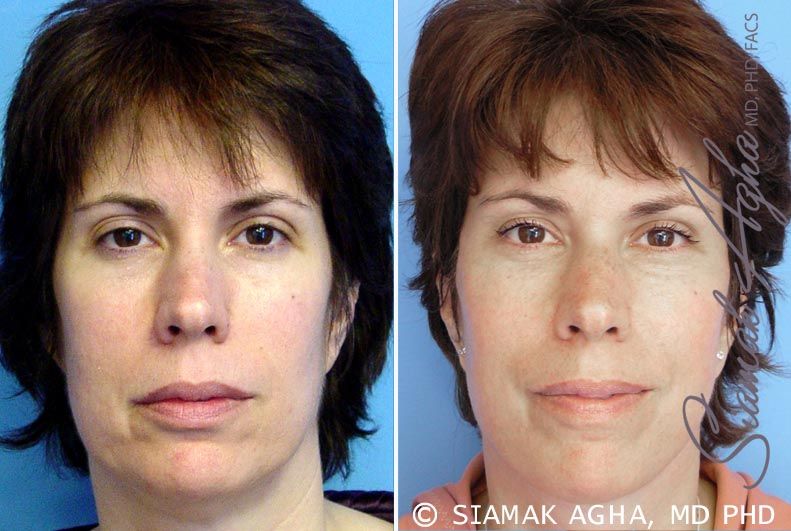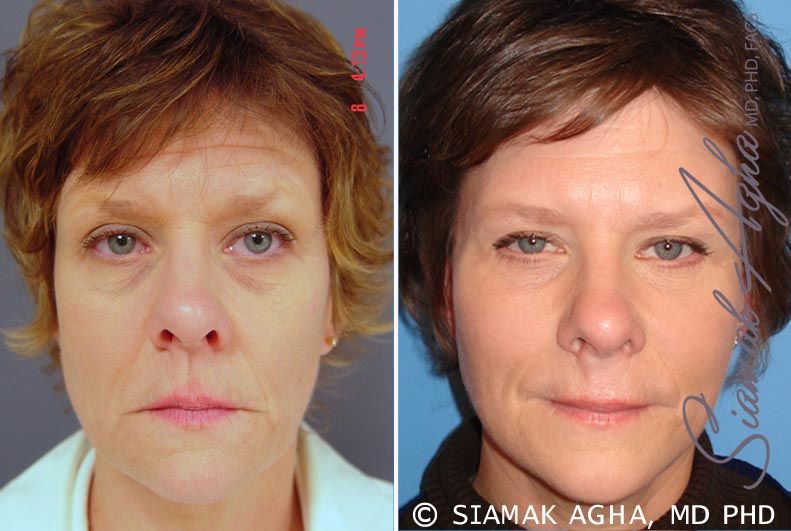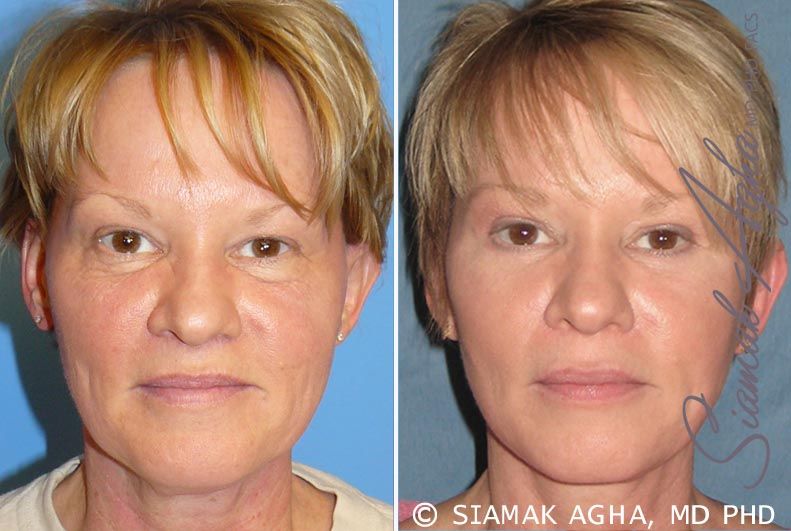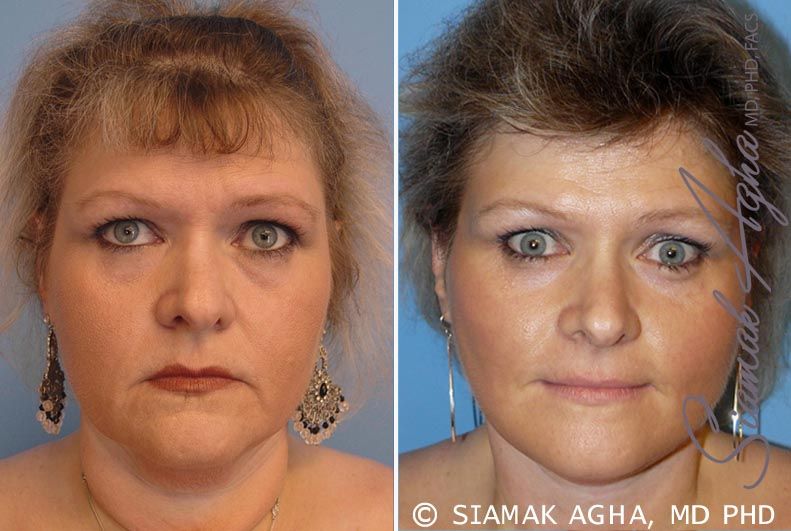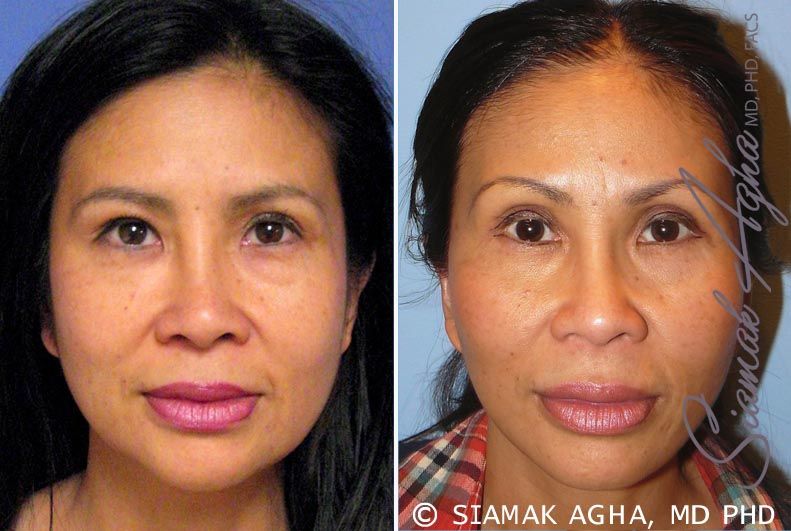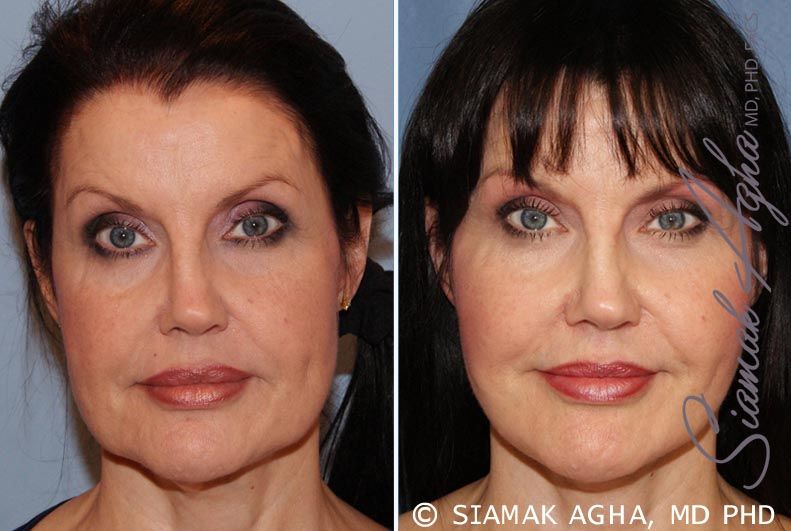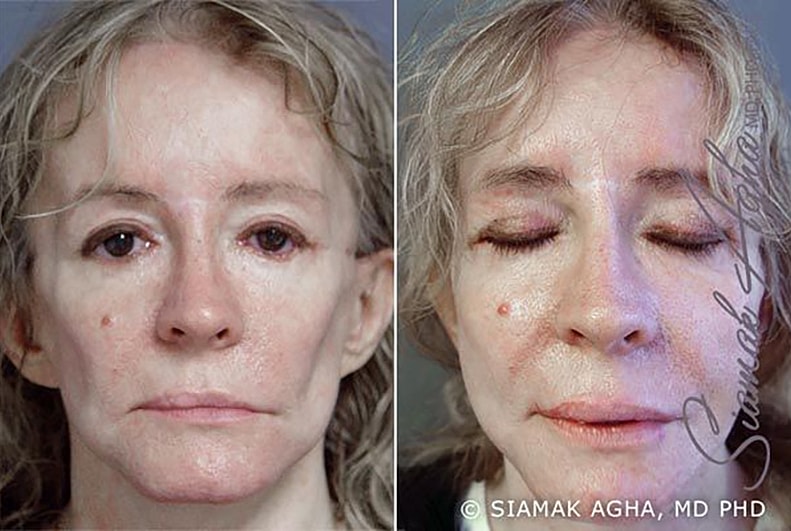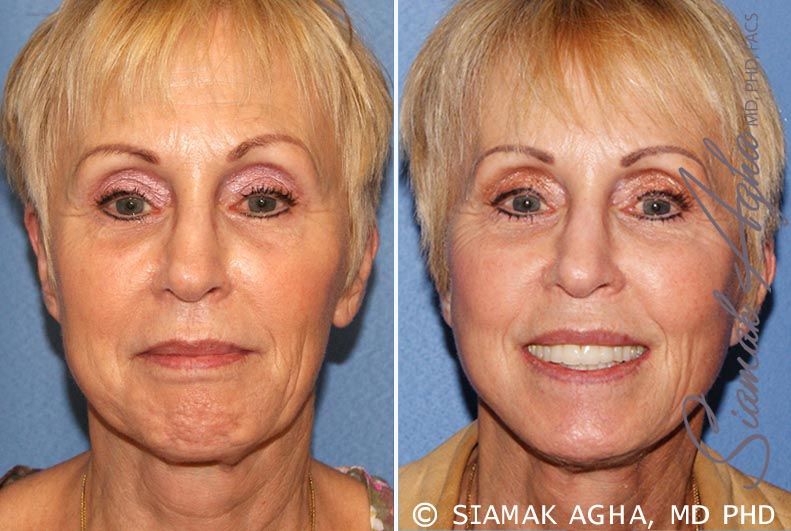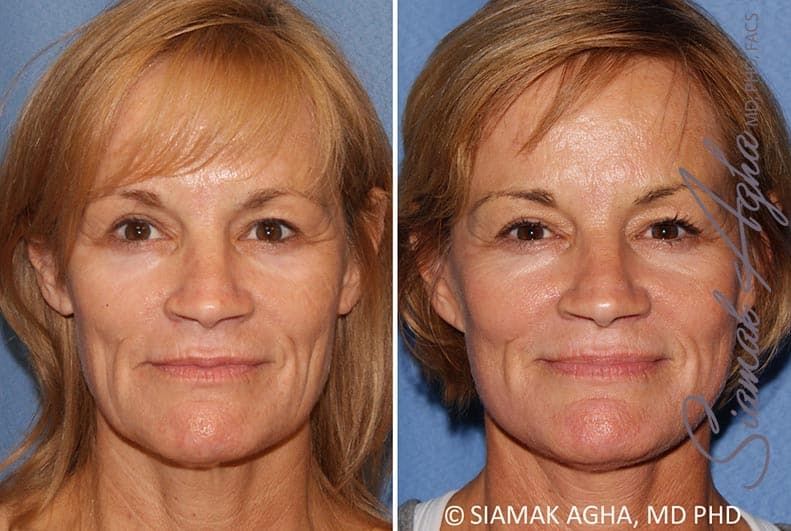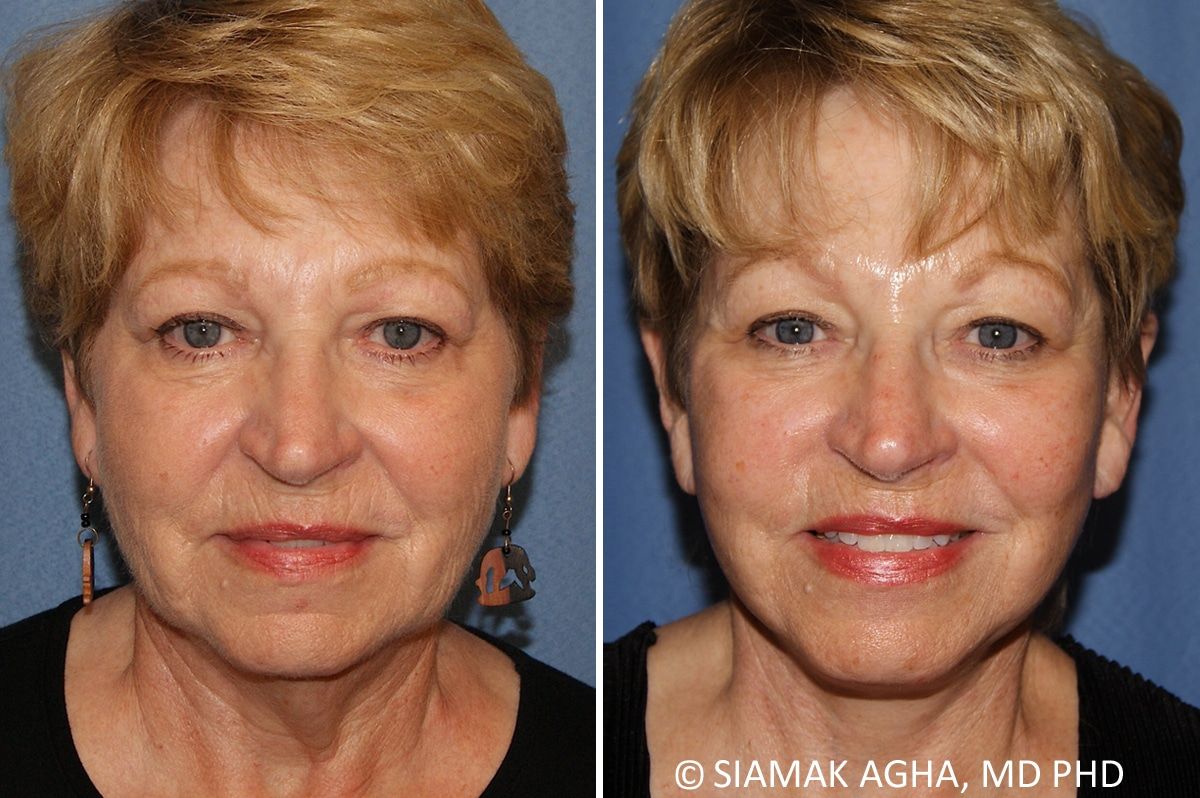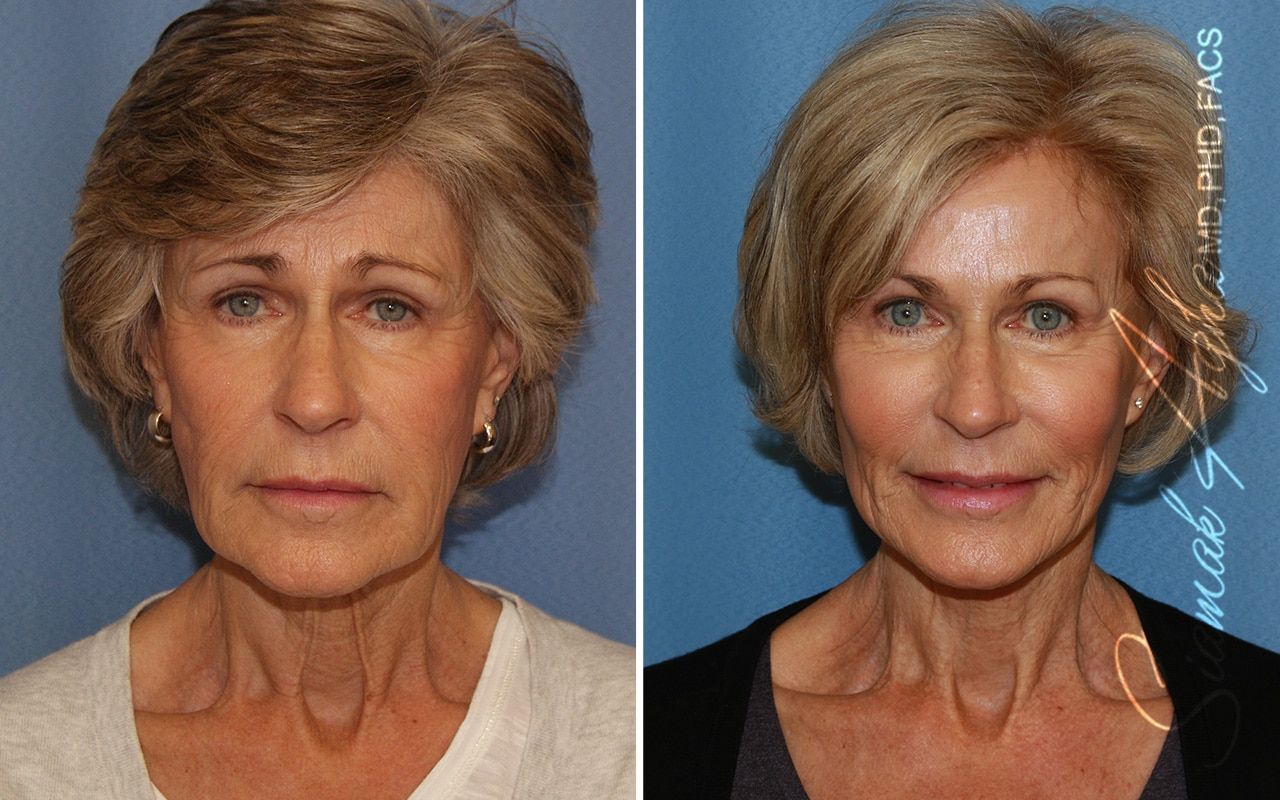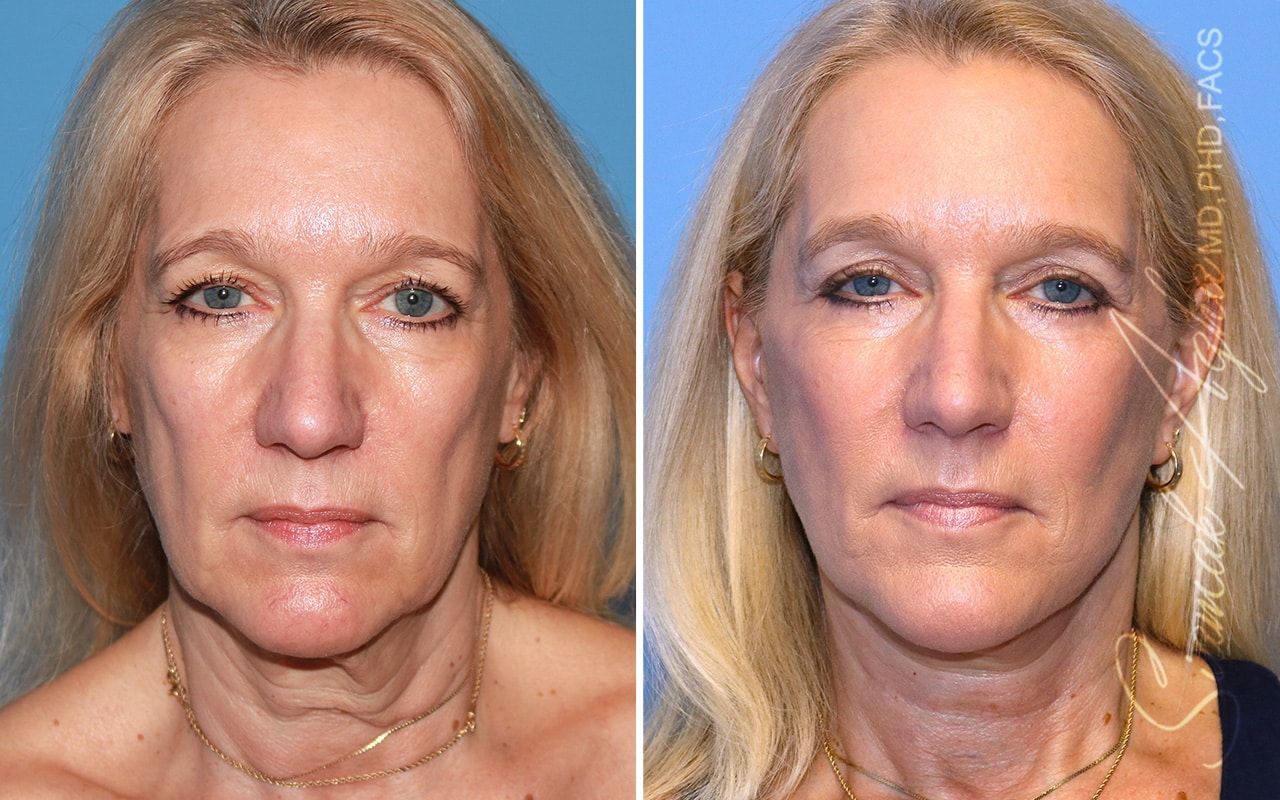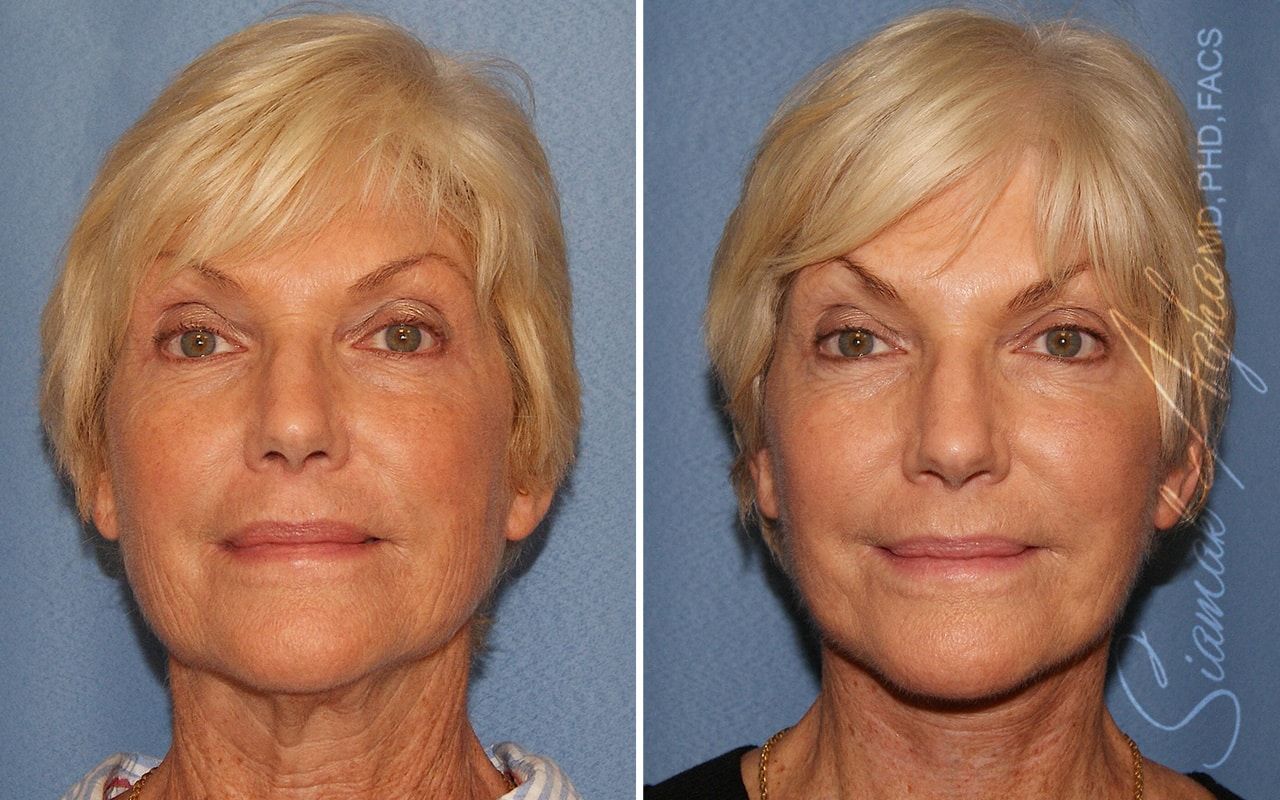


Are you feeling let down by signs of aging in your face and neck? Sagging skin, lines and wrinkles, and loss of elasticity can conspire to dim your inner spark of confidence. Minimally invasive treatments like dermal fillers and energy-based skin tightening have come a long way — but there comes a point where they can only do so much. When the changes are real and the aging is more significant, surgery is the only treatment that genuinely addresses what is happening beneath the surface.
The good news is that a facelift and neck lift performed by Dr. Siamak Agha at The One Plastic Surgery Center can restore a genuinely youthful version of your appearance — one that looks natural, refreshed, and authentically you.
Learn more about how our sophisticated three-dimensional approach to facelift surgery can restore the contours, definition, and vitality that aging takes away. Then, schedule your personal consultation with one of Newport Beach's most trusted board-certified plastic surgeons to discover which technique will deliver the results you deserve.

1 of 28
Choosing a facelift surgeon is one of the most consequential decisions you will make — the results live on your face every single day. Two surgeons can perform the same named procedure and produce vastly different outcomes. What makes the difference is the depth of training, the sophistication of the surgical philosophy, and the ability to see the face in three dimensions rather than two.
Dr. Agha completed his MD and PhD at the University of Cambridge on a prestigious Wellcome Trust scholarship — one of the most selective physician-scientist programs in the world. His doctoral research in gene therapy resulted in two international patents filed by Cambridge University, a testament to a scientific precision that carries directly into his surgical practice. He then completed a seven-year residency in plastic and reconstructive surgery at the University of Pittsburgh Medical Center — one of the most respected training programs in the United States. Critically, Dr. Agha trained directly under Dr. Bryan Mendelson, a globally recognized pioneer of the deep plane facelift and one of the foremost authorities on the anatomy of facial aging.
That foundation shows in how Dr. Agha approaches every facelift. Where most surgeons correct in two dimensions, he has spent over two decades developing techniques that restore the third: projection, volume, and structural depth. His three-dimensional philosophy does not simply tighten what remains — it rebuilds the underlying facial architecture, recreating the definition and natural shape of a younger face. The result is a patient who looks genuinely refreshed, not operated on.
Dr. Agha also specializes in revision facelift surgery — correcting results from other surgeons that did not meet expectations. This is among the most technically demanding work in plastic surgery, requiring the ability to work through prior scarring, altered tissue, and the limitations of what previous surgery left behind. His expertise here reflects not just technical skill, but a deep understanding of what goes wrong when the surgical philosophy is flawed from the start.
Beyond the operating room, Dr. Agha is recognized by his peers as both an educator and an innovator. He has served as faculty at more than five annual meetings of the American Society of Aesthetic Plastic Surgeons, teaching advanced techniques to fellow surgeons. He is an active member of the American Society of Plastic Surgeons, a Diplomat of the American Board of Plastic Surgery, a Fellow of the American College of Surgeons (FACS), and a Fellow of the Royal College of Medicine (U.K.). His peer-reviewed publications and contributions to plastic surgery textbooks reflect a career built on advancing the field — not simply practicing within it.
To schedule your personal facelift consultation, contact The One Plastic Surgery Center at (949) 644-2442 or visit us at 3701 Birch St. #200, Newport Beach, CA 92660. Monday through Thursday, 9 AM – 5:30 PM.

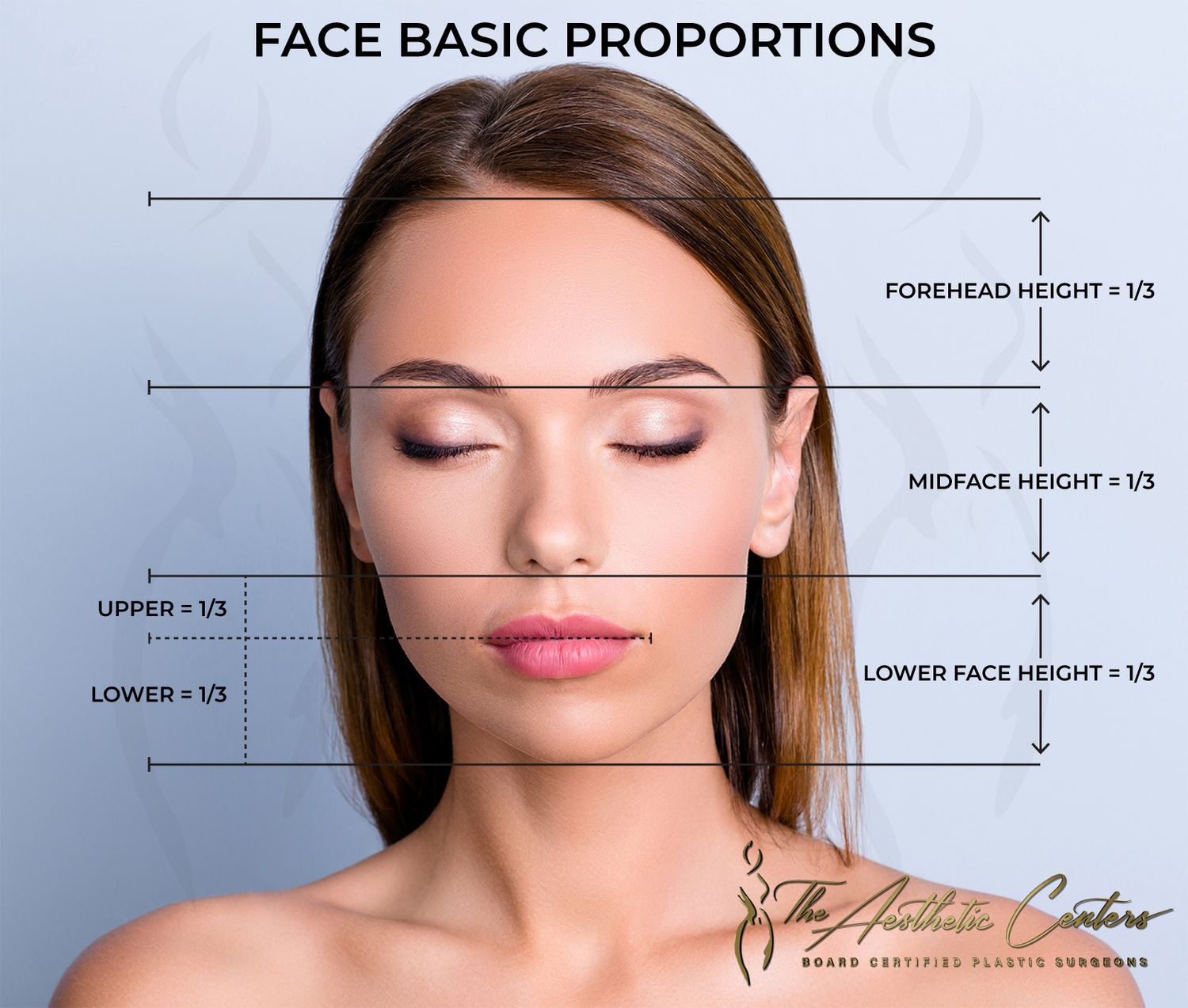
A truly beautiful face is defined by three dimensions — height, width, and projection. The upper, mid, and lower face each occupy roughly one-third of total face height. The cheekbones are prominent, the cheeks are defined, and the jawline is crisp and clear.
Aging gradually disrupts all of this. As skin loosens, fat descends, and bone recedes, those natural proportions begin to blur. A facelift can restore most of these changes — but only when it is done with the right approach. The problem with many facelift techniques today is that they offer what is essentially a
two-dimensional fix: pulling skin and muscle upward and backward. This tightens the face, but it also flattens it — erasing the very features that give a face its character. That pulled, windswept look that people associate with bad plastic surgery? That is what happens when a three-dimensional problem is treated with a two-dimensional solution.
At The One Plastic Surgery Center, Dr. Agha takes a different approach — one that restores the natural three-dimensional structure of the face, not just its surface tightness. The result is a face that looks like you, only years younger.
Facial aging is not one change — it is many changes happening at the same time, across every layer of the face. The skin loses collagen — the protein that keeps it firm and springy — which causes it to become thinner, drier, and less able to bounce back. Over time, this leads to the wrinkling and sagging that most of us notice first in the mirror.
At the same time, the fat pads in your face begin to shrink and shift downward. Volume disappears from the cheeks and temples, while heaviness accumulates along the jaw — creating that hollow-above, heavy-below look that ages the face more than wrinkles alone ever could.
Even the bones of the face lose density and volume with age. As the bony framework beneath your skin recedes, the soft tissue above it loses its support. Smile lines deepen. Cheeks hollow out. Lips thin. These are structural changes — and no cream, filler, or laser can fully correct them.
The neck often shows its age even before the face does — and for many patients, it is the area of greatest concern. As the platysma muscle (the flat sheet of muscle that runs along either side of your neck) weakens with age, it separates at the center and creates the vertical bands that become visible under thinning skin. Fat builds up under the chin. The jawline softens. A neck lift — performed alongside a facelift or on its own — corrects all of these changes directly, replacing loose, crepey neck skin with a smooth, taut, and defined contour.

Medically known as a rhytidectomy, a facelift is the most powerful and longest-lasting surgical solution for facial and neck aging. It works by removing excess skin, repositioning the deeper tissues and muscles that have descended over time, and restoring the natural structure of your face — so you look like a younger, more vibrant version of yourself. A facelift and neck lift are frequently performed together for complete rejuvenation of the lower face and neck in a single procedure.
With a facelift, Dr. Agha will:
Facelift surgery is one of the most sought-after cosmetic procedures for adults aged 55 and above — and for good reason. No other treatment delivers the same degree of structural correction, or results that last a decade or longer.
Fall in love with your appearance again. Schedule your personal facelift consultation at The One Plastic Surgery Center in Newport Beach today.

There are many different facelift techniques — and not all of them are right for every patient. The good news is that Dr. Agha will help guide you to the one that fits your anatomy and goals. What most people don't realize is that nearly all facelifts use the same basic incisions: starting at the temples within the hairline, continuing in the natural crease in front of the ear, around the earlobe, and ending behind the ear. Through these incisions, the deeper tissues are repositioned and excess skin is removed — smoothing creases, eliminating jowls, and tightening the neck.
What separates one facelift from another is how deeply the surgeon works and which layers of tissue are addressed. That is what determines the quality, naturalness, and longevity of your result. Here are the most common techniques Dr. Agha performs:
Also known as the SMAS facelift, this is the most widely performed facelift technique worldwide and is best suited for patients with moderate to severe sagging of the face and neck. SMAS stands for superficial musculo-aponeurotic system — essentially the deeper connective tissue layer that sits beneath your skin and covers the facial muscles. By lifting and repositioning this layer rather than just the skin, Dr. Agha creates results that hold longer and look more natural.
Depending on your facial anatomy, this layer may be tightened, folded, or fully repositioned to achieve the best lift. Excess skin is then removed and the incisions are carefully closed.
The deep plane facelift is a more advanced version of the traditional facelift — and for many patients, it delivers the most natural and longest-lasting results available. Instead of just tightening the deeper connective tissue layer, this technique releases it from the underlying facial muscles and lifts the skin and deeper tissue together as one unit. Because nothing is being pulled tight, there is almost no tension on the incisions — which is why scars from a deep plane facelift are nearly invisible. This is also why it is often called a "scarless facelift." The results are fuller, more natural, and more structurally complete than a standard facelift.
Not every patient needs a full facelift. The mini-facelift — also called a short-scar facelift — is a lighter, less invasive option designed for younger patients who are just beginning to notice the early signs of aging in the lower face. Through small incisions in front of the ears, the cheeks and jaw area are lifted to reduce early jowling, sharpen the jawline, and restore a fresher, more youthful look. Recovery is faster and it can be done under local or general anesthesia.
The midface lift focuses on the middle of the face — lifting the cheeks, softening smile lines, and addressing sagging in the central facial area. It is best for younger patients with specific concerns in this zone who don't need a full facelift. Dr. Agha has developed his own minimal-access version of this technique that uses small, well-hidden incisions within the hairline — giving effective results with a more discreet recovery.
The platysma is the flat muscle that runs along either side of your neck. Over time, it weakens and separates, creating those visible vertical bands that run down the neck. A platysmaplasty corrects this directly: through a small incision under the chin, the two edges of the muscle are stitched back together — eliminating the bands and restoring a smooth, clean neck profile. This is most often done alongside a facelift.
A neck lift is specifically designed to address the sagging, loose neck that many patients feel most self-conscious about. After the neck muscle is corrected with a platysmaplasty, incisions are made at the earlobe and behind the ear. Through these, the neck tissues are lifted and secured, the skin is tightened, and any excess fat under the chin is removed with liposuction if needed.
A neck lift is most often combined with a facelift for complete lower face and neck rejuvenation. For patients whose main concern is the neck with minimal lower-face aging, a standalone neck lift may be all that is needed. It can also be combined with a chin implant or the Ellacor skin-tightening treatment for even more defined results.
Every facelift Dr. Agha performs is tailored to that specific patient — their anatomy, their degree of aging, and their goals. A facelift is frequently combined with other facial procedures such as eyelid surgery or a brow lift for a more complete result. Before surgery, you will receive detailed pre-operative instructions to make sure your recovery goes as smoothly as possible.
Most facelift procedures are performed under general anesthesia — meaning you are fully asleep and completely comfortable throughout. For more limited procedures, local anesthesia with sedation (twilight anesthesia) may be used. Dr. Agha and the team will discuss the right option for your specific procedure.
The procedure begins with a numbing solution injected beneath the skin. This reduces bleeding during surgery and helps minimize discomfort afterward. If you have excess fat under the chin or a double chin, liposuction is performed at this stage to refine the neck contour before the lift begins.
A great facelift leaves behind two things: a beautifully rejuvenated face — and a scar no one can find. Dr. Agha places the incision starting within the sideburn hair at the temples, following the natural crease in front of the ear, curving around the earlobe, and ending in the crease behind the ear. It is designed to be completely hidden within the natural folds and hairline.
For patients with significant neck skin laxity — including those who have lost a substantial amount of weight or experienced "Ozempic face" — the incision is extended a little further along the hairline behind the ear to allow more neck skin to be removed. A small additional incision is also made under the chin to access and tighten the neck muscles.
Through the incisions, the skin of the face and neck is carefully lifted away from the deeper muscle and connective tissue layers beneath. The neck skin is fully elevated on both sides — giving Dr. Agha complete access to everything that needs to be repositioned.
In a traditional SMAS facelift, the deeper connective tissue layer is repositioned and secured at a higher position using carefully placed sutures — tailored to each patient's unique facial structure. In a deep plane facelift, this layer is released from the underlying muscles and lifted together with the overlying skin as one unit, with virtually no tension on the skin itself.
Once the deeper tissues are lifted and secured, the excess skin is trimmed and the incisions are closed. Dr. Agha often adds nanofat grafting at this stage — a technique that uses the patient's own processed fat to restore lost volume in the cheeks, temples, and lips, while also improving skin quality from within. CO2 laser resurfacing, a chemical peel, or dermabrasion may also be added to enhance skin texture and tone.
A small, thin drainage tube is placed behind the ear after surgery to collect any fluid that may accumulate — this is removed on day two. Your incisions are closed with sutures that are taken out five to seven days after surgery.
A facelift is a real surgical procedure — but most patients are pleasantly surprised by how manageable the recovery is. The first two to three days are when bruising and swelling are at their worst. After that, things improve quickly. Most patients feel comfortable being seen in public within one to two weeks.
Facelift scars take three to six months to fully mature and fade into a thin, nearly invisible line. Because they are placed within natural creases and the hairline, most patients feel comfortable going out in public well within the first week.
One important note: protect your skin from the sun during recovery. A wide-brimmed hat and daily broad-spectrum sunscreen will help your scars heal as well as possible and protect your results long-term.
| Timeline | Activity |
|---|---|
| Up to three days post-facelift | Bruising and swelling at their peak |
| 5-10 days | Initial healing completed Return to work (for mini-facelift) Removal of sutures |
| 2 weeks | Resume normal daily activities gradually Return to work (for full facelift) |
| 4 weeks | Light exercises allowed |
| 6 weeks | Regular exercises and strenuous activities allowed |
If you need additional support during recovery, The One Plastic Surgery Center can recommend home care and recovery facilities to help you heal comfortably.
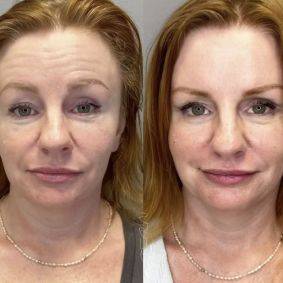
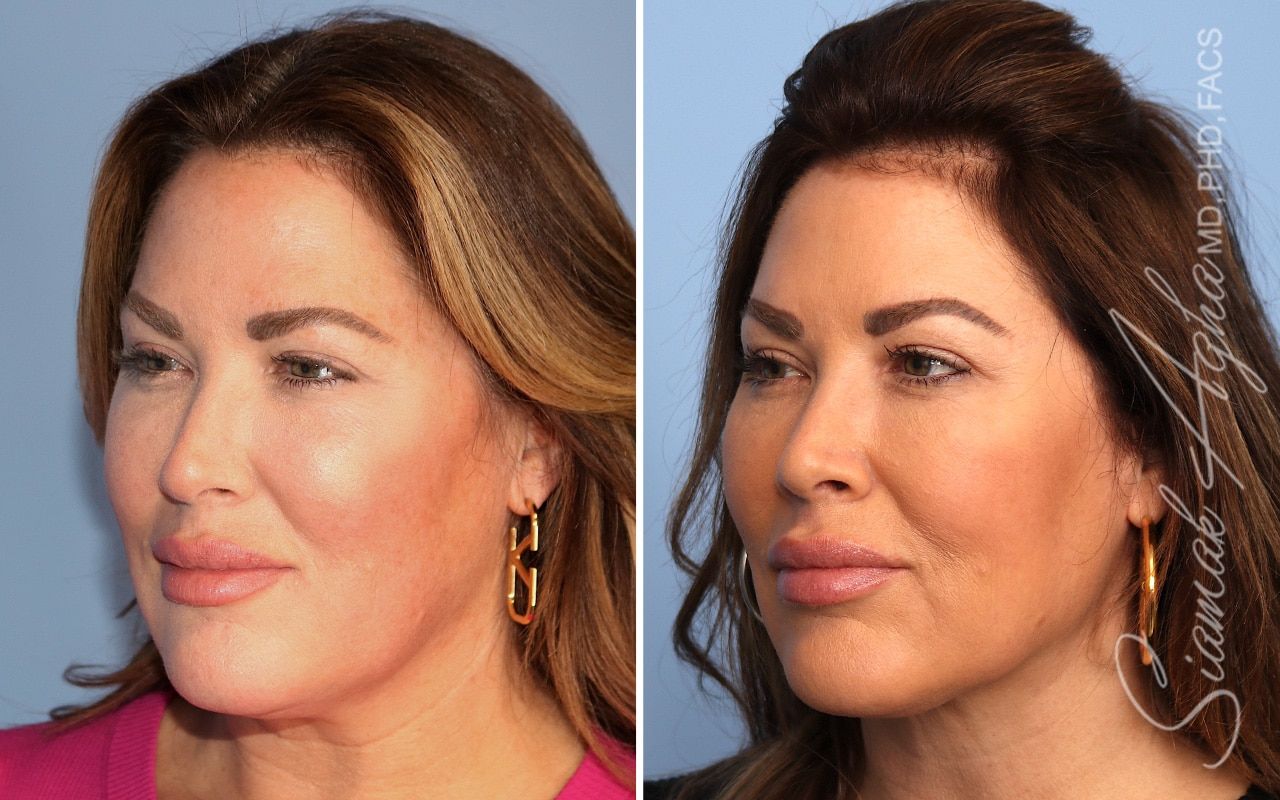
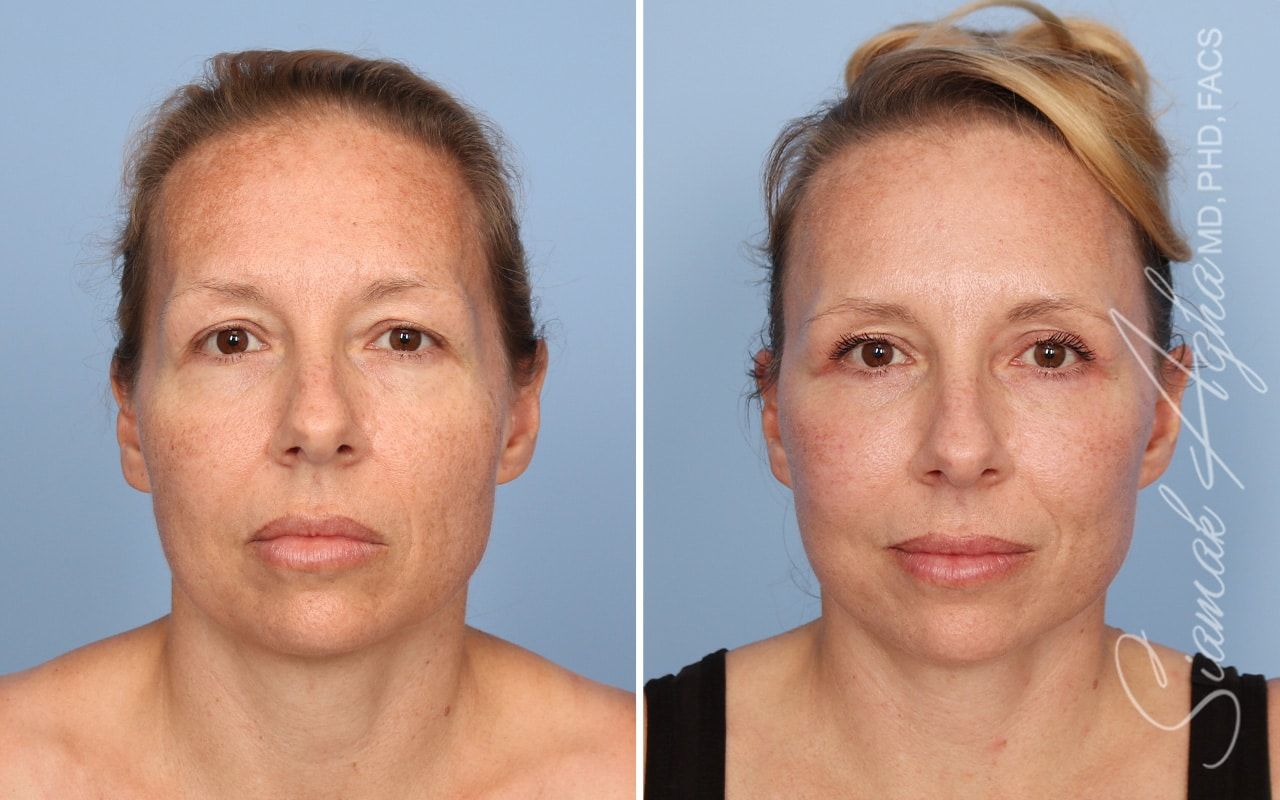
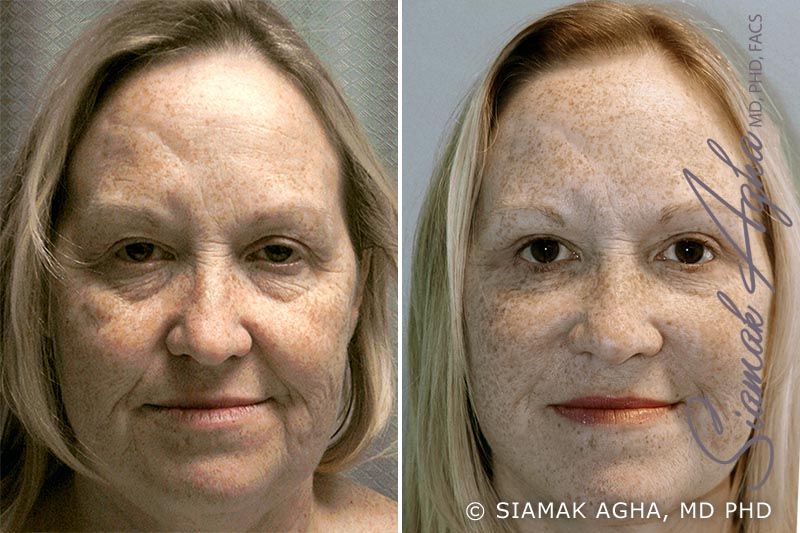
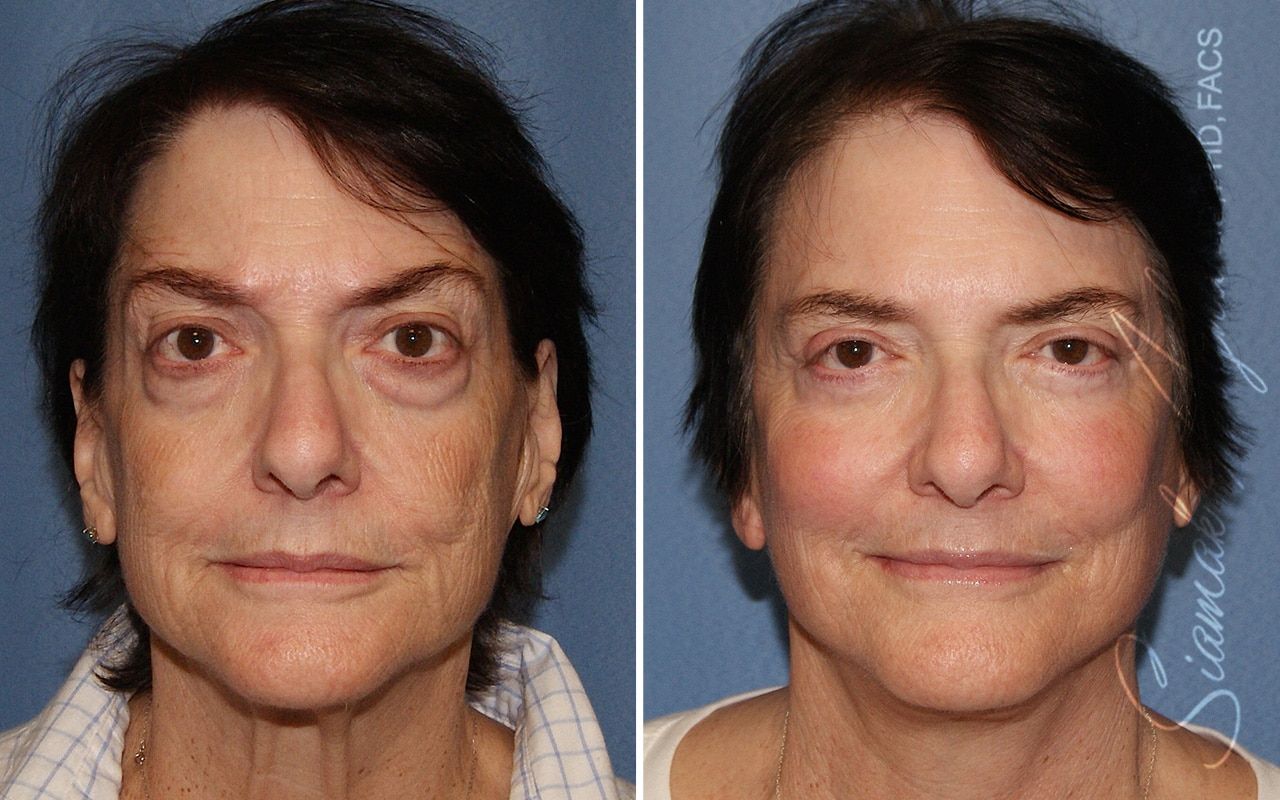
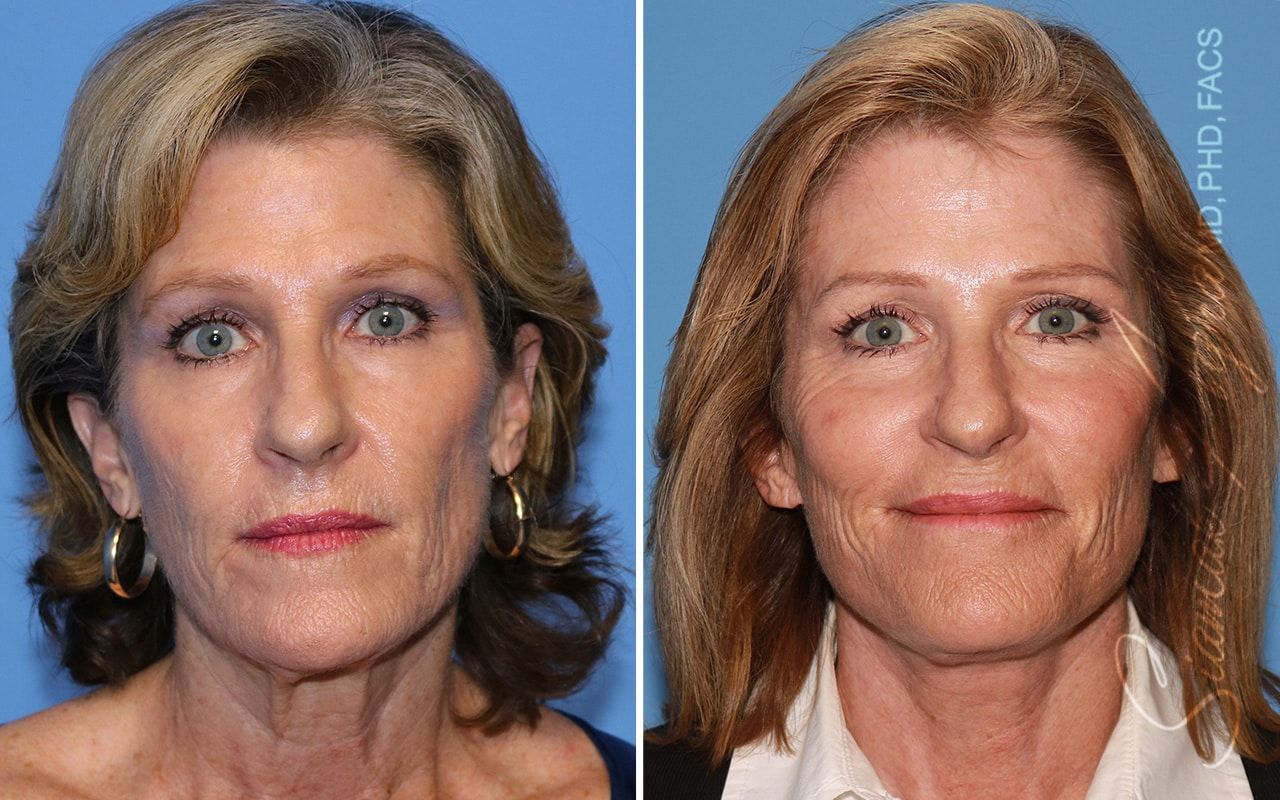
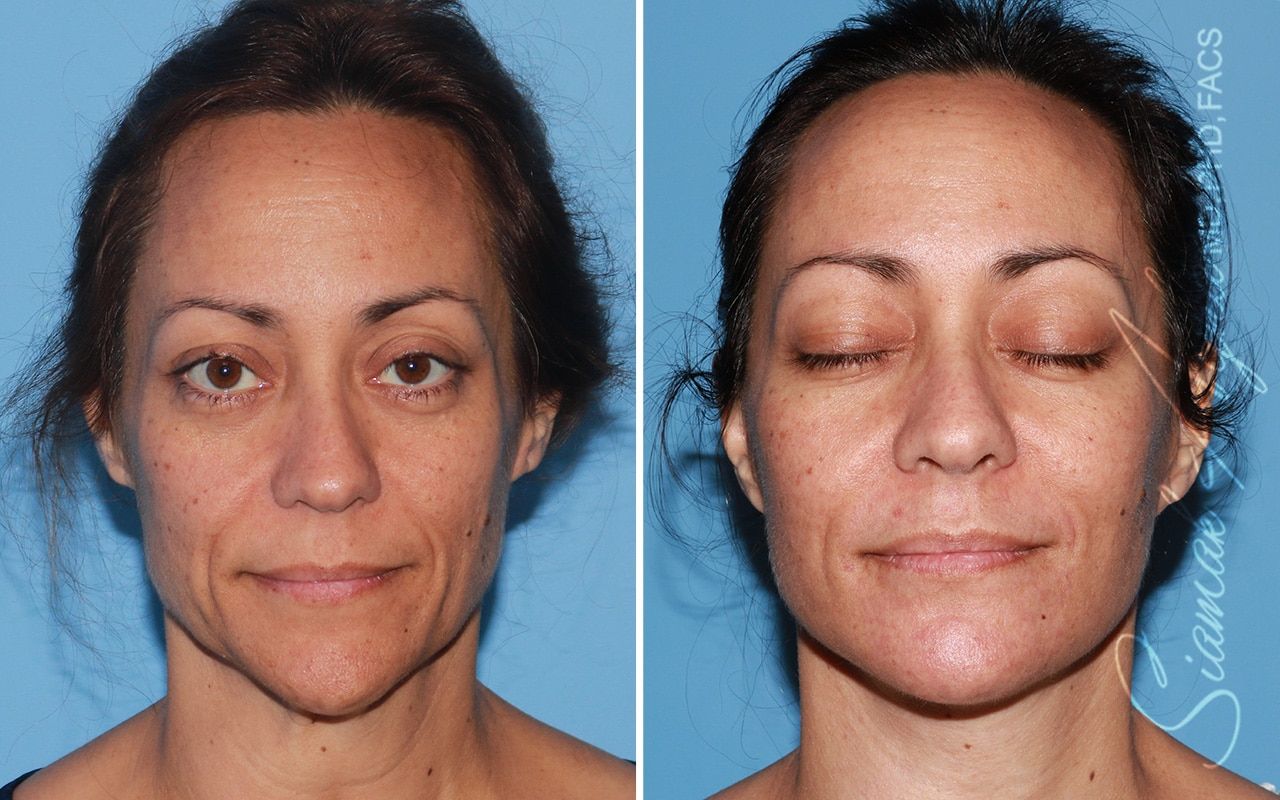
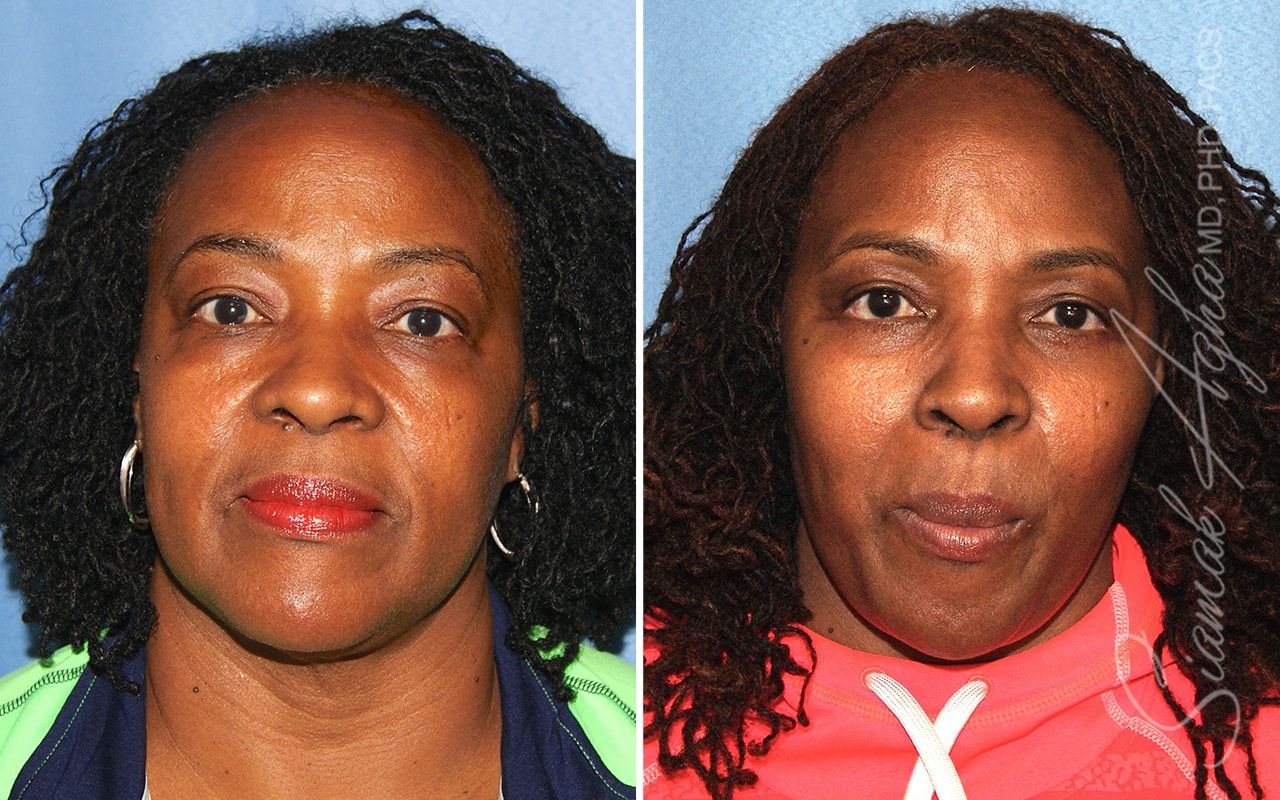
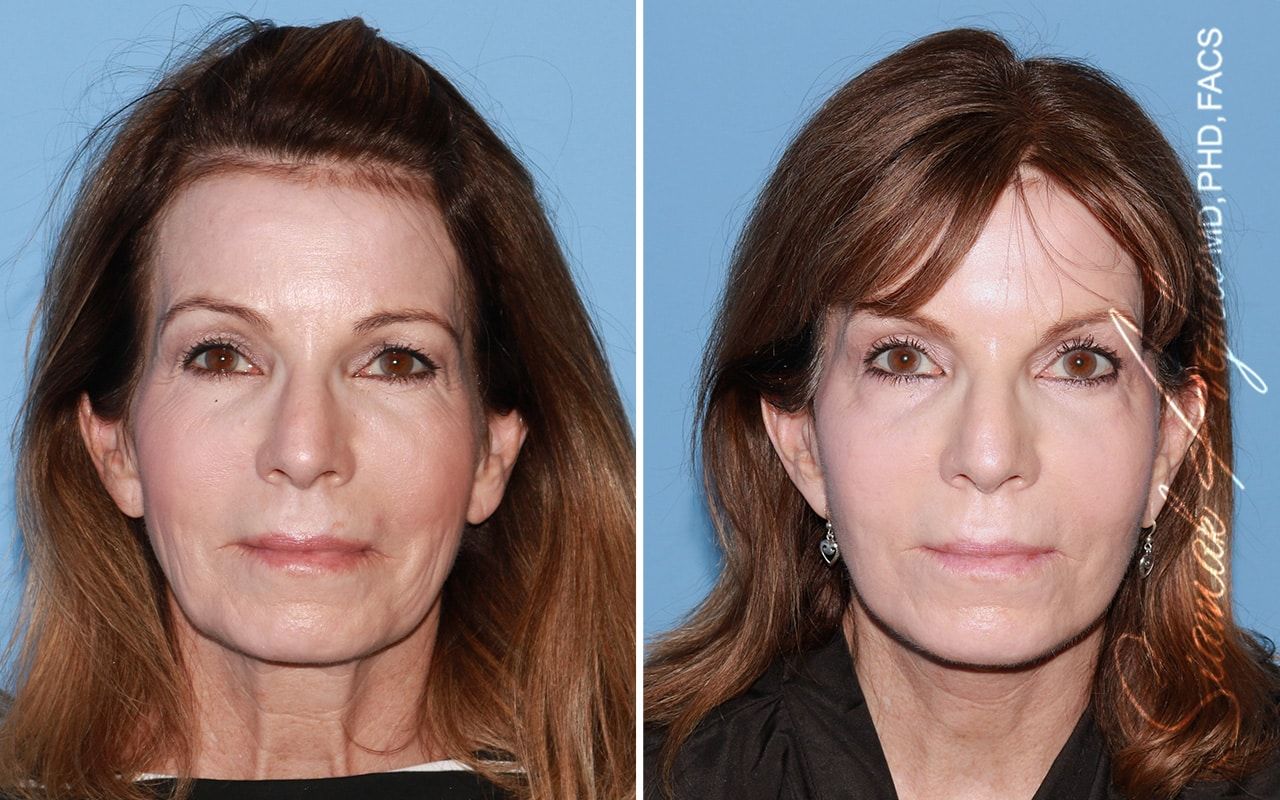
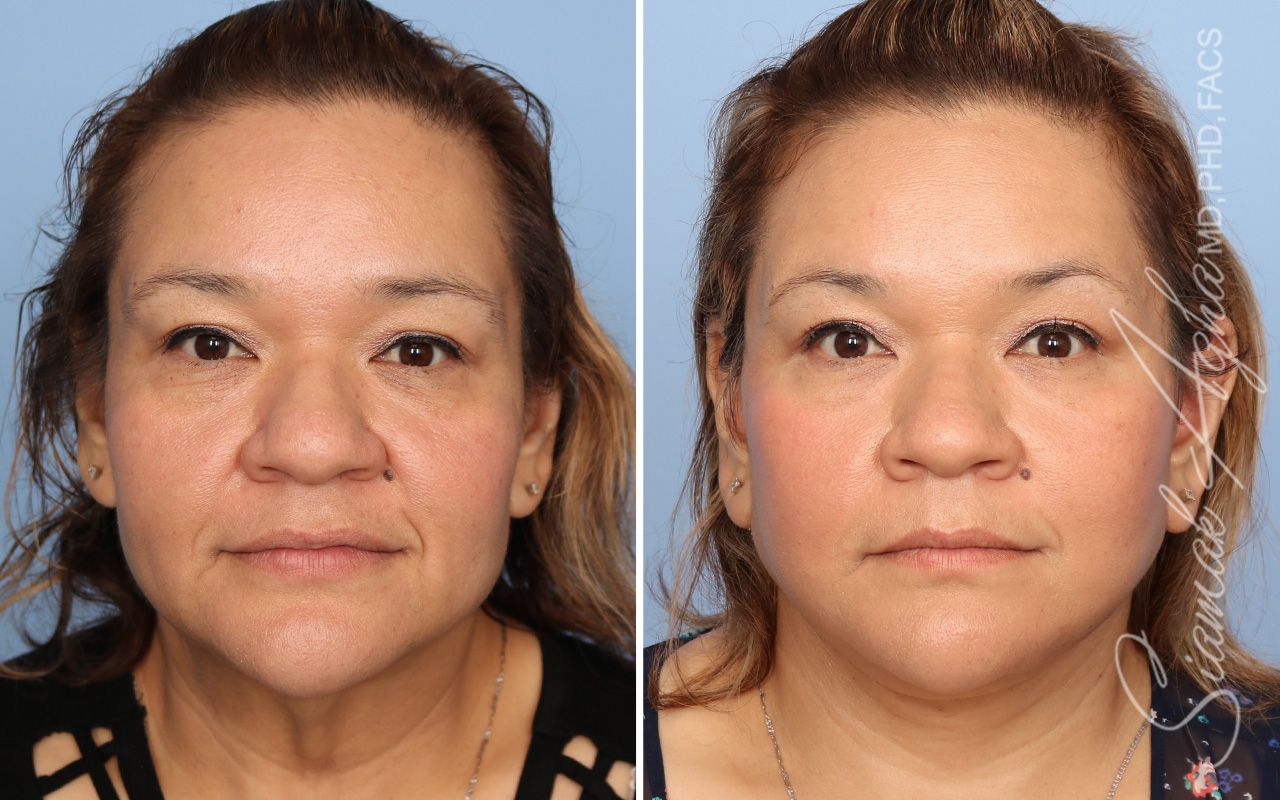
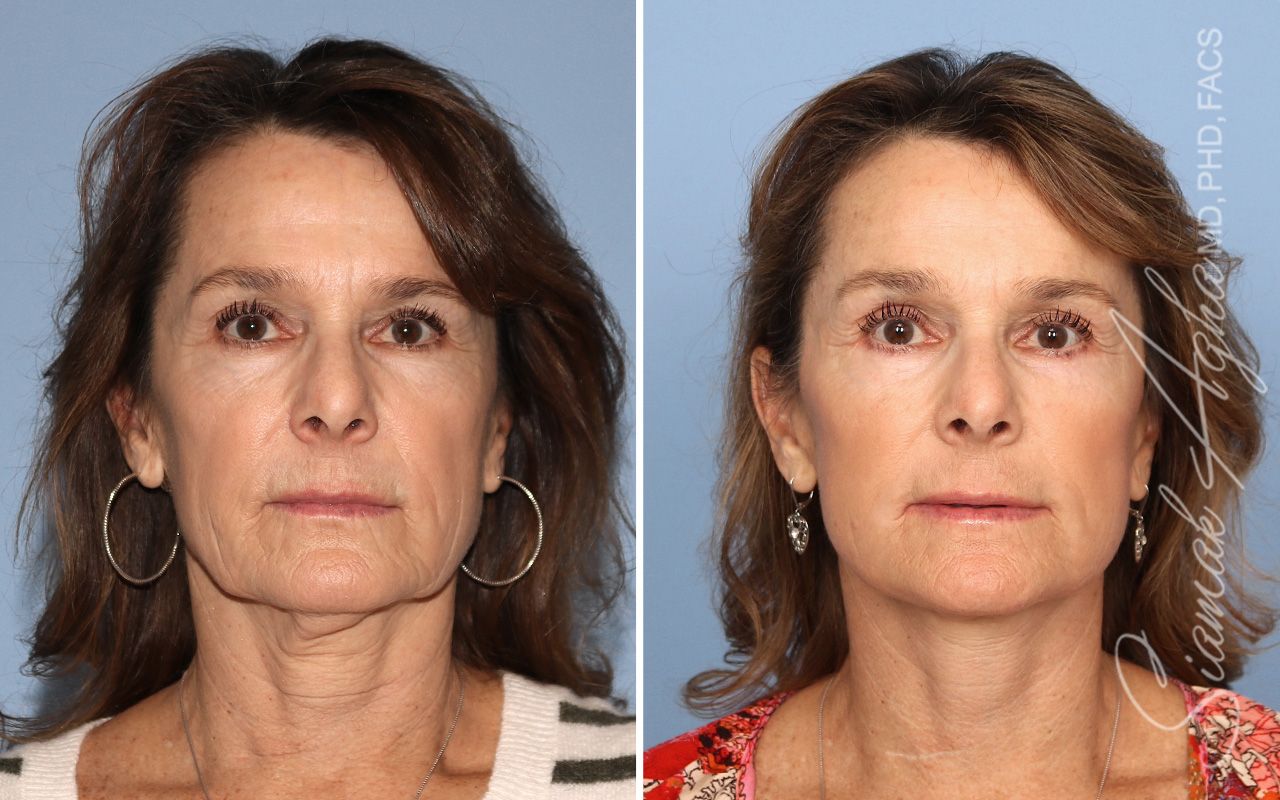
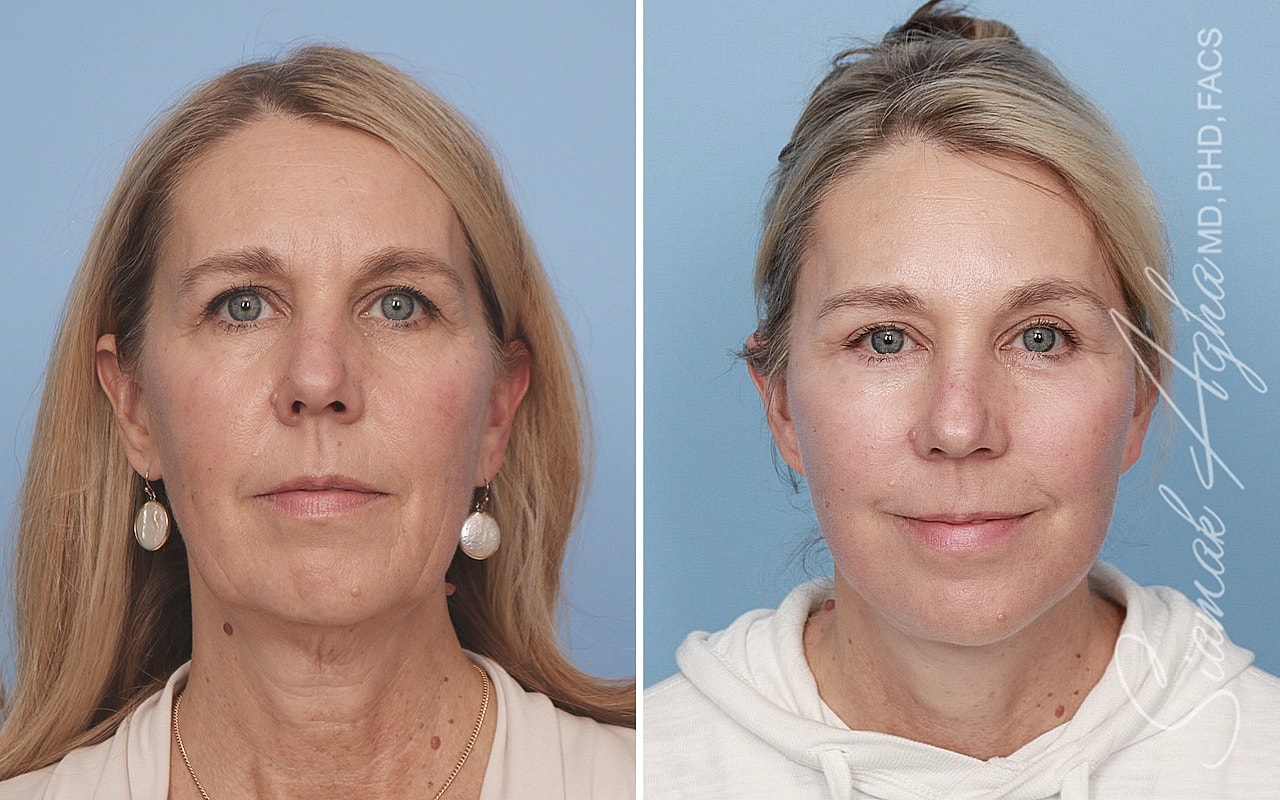
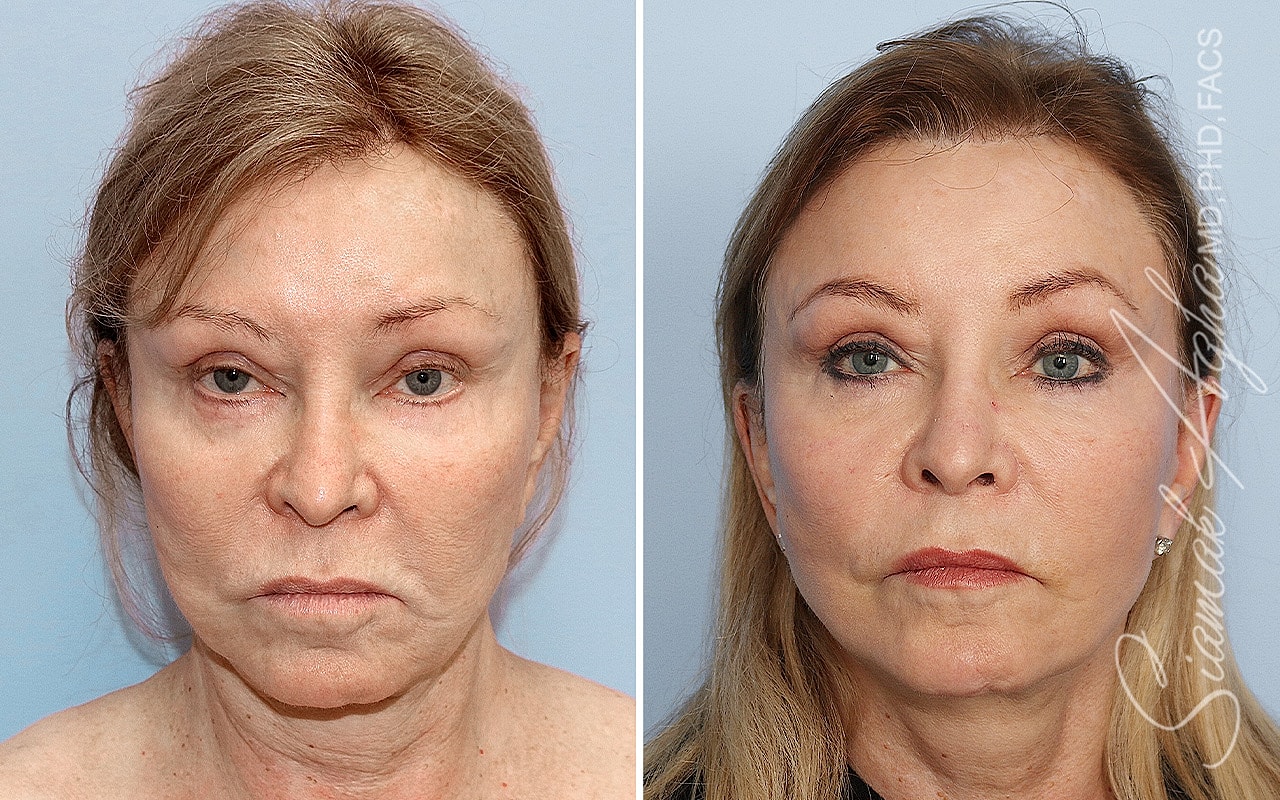
After a facelift and neck lift with Dr. Agha, the results speak for themselves — natural, three-dimensional, and built to last. The best compliment our patients receive after surgery is not "you look like you had a facelift." It is "you look incredible — what have you been doing?" That is exactly the outcome Dr. Agha works toward with every patient.
A 2017 peer-reviewed study confirmed that patients who underwent facial rejuvenation surgery were seen as significantly younger and more attractive by independent observers. With Dr. Agha's three-dimensional technique, results typically last a decade or longer — and are best maintained with sun protection, a stable weight, and a consistent skincare routine.

To help evaluate whether a facelift or neck lift might be right for you, try answering the following questions with a yes or a no:
If you said yes to any of the above, a facelift or neck lift may be exactly what you have been looking for. This procedure does more than change how you look — it restores the confidence that comes from looking like the best version of yourself. Schedule a consultation with Dr. Agha at The One Plastic Surgery Center to discuss your specific goals and find out which approach is right for you.
Not everyone who wants a facelift will be an immediate candidate — and an in-person consultation is the best way to know for sure. In general, the key factors are:
Talk to Dr. Agha about your goals, medical history, and concerns. He will help you understand exactly what is possible and which approach makes the most sense for your anatomy.
Facelift surgery is one of the most popular cosmetic procedures performed in the United States and continues to grow in demand as techniques improve and recovery times shorten. It consistently ranks among the top procedures for adults aged 55 and above, second only to eyelid surgery.
Yes — and for patients with mild or early signs of aging, non-surgical treatments can be very effective. Options like Botox, dermal fillers, and skin-tightening devices address surface-level concerns well. The One Plastic Surgery Center also offers Ellacor™ — a minimally invasive micro-coring treatment that removes tiny columns of skin tissue to produce meaningful lift and tightening without surgery. However, for patients with moderate to significant facial laxity, these treatments cannot replicate the structural correction and longevity that a facelift delivers. Read more about Ellacor here.
The cost of facelift surgery depends on several factors: the technique selected, the complexity of the procedure, the length of anesthesia, and whether any additional treatments are combined. A personalized cost estimate is provided after your consultation with Dr. Agha. Since a facelift is an elective cosmetic procedure, it is not covered by insurance — but The One Plastic Surgery Center offers financing options to help make your procedure more accessible.
GLP-1 weight-loss medications like Ozempic, Wegovy, and Mounjaro have helped many patients achieve significant weight loss. But rapid fat loss — especially in the face — often comes with an unwanted side effect: loose, sagging skin, hollowed-out cheeks and temples, more noticeable lines, and a tired or aged appearance even as the body becomes slimmer. This has become widely known as "Ozempic face."
For some patients, these changes can be softened with fillers or energy-based skin treatments. But for many — especially those with more significant laxity — a facelift and neck lift may be the most effective solution. Dr. Agha's approach for weight loss patients addresses both the loose skin and the lost volume, combining surgical lifting with fat grafting to restore a naturally balanced, youthful result.
Disclaimer:
GLP-1 medications, including semaglutide and tirzepatide medications such as Ozempic, Wegovy, and Mounjaro, are prescription drugs used for blood sugar management and, in some cases, chronic weight management under medical supervision. These medications are not suitable for everyone and should only be used as prescribed by a qualified healthcare provider.
Potential side effects of GLP-1 medications may include nausea, vomiting, diarrhea, abdominal pain, constipation, and reduced appetite. More serious risks, including pancreatitis, gallbladder disease, kidney problems, and possible thyroid-related risks, have also been reported in some cases. Patients should discuss their medical history, current medications, and any pre-existing conditions with their doctor before starting treatment.
This content is for informational purposes only and does not constitute medical advice, diagnosis, or treatment. Any decisions regarding GLP-1 medications, facial aging after weight loss, or possible surgical and non-surgical treatment options should be made in consultation with qualified medical professionals.
Please follow us @drsiamakagha to learn what makes Dr. Agha unique and special, learn from his educational podcasts and consults, and view precision surgery after surgery.