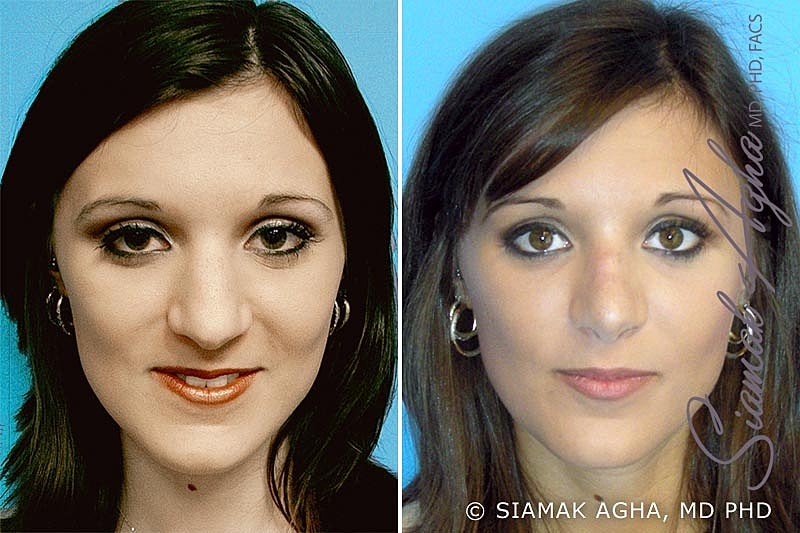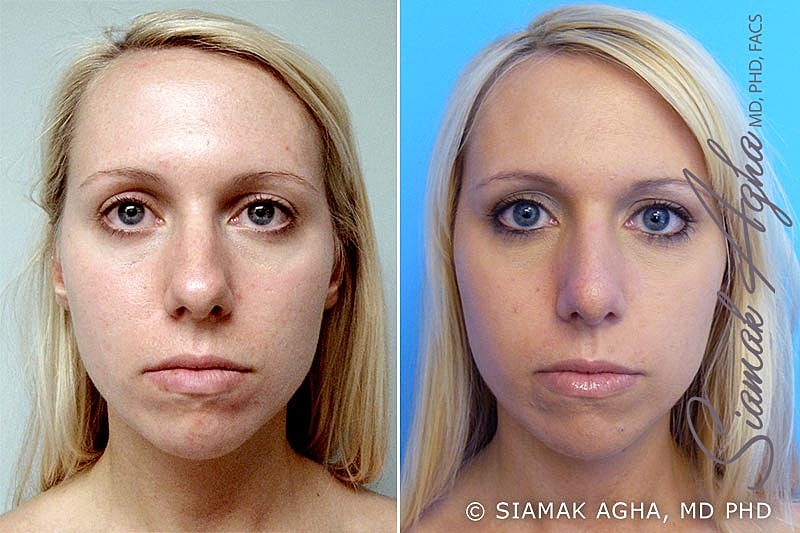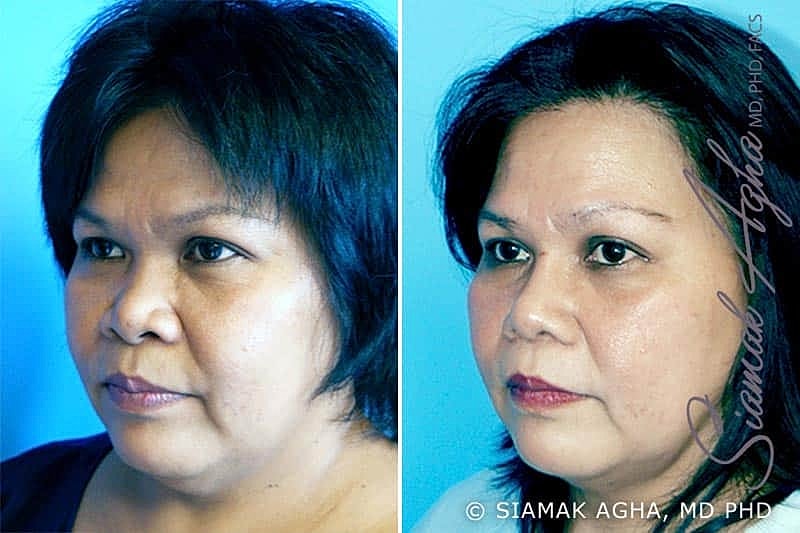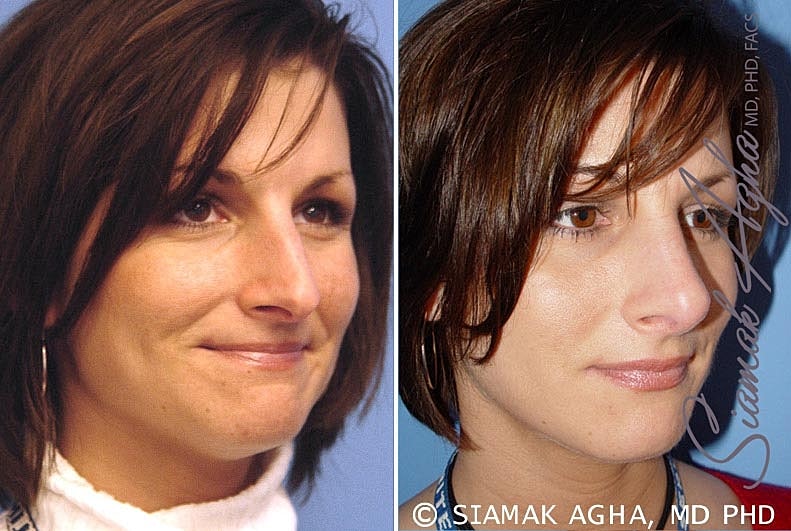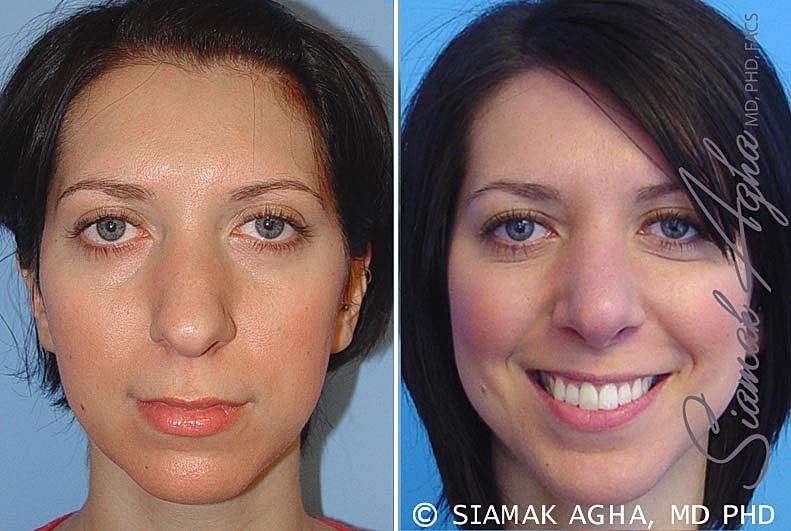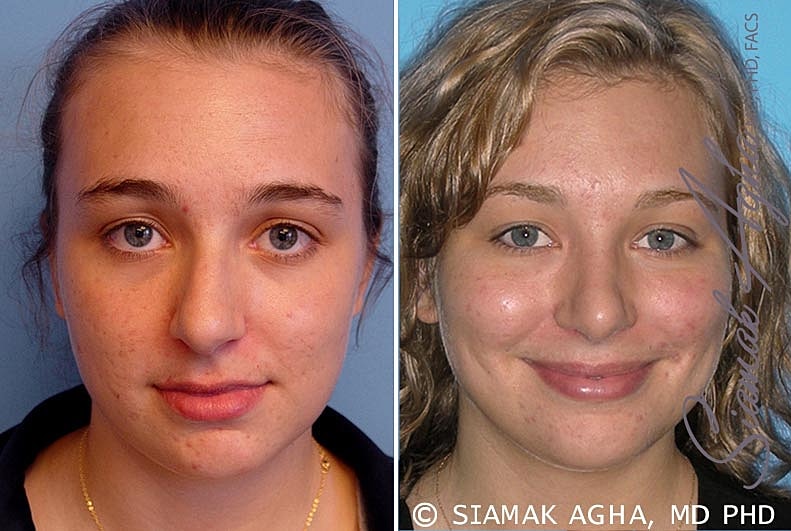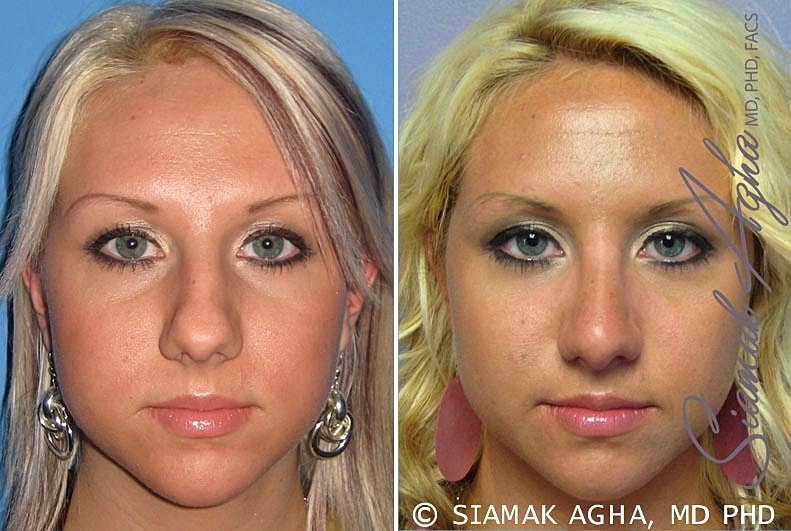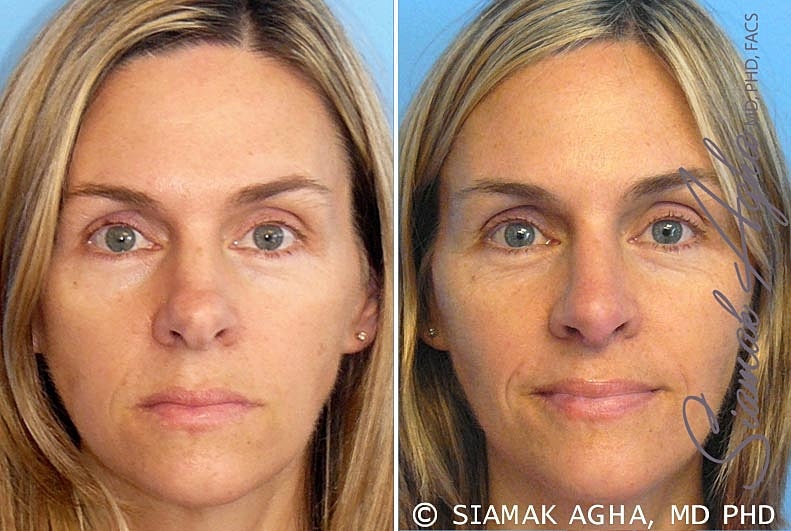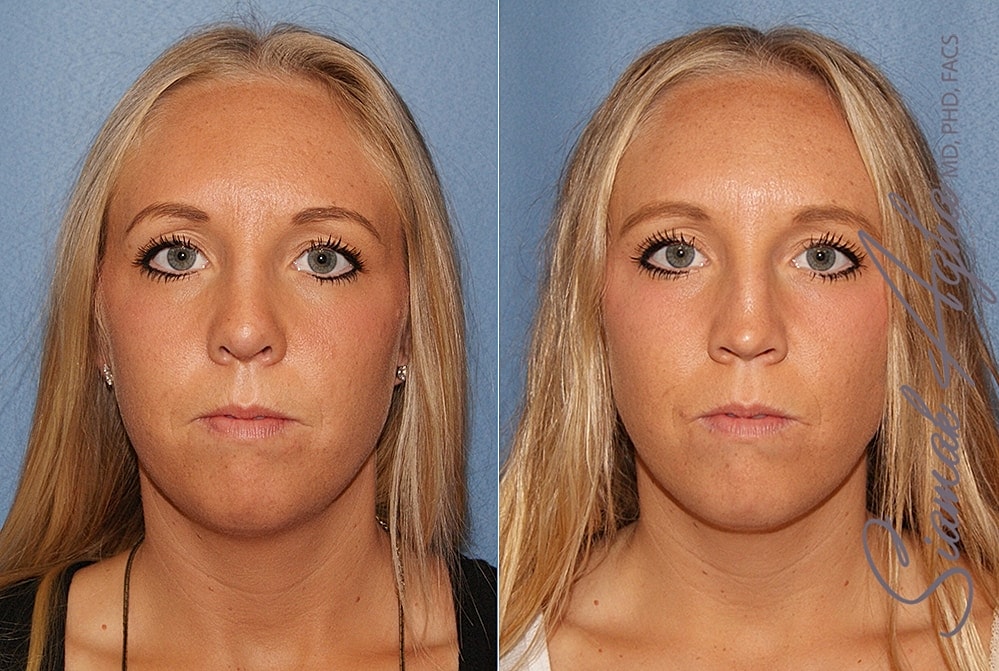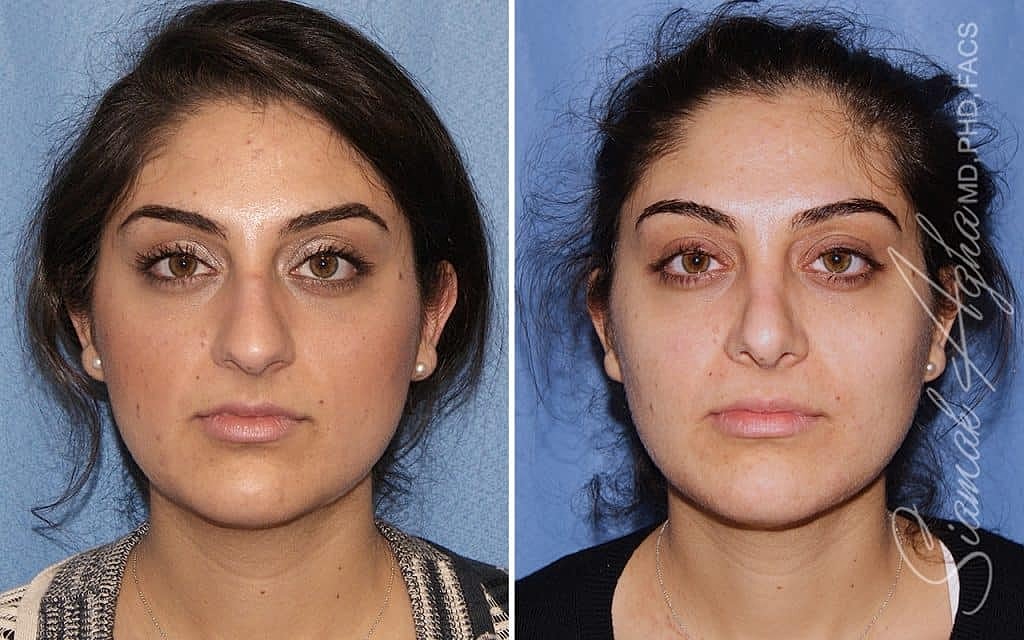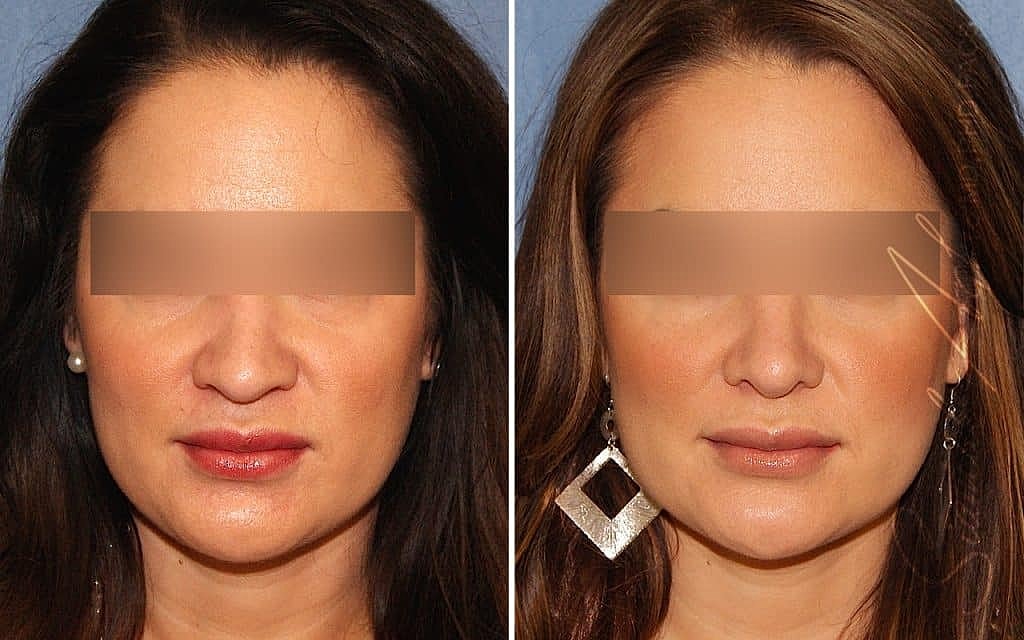


Beauty standards may come and go, but one thing never changes: your nose is your face's defining feature— literally and figuratively. Positioned at the very center of your face, it influences how every other feature is perceived. Even a subtle imbalance in size, shape, or proportion can draw attention away from your eyes, your cheekbones, and everything else that makes your face distinctly yours.
Many patients assume there is one universal ideal — a small, straight, symmetrical nose. But a truly beautiful nose is one that fits your face.
What looks harmonious on one person can look completely wrong on another. That is what makes rhinoplasty — nose reshaping surgery — one of the most individualized and technically demanding procedures in all of cosmetic surgery.
At The One Plastic Surgery Center in Newport Beach, rhinoplasty is approached with a deep respect for each patient's unique anatomy, ethnic identity, and personal goals. Every nose job is planned around your face — not a template. The result should look like it was always yours, only better.

1 of 11
The nose is not just any facial feature — it is the most defining one. It sits at the exact center of the face, and a result that is even slightly off is immediately apparent, even to people who cannot articulate why.
Rhinoplasty demands more than technical skill. It demands an eye for proportion, a genuine understanding of facial harmony across different ethnicities, and the surgical discipline to know when less is more.
Dr. Agha's academic foundation — an MD and PhD from the University of Cambridge, earned on a prestigious Wellcome Trust scholarship — instilled a level of scientific precision that shapes how he thinks about anatomy and surgical planning. His seven-year residency in plastic and reconstructive surgery at the University of Pittsburgh Medical Center gave him the technical depth that rhinoplasty — a procedure with virtually no margin for error — demands.
What sets Dr. Agha apart in rhinoplasty specifically is his sensitivity to individuality. He does not approach the nose with a template in mind. He works from a thorough understanding of your face — your proportions, your ethnicity, your skin quality, and what will look balanced and natural for you specifically.
For patients seeking ethnic rhinoplasty — whether Middle Eastern, Asian, Hispanic, or African-American — this sensitivity is not optional. It is what separates a result that honors your identity from one that erases it.
Rhinoplasty is also a procedure where revision is unfortunately common — because it is difficult, and because not every surgeon gets it right. Dr. Agha specializes in revision rhinoplasty, which is among the most technically demanding work in all of plastic surgery, requiring the ability to navigate prior scarring, compromised cartilage, and structurally altered anatomy to rebuild something that looks and functions well. His experience in correction and reconstruction gives patients a real option when they have been told there is nothing more that can be done.
Dr. Agha is a board-certified plastic surgeon (Diplomat, American Board of Plastic Surgery), a Fellow of the American College of Surgeons (FACS), and an active member of both the American Society of Plastic Surgeons and the American Society of Aesthetic Plastic Surgeons. He has served as faculty at more than five of the Society's annual meetings — not as an attendee, but as a teacher of advanced surgical techniques to fellow surgeons. Schedule a rhinoplasty consultation at The One Plastic Surgery Center in Newport Beach to find out what is possible for your nose.

Rhinoplasty — commonly referred to as a nose job or nose reshaping surgery — is a surgical procedure that reshapes the nose to improve its size, structure, and proportions relative to the rest of the face, enhancing overall facial harmony. It is one of the most frequently performed cosmetic surgeries in the United States and consistently ranks as the most popular procedure among adults between the ages of 20 and 39.
With rhinoplasty, you can:
Rhinoplasty is also one of the few cosmetic procedures that can serve a medical purpose. A deviated septum — where the wall of cartilage dividing the two nasal passages is off-center — is one of the most
common causes of chronic nasal obstruction and breathing difficulty. Functional rhinoplasty, also called septoplasty, corrects this internal structural problem to restore proper airflow and is frequently combined with cosmetic nose reshaping in a single procedure. In qualifying cases, functional rhinoplasty may be partially covered by insurance.

Ultrasonic rhinoplasty is one of the most significant advances in nasal surgery in recent years. Rather than using traditional instruments — rasps, chisels, and hammers — to cut and reshape nasal bones, this technique uses a piezoelectric device that delivers precise, high-frequency ultrasonic energy to sculpt bone and hard cartilage with exceptional accuracy. Critically, the surrounding skin and soft tissue are left completely undisturbed.
Conventional rhinoplasty bone work carries a real risk of uncontrolled fractures, irregular contours, and excessive trauma to surrounding tissue. Ultrasonic rhinoplasty eliminates most of these risks, giving the surgeon far greater control, precision, and predictability — and giving patients a noticeably smoother, faster recovery.
Advantages of ultrasonic rhinoplasty:
Common nasal concerns treated with ultrasonic rhinoplasty:

All rhinoplasty procedures use one of two fundamental surgical approaches — open or closed rhinoplasty. The right choice depends on the complexity of the changes needed and the individual anatomy of each patient.
In open rhinoplasty, a small incision is made across the columella — the narrow strip of skin separating the two nostrils at the base of the nose — and connected to incisions placed just inside the nostrils. This allows the nasal skin to be gently lifted, giving the surgeon complete direct access to all underlying bones, cartilage, and structural tissues. Open rhinoplasty is the preferred approach for more complex nasal reshaping where precision and full visualization are essential. Once healed, the columella scar is virtually invisible.
In closed rhinoplasty — also known as endonasal rhinoplasty — all incisions are placed entirely inside the nostrils, leaving absolutely no visible external scarring. Because the nasal skin is not fully lifted away from the underlying structures, this approach provides slightly less access and is best suited for patients who require more limited nasal reshaping with simpler anatomical changes.
Beyond the open and closed approaches, rhinoplasty encompasses several distinct procedure types — each designed around the patient's specific anatomy, cultural background, and aesthetic goals.
Primary rhinoplasty refers to a first-time nose reshaping procedure. The most common goal is improving nasal proportion and facial balance — typically by reducing a dorsal hump, lowering the nasal bridge, refining the tip, or narrowing the overall width. For patients with a naturally low or flat bridge, particularly those of Asian or Middle Eastern descent, augmentation rhinoplasty may be performed instead — using cartilage grafts to build definition, projection, and height.
A conservative, tissue-sparing philosophy is always applied — removing only what is necessary to achieve the desired result. Overly aggressive removal of cartilage and bone is one of the most common causes of long-term complications and unsatisfactory rhinoplasty outcomes, and is something The One Plastic Surgery Center takes great care to avoid.
When nostril width reduction is also desired, a base reduction — the precise removal of small wedges of tissue at the base of the nostrils — can be incorporated into the same rhinoplasty procedure.
Revision rhinoplasty is a corrective nose surgery performed to address problems that developed following a previous rhinoplasty — whether cosmetic, functional, or both. Minor external irregularities can sometimes be corrected with a straightforward approach, but significant reconstruction is frequently required to restore both form and nasal function. In many revision cases, cartilage must be harvested from a secondary donor site — most commonly the ear or rib — to rebuild nasal structure and provide lasting support.
A nose can only truly look beautiful when it belongs to the face it is on — and that requires respecting and preserving the distinct features that reflect a patient's cultural heritage. Ethnic rhinoplasty is specifically designed for patients of Asian, Middle Eastern, Persian, Hispanic, African-American, or other
non-Caucasian backgrounds, where nasal anatomy, skin characteristics, and aesthetic ideals differ significantly from standard Western rhinoplasty.
Many patients of Asian and African-American descent, for example, have flatter nasal bridges, wider or less defined tips, thicker skin, and softer underlying cartilage. In these cases, augmentation techniques are often needed — using cartilage grafts from the rib or ear to build bridge height, define the tip, and create a more refined profile while fully preserving the patient's natural facial identity.
The One Plastic Surgery Center offers rhinoplasty for patients of all ethnic backgrounds, including Middle Eastern and Persian rhinoplasty, Hispanic rhinoplasty, and Asian rhinoplasty.
Rhinoplasty is widely considered the most technically demanding cosmetic procedure performed today. The nose occupies the center of the face, involves both aesthetic form and physiological function, and leaves virtually no margin for error. Choosing the right rhinoplasty surgeon is the most important decision you will make.
At The One Plastic Surgery Center in Newport Beach, every rhinoplasty consultation begins with a comprehensive evaluation of your facial proportions, nasal anatomy, skin type and thickness, ethnic background, and personal goals. Dr. Agha listens carefully to what you want to achieve — and gives you an honest, realistic assessment of what is achievable for your specific anatomy.
The One Plastic Surgery Center offers the full spectrum of nose reshaping procedures, including primary rhinoplasty, revision rhinoplasty, ethnic rhinoplasty, functional rhinoplasty, septoplasty, and reconstructive rhinoplasty.
Serving patients throughout Newport Beach, Orange County, Los Angeles, and beyond, The One Plastic Surgery Center combines the most advanced rhinoplasty techniques with a deeply individualized approach — because no two noses, and no two patients, are ever the same.
Rhinoplasty is a highly individualized procedure, which is why Dr. Agha takes special consideration of your expectations and goals during the initial consultation. He will also ask you about your detailed medical history and perform a physical exam to determine your fitness for surgery. After listening to how you want your nose and face to look, he will develop a customized surgical plan to produce your desired results. Your rhinoplasty can be performed in a hospital, a free-standing ambulatory facility, or an office-based surgical suite.
In the weeks before your rhinoplasty, Dr. Agha will provide detailed pre-operative instructions covering which medications to pause, lifestyle adjustments to make, and how to prepare your home for recovery. Following these instructions carefully is one of the most effective things you can do to ensure a safe surgery and smooth healing process.
Rhinoplasty is performed under general anesthesia — you are fully asleep and completely comfortable for the entire procedure. In select, less extensive cases, local anesthesia with intravenous sedation may be used. Your anesthesiologist will review all options with you before surgery.
For open rhinoplasty, Dr. Agha creates a small, carefully placed incision across the columella — the narrow strip of skin at the base of the nose between the nostrils. This is connected to additional incisions inside the nostrils, allowing the nasal skin to be gently elevated for full access to the underlying structures. For closed rhinoplasty, all incisions are placed entirely within the nostrils — with no external scarring of any kind.
With full access to the nasal framework, Dr. Agha precisely adjusts the nasal bones, cartilage, and soft tissue to achieve the desired shape, size, projection, and profile. The nasal tip is refined and structurally supported. A deviated septum, if present, is corrected at this stage to restore nasal airflow. Where additional structural support is needed, cartilage may be harvested from inside the nose or from a secondary donor site such as the ear or rib.
When nasal bone reshaping is required, Dr. Agha may use ultrasonic rhinoplasty techniques for greater precision, reduced trauma, and a faster recovery — sculpting bone under direct vision rather than relying on traditional chisels or osteotomes.
Once reshaping is complete, the nasal skin is carefully re-draped and the incisions are closed. A small external nasal splint is placed to support and protect the new nasal shape during initial healing. Internal nasal splints may also be used if additional support is needed and to keep the nasal airways clear and comfortable. Rhinoplasty typically takes three to four hours.
Rhinoplasty is performed as an outpatient procedure in the vast majority of cases — meaning you return home the same day. An overnight stay is occasionally recommended. Recovery is gradual: visible bruising and swelling improve significantly within the first two weeks, while the nose continues to refine and settle for up to a full year after surgery.
| Timeline | Activity |
|---|---|
| 7 days | Nasal splint and bandages removed; initial rhinoplasty healing complete; most patients return to work; bruising and swelling begin to improve |
| 2 weeks | Bruising and swelling noticeably reduced; light daily activities resume |
| 4 weeks | Normal activities resume; light exercise permitted; nose still swollen but most visible signs of rhinoplasty surgery are no longer obvious to others |
| 3 months | Nose looks natural and refined in photographs; residual swelling continues to gradually resolve |
| 1 year | Rhinoplasty healing essentially complete; final result fully apparent |
If nasal bones were reshaped during your rhinoplasty, you will need to avoid wearing glasses directly on the nose for several weeks. Your surgical team will advise you on how to manage this during healing. Direct sun exposure to the nose should also be limited for the first few months. Any columella scarring will continue to flatten and fade in the months following surgery.
When rhinoplasty is performed well, the result looks completely natural — as though you simply grew into a better version of your nose. People around you may sense that something is different, but won't be able to say exactly what. That is the standard every nose job at The One Plastic Surgery Center is held to.
After your rhinoplasty, you can expect:
Rhinoplasty results are permanent. While the nose continues to age naturally alongside the rest of the face, the structural reshaping achieved through surgery remains. Full healing takes up to one year — with residual swelling, particularly at the nasal tip, resolving gradually over that time. The final rhinoplasty result is well worth the patience it requires.

Yes — and breathing improvement is one of the most common reasons patients seek rhinoplasty. A deviated septum — the wall of cartilage dividing the two nasal passages — is among the leading causes of chronic nasal obstruction, congestion, and mouth breathing. Functional rhinoplasty, or septoplasty, straightens and repositions the septum to restore unobstructed airflow. It is frequently combined with cosmetic rhinoplasty in a single procedure so that both the appearance and function of the nose are addressed at the same time. Functional rhinoplasty may qualify for partial insurance coverage in appropriate cases.
Rhinoplasty cost varies based on the complexity of the procedure, the surgical technique used (open vs. closed rhinoplasty, ultrasonic rhinoplasty, revision rhinoplasty), the length of anesthesia, and whether additional procedures are combined. A personalized cost estimate is provided following your consultation with Dr. Agha. Cosmetic rhinoplasty is not covered by insurance, though functional rhinoplasty for nasal obstruction may qualify for partial coverage. The One Plastic Surgery Center offers financing options to help make your procedure accessible.
Rhinoplasty results emerge gradually over the course of a full year. Most bruising and swelling resolves within the first two weeks, allowing patients to return to work and social activities feeling comfortable. By three months, the nose looks significantly more refined and natural in photographs. Full resolution of residual swelling — particularly in the nasal tip — takes up to twelve months. The patience is well worth it.
Open rhinoplasty uses a small incision across the columella — the skin between the nostrils — to allow the surgeon full direct visibility of the nasal structures. It is preferred for more complex reshaping. Closed rhinoplasty (endonasal rhinoplasty) places all incisions inside the nostrils with no external scar, and is suited for more limited nasal corrections. The best approach depends on your anatomy and the degree of change desired — something determined during your personal consultation.
Ultrasonic rhinoplasty is most beneficial for patients requiring nasal bone reshaping — such as dorsal hump reduction, bridge narrowing, or correction of a crooked nasal profile. If your main concern is the nasal tip or soft tissue rather than the bones, conventional rhinoplasty techniques may be equally effective. A personal consultation with Dr. Agha is the best way to determine which approach is right for your nose.
Try answering the following questions to help determine whether rhinoplasty might be right for you:
If you answered yes to any of the above, rhinoplasty may be exactly what you have been looking for. Nose reshaping surgery can bring your nose into better harmony with your features — improving both your appearance and, where needed, your breathing.
Not every patient who wants a rhinoplasty is immediately ready for one. Here are the key factors that determine candidacy:
Age: Rhinoplasty should only be performed once nasal growth is complete — generally around age 16 to 17 for girls, and slightly later for boys. Operating before this point can interfere with ongoing development and lead to long-term complications.
Ethnicity: Your ethnic background plays a significant role in rhinoplasty planning. Every ethnicity has distinct nasal anatomy, skin characteristics, and aesthetic ideals that must be carefully understood and respected. An experienced rhinoplasty surgeon approaches each patient with this context fully in mind.
Underlying Nose Skeletal Structure: The internal architecture of your nose — the bones, cartilage, and septum — directly shapes which rhinoplasty techniques will produce the best outcome for you. Every surgical plan is built around your specific anatomy.
Good Overall Health: As with any surgery, you should be in good general health and free of serious medical conditions that could increase surgical or anesthetic risk. Patients seeking rhinoplasty for functional reasons — such as a deviated septum or nasal obstruction — may qualify for partial insurance coverage.
Realistic Expectations: Rhinoplasty can produce a meaningful, lasting improvement to your nose and your overall facial balance. But it is not a transformation into someone else's face. The best outcomes happen when patients have an honest, informed understanding of what the procedure can achieve for their specific anatomy.