

Longevity has moved from a niche scientific topic into mainstream wellness. But for most people, simply adding years to life is not the real goal. The more meaningful goal is preserving energy, mobility, strength, cognitive performance, skin and tissue quality, and overall independence for as many of those years as possible.
This idea is often described as healthspan, meaning the portion of life spent in good health and with a high level of physical and mental function. In other words, longevity is not only about how long you live, but how well you live during those years.
That growing interest has created an entire longevity and biohacking movement. People are exploring approaches ranging from peptide therapies and NAD+ support to NAC, glutathione, metabolic optimization, nutritional strategies, and other treatments designed to support how the body functions as it ages. Hyperbaric Oxygen Therapy has become part of that conversation because human studies have reported measurable changes in several biological processes associated with aging after intensive, repeated treatment protocols.
“Anti-aging” remains the language many people use, even though no treatment literally stops chronological aging. Researchers instead look at whether an intervention can influence biological aging and specific changes that occur within the body over time.
One example is cellular senescence. As some cells age or become damaged, they stop dividing and functioning normally but remain in the body. These older, dysfunctional cells can release signals that contribute to inflammation and changes in surrounding tissues. Researchers sometimes refer to them as senescent cells, and reducing their accumulation has become an important area of longevity research.
Scientists are also studying changes in telomeres, blood-vessel health, brain function, tissue quality, metabolism, and other measurable signs associated with aging. It is within this broader search for longer healthspan, greater resilience, and better function later in life that the research into Hyperbaric Oxygen Therapy becomes particularly interesting.

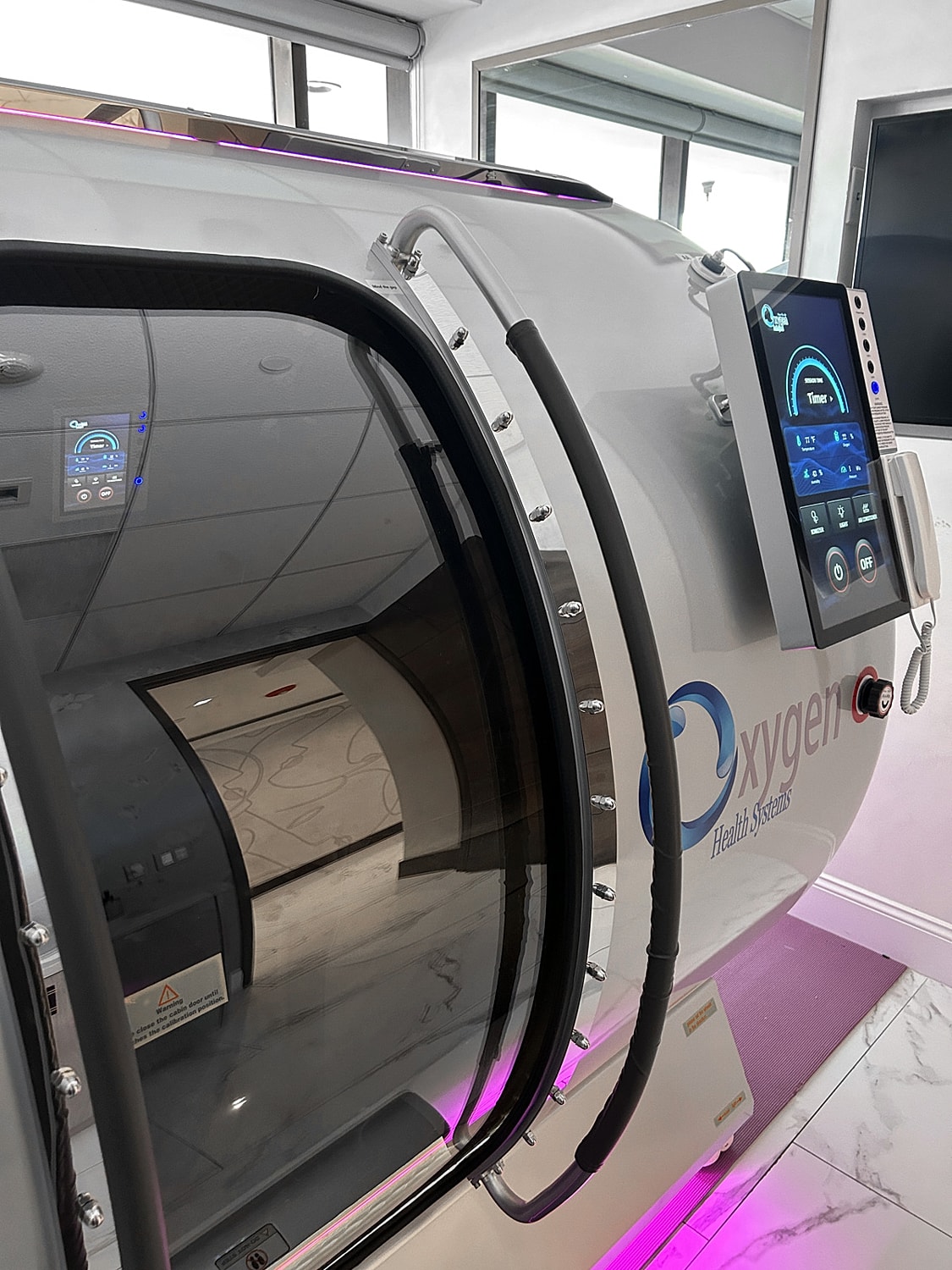
Repeated Hyperbaric Oxygen Therapy exposes the body to short periods of very high oxygen, followed by a return to normal oxygen levels. Interestingly, the body can respond to these repeated changes almost as if it needs to adapt to temporary oxygen stress. Researchers call this the hyperoxic-hypoxic paradox.
That response may activate several of the body’s repair and adaptation systems. Research has associated it with the growth of new blood vessels, changes in how cells produce energy, the release of stem cells involved in tissue repair, and other processes that help the body respond to stress and recover.
These effects do not mean Hyperbaric Oxygen Therapy has been proven to make people live longer. They do help explain why it has become increasingly interesting to longevity researchers. Rather than looking only at lifespan, scientists are studying whether repeated Hyperbaric Oxygen Therapy can influence measurable features of biological aging, tissue health, brain function, and the body’s ability to repair and adapt over time.

In consumer language, it can reasonably be discussed as part of biohacking: using measurable interventions to influence performance, recovery, or biological function. Hyperbaric Oxygen Therapy is more medically grounded than many wellness trends because pressure and oxygen exposure create well-described physiologic effects, but elective longevity use still differs from treating an established medical indication.
For people interested in biohacking, Hyperbaric Oxygen Therapy offers something more concrete than many wellness trends: a controlled treatment that changes oxygen availability and triggers measurable responses in the body. Its potential applications in longevity, recovery, brain function, and physical performance are still being studied, but there is already human research behind several of these areas.

Research into Hyperbaric Oxygen Therapy and aging is still developing, but several human studies have reported measurable changes in areas associated with how the body ages. These findings include changes in telomeres, senescent cells, skin structure, brain function, blood flow, physical performance, and mitochondrial function.
One of the most widely discussed studies involved adults over age 64 who completed 60 Hyperbaric Oxygen Therapy sessions over three months, five days per week. Each session involved 90 minutes at 2.0 ATA, with scheduled air breaks. Researchers reported increases in telomere length in several immune-cell populations and reductions in certain senescent T-cell populations. Read the study on telomere length and senescent cells.
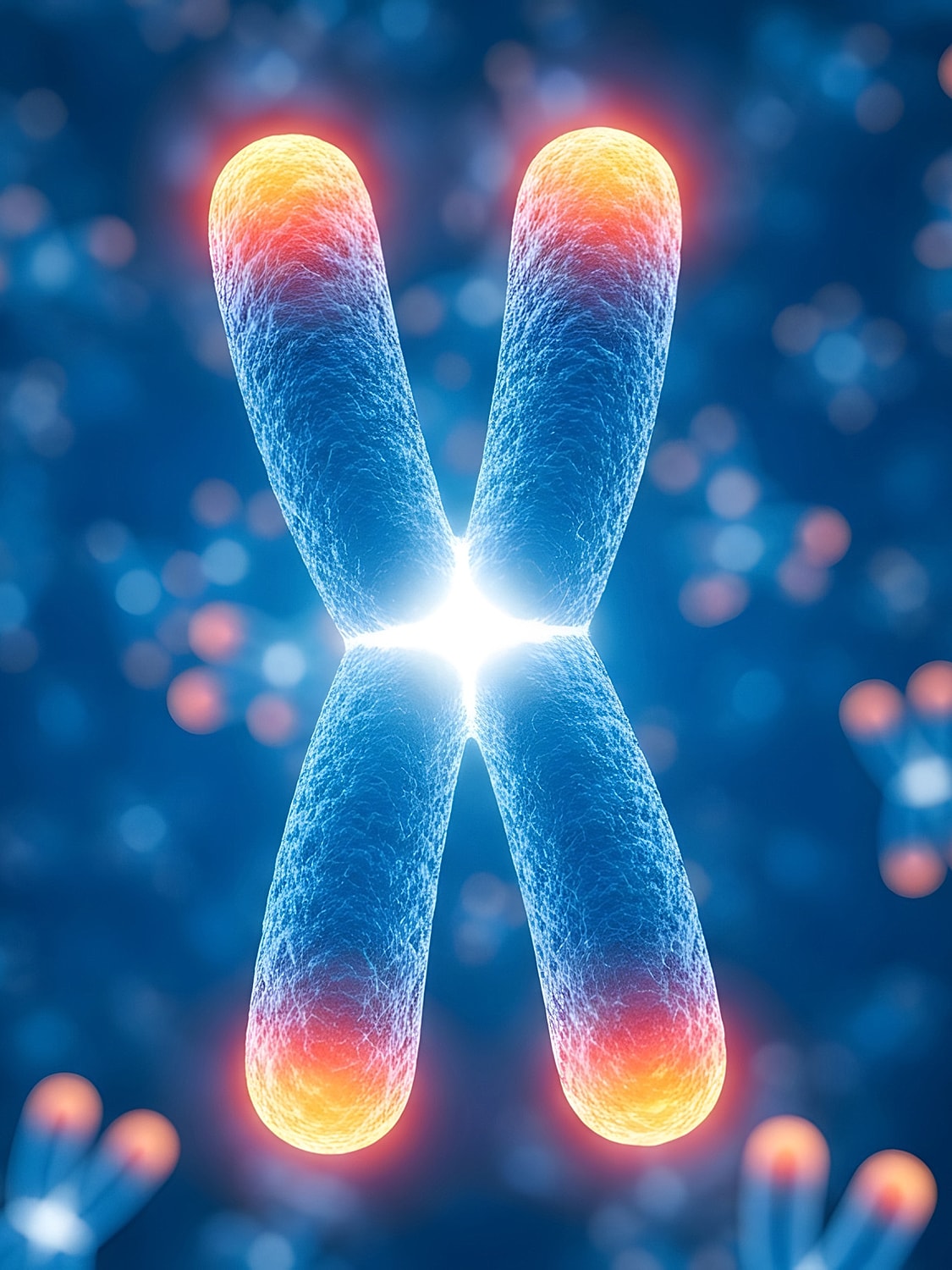
Telomeres are protective structures at the ends of chromosomes that generally become shorter as cells repeatedly divide. Senescent cells, which we discussed earlier, are aging or damaged cells that remain in the body even after they stop functioning normally.
The findings do not mean that a short course of Hyperbaric Oxygen Therapy can reverse aging or that longer telomeres automatically translate into a longer life. What makes the research important is that it provides human evidence that a defined Hyperbaric Oxygen Therapy protocol can influence measurable biological changes associated with aging.
Other studies have explored additional areas of aging, including skin quality, cognitive performance, blood flow to the brain, physical capacity, and mitochondrial function, which we examine below.
A human study evaluating skin biopsies before and after a repeated Hyperbaric Oxygen Therapy protocol reported changes in skin structure and vascular measures associated with aging. The findings add a tissue-level dimension to the longevity discussion and support interest in Hyperbaric Oxygen Therapy for skin quality, collagen-related remodeling, and age-associated changes.
This is more meaningful than simply claiming that oxygen “makes skin younger.” The research measured biological changes after a defined treatment course.
Longevity increasingly includes brain performance, not just lifespan. A randomized study in healthy older adults reported improvements in several cognitive domains together with increases in regional cerebral blood flow following a repeated Hyperbaric Oxygen Therapy protocol. The result does not establish Hyperbaric Oxygen Therapy as a treatment for dementia, but it supports continued research into cognitive aging and neuroplasticity.
A double-blind, placebo-controlled trial in healthy middle-aged master athletes found improvements in several measures of physical performance after a repeated course of Hyperbaric Oxygen Therapy. These included improvements in VO₂ max, a measure of the maximum amount of oxygen the body can use during intense exercise, as well as power and overall exercise capacity.
Researchers also examined the athletes’ mitochondria, the tiny structures inside our cells that convert oxygen and nutrients into the energy cells need to function. Muscle biopsies showed improved mitochondrial respiration, meaning the mitochondria became better at using oxygen to produce energy, along with an increase in a marker associated with mitochondrial mass.
These findings are especially relevant to longevity because maintaining efficient energy production, aerobic capacity, strength, and physical performance can play an important role in remaining active and functional as we age.
Hyperbaric Oxygen Therapy for Wellness, Recovery and Performance

“Biological age” is an umbrella concept rather than a single laboratory value. It refers to how old the body appears to be functioning biologically, which may not always match a person’s chronological age.
Researchers estimate biological age using different markers. One example is an epigenetic clock, which looks at chemical changes attached to DNA that tend to change in predictable patterns as we age. These changes do not alter the DNA sequence itself, but they can influence how genes are turned on or off. By analyzing these patterns, researchers can estimate whether certain tissues or cells appear biologically older or younger than expected for a person’s actual age.
Other markers used in aging research include telomere length, the accumulation of senescent cells, blood-vessel health, inflammation, metabolism, and physical performance.
Hyperbaric Oxygen Therapy has produced interesting findings in several of these areas, including telomeres, senescent cells, skin structure, cognition, circulation, and mitochondrial function. Researchers are continuing to investigate whether these changes may reflect broader effects on biological aging.
The phrase “age reversal” needs a precise definition. Hyperbaric Oxygen Therapy cannot reverse the calendar. What researchers can test is whether specific age-associated markers move in a more youthful direction after treatment. Telomere length, senescent-cell burden, skin characteristics, vascular responses, cognition and mitochondrial performance are examples of measurable outcomes that can be studied.
Living longer has limited value if those additional years come with declining mobility, cognition, independence, or overall quality of life. That is why longevity research increasingly focuses on healthspan, the years a person remains healthy and functional.
For Hyperbaric Oxygen Therapy, the more relevant question is therefore not simply whether it can extend lifespan, but whether it may influence areas that contribute to functioning well as we age, such as brain performance, blood-vessel health, physical capacity, tissue repair, and other measurable aspects of aging.

There is no single established Hyperbaric Oxygen Therapy schedule for longevity or anti-aging. The research showing some of the most interesting aging-related changes has generally used repeated treatments rather than occasional sessions.
For example, the widely cited human study that reported increased telomere length and reductions in senescent cells used 60 Hyperbaric Oxygen Therapy sessions.
That does not mean every longevity patient needs 60 sessions or that fewer sessions offer no value. The number and frequency of treatments should be individualized based on the patient’s goals, health history, tolerance, and clinical recommendation.
It has not been proven to reverse chronological aging or extend human lifespan. Human studies have, however, reported changes in specific aging-related markers, including telomere length, senescent immune cells, skin characteristics, cognition and mitochondrial measures after intensive treatment protocols.
“Anti-aging” is a useful consumer term, but the scientifically accurate interpretation is that researchers are studying whether Hyperbaric Oxygen Therapy can influence measurable biological processes associated with aging. The evidence is promising in several areas but is not equivalent to stopping aging.
Many people place it in the biohacking category because it uses a controlled physiologic stimulus with measurable effects on oxygen exposure, circulation and cellular signaling. It also has established medical uses, which distinguishes it from many purely consumer wellness trends.
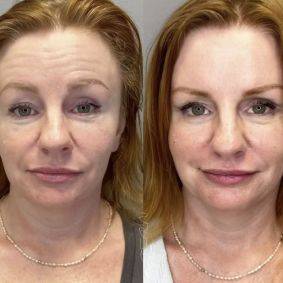
Human research has reported changes in skin-aging parameters after a repeated protocol, but aesthetic appearance was not reduced to a simple “before and after” promise. Skin aging is influenced by genetics, sun exposure, smoking, hormones, nutrition and many other factors.
Sources and further reading:
Hyperbaric Oxygen Therapy Overview
Hyperbaric Oxygen Therapy and Plastic Surgery
How Hyperbaric Oxygen Therapy Works
What to Expect of Your Hyperbaric Oxygen Therapy Treatment
Hyperbaric Oxygen Therapy for Wellness & Recovery
Hachmo et al. — Telomere Length and Senescent Cells After Hyperbaric Oxygen Therapy — Human aging study using a 60-session protocol.
Hachmo et al. — Effects of Hyperbaric Oxygen Therapy on Aging Skin — Human biopsy-based study of skin-aging parameters.
Hadanny et al. — Cognitive Enhancement in Healthy Older Adults — Randomized study linking cognitive changes with cerebral blood-flow changes.
Hadanny et al. — Physical Performance and Mitochondrial Effects in Master Athletes — Double-blind placebo-controlled trial.
Hadanny & Efrati — The Hyperoxic-Hypoxic Paradox — Mechanistic framework for intermittent hyperoxia-related signaling.
Please follow us @drsiamakagha to learn what makes Dr. Agha unique and special, learn from his educational podcasts and consults, and view precision surgery after surgery.