
Why GLP-1 weight loss can flatten and deflate the buttocks, what exercise can fix, and the surgical options to consider.
"Ozempic butt" is a nickname, not a medical diagnosis. It describes buttocks that look flatter, deflated, or saggy after rapid weight loss on GLP-1 medications. It comes from fat loss, some muscle loss, and loose skin. Glute training can rebuild muscle but can't remove loose skin.
The right surgery depends on how much donor fat and loose skin you have, and your weight should be stable first.
Many people losing weight on GLP-1 medications such as semaglutide (Ozempic, Wegovy) are thrilled with how they feel. Then they catch their reflection from behind and notice something unexpected: the buttocks look flatter, looser, or lower than before. That change has picked up a popular name, "Ozempic butt."
It's a real and common concern. The American Society of Plastic Surgeons describes it as a loss of volume and shape in the buttocks, along with reduced skin elasticity, after significant weight loss.
This guide explains why it happens, what exercise can and can't do, and the surgical options that can help. It reflects the approach of board-certified plastic surgeon Dr. Siamak Agha in Newport Beach, a post-weight-loss body contouring specialist.
What Is "Ozempic Butt"?
Ozempic butt is an informal term for buttocks that lose volume, shape, and firmness after rapid weight loss on GLP-1 medications. The ASPS links it to both lost volume and skin laxity, meaning loose skin. The same changes can happen after any major weight loss.
A Nickname, Not a Medical Diagnosis
There's nothing unique about Ozempic that targets the buttocks. The name simply reflects how many people are now losing weight quickly with these medications. The underlying changes are the same ones surgeons have long seen after bariatric surgery or other significant weight loss.
Flat, Deflated, or Sagging: What Patients Notice
Patients describe several changes. Some see a flatter shape with less projection. Others notice deflation, where the skin looks emptier. Many see sagging, with the buttocks sitting lower and a fold forming where they meet the thighs. Often it's a mix of all three.
Why GLP-1 Weight Loss Changes the Buttocks
GLP-1 weight loss changes the buttocks in three main ways. You lose fat that once gave the area its fullness. You may lose some muscle along with the fat. And skin that was stretched may not tighten back. How much each matters depends on your age, genetics, and how much weight you lose.
Fat Loss and Deflation
The buttocks get much of their rounded shape from fat. When that fat shrinks, the area loses volume and projection, even if the underlying muscle stays the same.
Muscle Loss During Rapid Weight Loss
Rapid weight loss can include some loss of lean mass. The landmark STEP 1 trial published in the New England Journal of Medicine found that while fat mass fell substantially with semaglutide, lean mass also decreased in absolute terms. Cleveland Clinic explains that muscle loss comes with weight loss in general, not from the medication itself.
Skin Elasticity, Age, and Genetics
Skin that has stretched over time may not recoil when volume disappears. Age, genetics, sun exposure, and the amount and speed of weight loss all affect how well your skin bounces back.
Can Glute Training and Protein Fix Ozempic Butt?
Glute training and adequate protein can make a real difference by rebuilding muscle and improving shape. They can't remove loose skin or fully replace lost fat volume. For many people, exercise improves the result but doesn't completely restore the buttocks to how they looked before weight loss.
What Strength Training and Protein Can Do
Strength training helps preserve and rebuild muscle during and after weight loss. Cleveland Clinic recommends strength training and enough protein and suggests working with a dietitian. Exercises that target the glutes can improve firmness and projection.
What Exercise Can't Do
Exercise builds muscle, but it can't shrink loose skin or create fat volume where it's been lost. If your concern is mainly sagging skin, a lower buttock fold, or significant deflation, surgery is often the only way to fully address it.
Glute training can rebuild muscle, but no workout can remove loose skin or replace lost fat.
Surgical Options for a Flat or Saggy Butt After Weight Loss
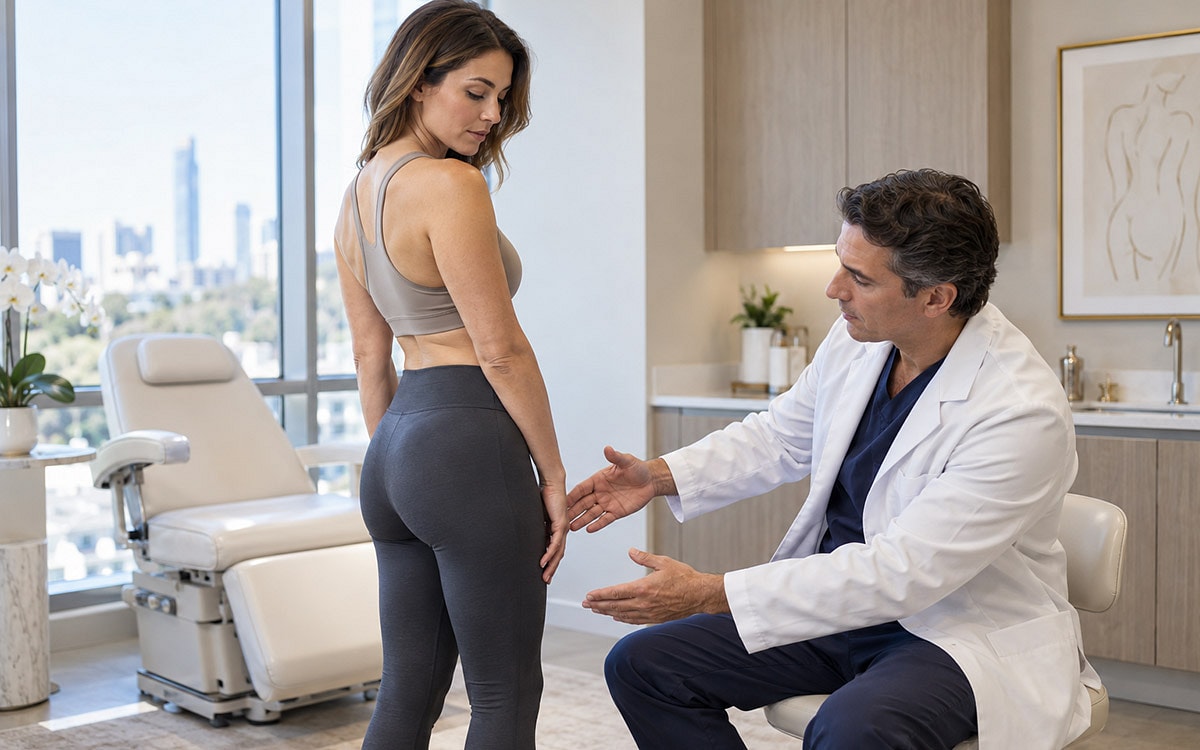
The best surgical option for Ozempic butt depends on two things: how much fat you have available to transfer and how much loose skin needs to be removed. Some patients need added volume, some need a lift, and many benefit from both. A careful exam determines which approach fits your body.
BBL After Weight Loss: Do You Have Enough Donor Fat?
A Brazilian butt lift uses your own fat, removed with liposuction from areas like the abdomen or flanks, to add volume and shape. It requires enough fat in donor areas for grafting. After major weight loss, some patients simply don't have enough fat available, which can limit how much a BBL can achieve.
Buttock Implants When Fat Is Scarce
For patients with little donor fat, buttock implants can add projection and shape. Implants can work for patients with minimal or no fat to transfer. Your surgeon will discuss the benefits, recovery, and risks compared with fat grafting.
Buttock Lift for Sagging Skin
When loose skin is the main concern, a buttock lift removes excess skin and lifts the buttocks to a higher, firmer position. Dr. Agha's buttocks lift after weight loss is a high-definition approach. Fat from the lower back is prepared as fat pads, kept connected to its blood supply, and rotated into the buttocks for added volume, with liposuctioned fat used to refine the shape.
Lower Body Lift for Laxity Around the Whole Torso
If loose skin wraps around your hips, flanks, and abdomen as well, a lower body lift addresses the entire lower torso in one surgery. It lifts the buttocks and tightens the abdomen and thighs. For many patients after major weight loss, this procedure offers the most complete result.
The right fix for Ozempic butt depends on how much fat and loose skin remain.
BBL Safety When Fat Transfer Is the Plan
If your plan includes fat transfer to the buttocks, safety technique matters. A joint safety advisory from leading plastic surgery organizations states that fat should be placed only in the layer under the skin, above the muscle, and recommends real-time ultrasound to guide placement.
Choosing a board-certified plastic surgeon who follows these standards is one of the most important safety decisions you'll make. For a closer look at the history and guidelines, read our Brazilian butt lift safety guide.
Timing Ozempic Butt Surgery: Weight Stability First
Timing plays a major role in your results. Surgery works best once your weight has stabilized, because further weight loss after surgery can reduce volume and change your shape.
Why Stable Weight Matters
If you lose more weight after fat transfer, some of that transferred fat may shrink as well.
Loose skin can also return if your weight keeps dropping. The One Plastic Surgery Center recommends maintaining a stable weight for at least three months before body contouring after GLP-1 weight loss. Your surgeon will confirm the right timing for you.
Choosing a Post-Weight-Loss Specialist
Body contouring after major weight loss calls for specialized experience. Skin quality, fat distribution, and nutrition all differ from typical cosmetic patients. Board-certified plastic surgeon Dr. Siamak Agha has performed more than 500 body lifts and focuses on post-weight-loss contouring in Newport Beach. He evaluates each patient's skin, fat, and goals to recommend the safest, most natural-looking plan.
The Bottom Line on Ozempic Butt
Ozempic butt results from lost fat, some lost muscle, and loose skin after rapid weight loss.
Glute training and protein can help, but they can't remove loose skin or fully replace lost volume. Surgical options range from fat transfer and implants to a buttock lift or lower body lift, depending on your anatomy.
Ready to find out if buttock contouring is right for you? Schedule a consultation with board-certified plastic surgeon Dr. Siamak Agha at The One Plastic Surgery Center in Newport Beach to discuss your goals and options.
Frequently Asked Questions
Is Ozempic butt permanent?
Lost fat and loose skin usually don't fully return to their previous state on their own. Strength training can improve muscle tone and shape, but loose skin generally remains. Surgical options can restore volume and lift when exercise isn't enough.
Can I get a BBL after losing a lot of weight on a GLP-1?
Possibly, but it depends on how much donor fat you have. After major weight loss, some patients don't have enough fat for a meaningful BBL. In those cases, implants or a buttock lift that uses your own tissue may be better options.
Will squats fix a flat butt after weight loss?
Squats and other glute exercises can build muscle and improve firmness and shape. They can't remove loose skin or replace lost fat volume. For deflation or sagging, surgery may be needed to fully restore the buttocks.
How long should my weight be stable before a buttock lift?
The One Plastic Surgery Center recommends maintaining a stable weight for at least three months before body contouring after GLP-1 weight loss. Your surgeon may recommend a different timeline based on your health and weight-loss history.
What is the difference between a buttock lift and a lower body lift?
A buttock lift focuses on lifting and reshaping the buttocks. A lower body lift addresses loose skin around the entire lower torso, including the abdomen, hips, flanks, and buttocks, in one surgery. The right choice depends on how far your loose skin extends.
Medical disclaimer: This article is for educational purposes only and is not medical advice. Results and candidacy vary by patient, and a consultation with a qualified plastic surgeon is required to determine which buttock procedure is right for you.