


The real risks, the safety standards that followed, and the questions to ask any BBL surgeon in Newport Beach.
The Brazilian butt lift (BBL) moves your fat to the buttocks for a fuller shape. In 2018, plastic surgery societies warned that BBL carried a higher death risk than other cosmetic procedures, mainly from fat entering large veins deep in the muscle. Safety standards now call for injecting fat only above the muscle, and many experts recommend real-time ultrasound guidance. Choosing an experienced board-certified plastic surgeon and asking the right questions are essential.
If you've been thinking about a BBL, you've probably also seen the headlines. For a while, the Brazilian butt lift had a reputation as one of the riskiest procedures in cosmetic surgery, and that reputation made many people understandably nervous. Brazilian butt lift safety is a fair concern, and it deserves a clear, honest explanation.
At The One Plastic Surgery Center in Newport Beach, board-certified plastic surgeon Dr. Siamak Agha believes that patients considering a BBL should understand both the risks and the safety standards that have developed in response. Informed patients make better decisions and ask better questions.
This guide explains why BBL safety became a national issue, what causes the most serious complications, what has changed, and what to ask any surgeon before you book.
Key Takeaways
- Brazilian butt lift safety became a national concern after a 2018 warning estimated that mortality could be as high as 1 in 3,000 procedures.
- The most serious BBL risk is pulmonary fat embolism, which can occur when fat enters large veins beneath or within the gluteal muscle.
- Current safety guidance calls for injecting fat only into the subcutaneous layer, above the muscle, and never into or below it.
- Many experts recommend real-time ultrasound to confirm fat is placed in the safe layer during the procedure.
- Choosing a board-certified plastic surgeon and asking specific technique questions are among the most important steps you can take.
Why BBL Safety Became a National Conversation
The BBL's safety record became a major concern in the late 2010s. In 2018, a multi-society task force including the American Society of Plastic Surgeons issued an urgent warning estimating that gluteal fat grafting mortality could be as high as 1 in 3,000, far higher than other cosmetic procedures.
At the same time, BBL demand was rising quickly. More providers began offering the procedure, including some without formal plastic surgery training. The warning urged patients to seek board-certified plastic surgeons and to discuss risks openly before surgery.
That warning was a turning point. It led to research, technique changes, and new safety standards that continue to shape how responsible surgeons perform the procedure today.
What Causes the Most Serious BBL Risk
The most dangerous BBL complication is pulmonary fat embolism, where fat enters the bloodstream and travels to the lungs. This happens most often when fat is injected into or beneath the gluteal muscle, where large veins can be injured.
The buttock contains large blood vessels deep within and beneath the gluteal muscles. If fat is injected into this deeper area, it can enter a damaged vein and travel to the heart and lungs, blocking blood flow. A study in the Aesthetic Surgery Journal identified pulmonary fat embolism as the cause of the vast majority of BBL deaths.
The key finding from this research is simple but important: the depth of fat placement matters most. Fat placed in the subcutaneous layer, the fatty tissue between the skin and the muscle, is far less likely to reach these large veins.
Other BBL risks are similar to those of liposuction and fat grafting, including infection, bleeding, seroma (fluid buildup), fat necrosis (firm areas where some grafted fat doesn't survive), contour irregularities, and asymmetry.
When it comes to BBL safety, where the fat goes matters more than how much.
The Safety Standards That Followed
Since the 2018 warning, plastic surgery organizations have published guidance to reduce the risk of fat embolism. These standards focus on where fat is injected, how the surgeon confirms its placement, and how the overall procedure is planned.
Subcutaneous-Only Injection
The most important standard is to inject fat only into the subcutaneous layer, never into or beneath the gluteal muscle. The Aesthetic Society's gluteal fat grafting safety advisory emphasizes this approach, along with technique details such as cannula size and angle that help keep fat out of deep tissue.
Real-Time Ultrasound Guidance
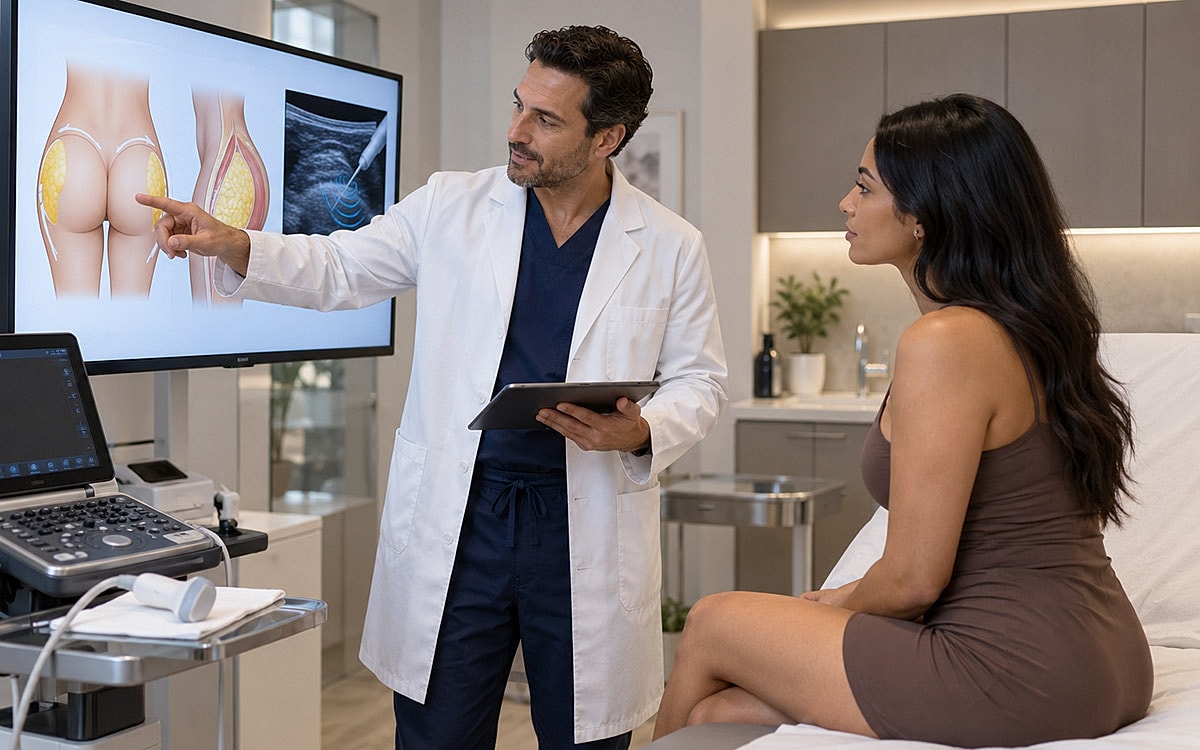
Many experts now recommend using real-time ultrasound during the procedure. Ultrasound lets the surgeon see the tip of the cannula and confirm that fat is placed above the muscle. The Aesthetic Surgery Journal study notes that Florida made ultrasound guidance a requirement in 2023, and a joint safety statement from ASPS and partner societies highlights its role in safer technique.
Careful Planning and Patient Selection
Responsible planning also includes reviewing your health history, keeping the total length of surgery reasonable, and choosing an accredited surgical facility. Some surgeons limit the number of procedures they combine with a BBL, since longer operations can add risk.
Who Is a Good BBL Candidate?
A good BBL candidate is in good overall health, has enough fat to harvest from areas like the abdomen, flanks, or back, and has realistic expectations about the result. Nonsmokers and people at a stable weight tend to heal best.
You may be a suitable candidate if you:
- Want more fullness or projection in the buttocks
- Have enough donor fat for liposuction
- Are at or near a stable, healthy weight
- Can follow strict recovery instructions, including sitting restrictions
If you don't have enough donor fat, buttock implants may be an alternative. Our buttock enhancement page compares options.
Because fat is harvested with liposuction, a BBL also contours the donor areas. Many patients pair it with Lipo 360 to shape the waist and back, which can enhance the overall silhouette.
BBL Recovery: What to Expect
BBL recovery centers on protecting the newly grafted fat. For the first several weeks, you'll avoid putting direct pressure on your buttocks and wear a compression garment to support healing in the liposuction areas.
According to our Brazilian butt lift page, typical recovery instructions include:
- Sleeping on your stomach or side at first
- Avoiding direct sitting for more than a few minutes at a time
- Using a soft cushion when sitting is necessary
- Wearing a compression garment around the clock for about four to six weeks
Most patients return to light activity and desk work within about two weeks, with modifications for sitting. Swelling decreases gradually, and it may take several months to see the final shape as some grafted fat is naturally reabsorbed.
Walking soon after surgery is encouraged, as it helps circulation and lowers the risk of blood clots.
Know the warning signs, too. Sudden shortness of breath, chest pain, a racing heartbeat, confusion, or leg swelling and pain after surgery can signal a serious problem such as a blood clot or embolism. These symptoms require emergency care right away, so call 911 rather than waiting for a follow-up visit.
Less urgent but still important signs include increasing redness, warmth, fever, or drainage from incisions, which may point to infection. Your surgical team should give you clear instructions on who to call and when. Keeping all follow-up appointments helps your surgeon spot and address issues early.
Questions to Ask Your BBL Surgeon in Newport Beach
Asking direct questions is one of the best ways to protect yourself. A qualified surgeon will welcome them and answer clearly.
Consider asking:
- Are you certified by the American Board of Plastic Surgery?
- Where do you inject fat, and how do you make sure it stays above the muscle?
- Do you use real-time ultrasound during fat grafting?
- How many BBL procedures do you perform each year?
- Where will my surgery take place, and is the facility accredited?
- Who administers anesthesia, and what are their credentials?
- How do you decide how much fat is safe to transfer?
- What is your plan if a complication occurs?
Be cautious of offers that seem unusually cheap, heavily discounted, or rushed. A lower price is never worth compromising on safety.
Medical disclaimer: This article is for educational purposes only and is not medical advice. All surgery carries risk, and results and candidacy vary by patient. A consultation is required to determine whether a Brazilian butt lift is appropriate for you.
Conclusion
Brazilian butt lift safety has changed meaningfully since the warnings of the late 2010s. The research made one thing clear: fat must stay above the muscle, and surgeons need reliable ways to confirm where it goes. Subcutaneous-only injection, ultrasound guidance, and careful patient selection are now central to responsible practice.
For patients, the best protection is choosing an experienced board-certified plastic surgeon and asking specific questions about technique.
Ready to find out if a Brazilian butt lift is right for you? Schedule a consultation with board-certified plastic surgeon Dr. Siamak Agha at The One Plastic Surgery Center in Newport Beach to discuss your goals and options.
Frequently Asked Questions
Is a Brazilian butt lift safe?
A BBL carries real risks, including a rare but serious risk of fat embolism. Safety standards that limit fat injection to the layer above the muscle, along with ultrasound guidance and careful patient selection, are designed to reduce that risk. Choosing a board-certified plastic surgeon is essential.
What is the biggest risk of a BBL?
The most serious risk is pulmonary fat embolism, when fat enters large veins in or beneath the gluteal muscle and travels to the lungs. Injecting fat only into the subcutaneous layer is the key safety measure to reduce this risk.
What does subcutaneous fat grafting mean?
Subcutaneous fat grafting means placing fat in the layer between the skin and the muscle. This layer does not contain the large deep veins that make fat embolism more likely. Current safety guidance recommends injecting fat only in this layer.
How long can't you sit after a BBL?
Most surgeons recommend avoiding direct sitting on the buttocks for several weeks after a BBL. When sitting is necessary, a soft cushion that shifts pressure to the thighs is often used. Your surgeon will give you a specific timeline.
What should I ask a BBL surgeon before surgery?
Ask whether they are certified by the American Board of Plastic Surgery, where they inject fat, whether they use real-time ultrasound, and where the surgery will take place. You should also ask about their experience and how they handle complications.






