

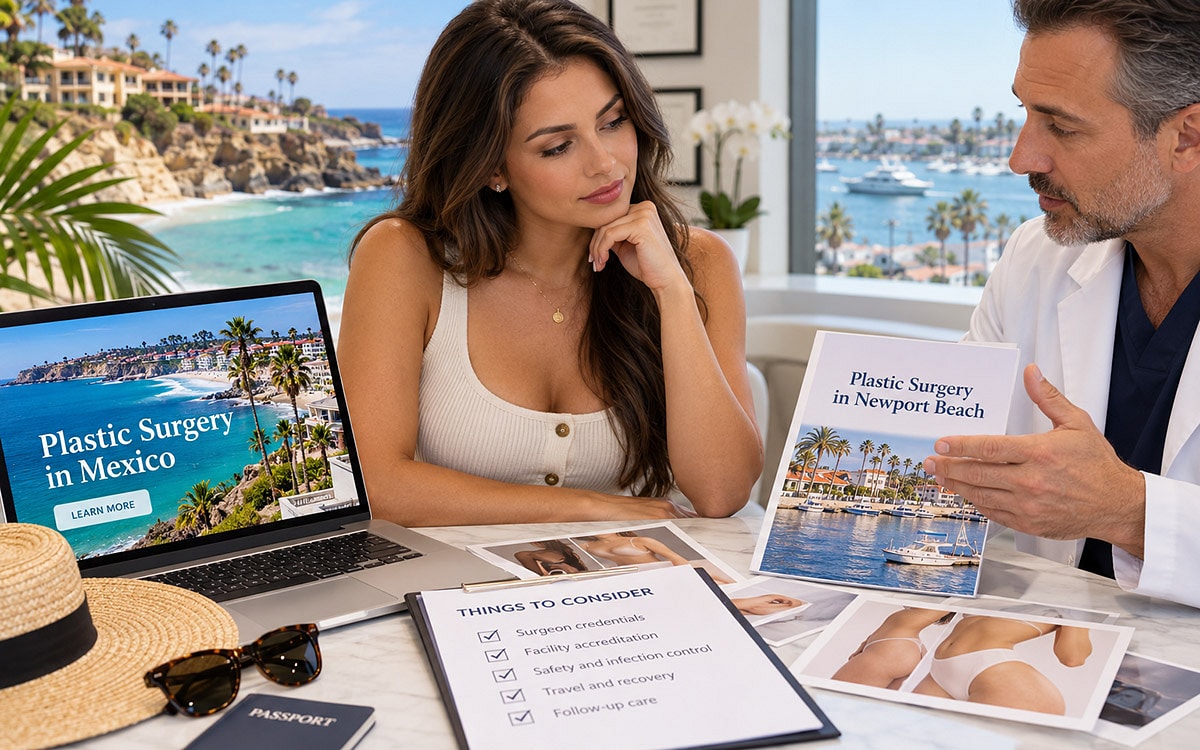
What the CDC and ASPS say about traveling for cosmetic surgery and how to vet any surgeon anywhere.
Skilled, certified plastic surgeons and accredited facilities exist in Mexico, just as they do in the United States. The added risks of surgery abroad come mostly from the trip itself: infection control, flying soon after surgery, and limited follow-up care once you're home.
Whether you're considering Mexico or Newport Beach, vet the surgeon and facility the same careful way.
For many Southern California residents, plastic surgery in Mexico can seem appealing. Tijuana is a short drive away, and you can find all-inclusive packages widely advertised, with lower prices making a procedure feel more within reach. Those are understandable reasons to look across the border.
At the same time, choosing where to have surgery is one of the most important decisions in your journey. This guide offers a balanced, factual look at what health authorities say about traveling for cosmetic surgery, so you can decide with confidence.
It includes perspective from board-certified plastic surgeon Dr. Siamak Agha in Newport Beach, who also sees patients seeking second opinions and revision care after procedures performed elsewhere.
Why People Consider Plastic Surgery in Mexico
People consider plastic surgery in Mexico mainly for lower costs, bundled packages, and proximity to Southern California. Some packages combine surgery, a hotel stay, and transportation into one price. For patients near the border, the short travel time can make it feel like a practical choice.
Cost and All-Inclusive Packages
Lower prices are often the biggest draw. Packages may bundle surgery, anesthesia, lodging, and transportation. It's worth reviewing exactly what's included, especially follow-up visits and care if a complication arises after you return home.
Being Close to Southern California
For Orange County residents, Mexico is close compared with many medical tourism destinations. That proximity can make travel easier, though it doesn't change the importance of planning for recovery and follow-up care.
What the CDC Says About Medical Tourism Risks
The Centers for Disease Control and Prevention notes that traveling for medical care carries specific risks, including infections, communication challenges, and differences in standards of care. It also notes that highly drug-resistant bacteria and fungi have caused outbreaks among medical tourists. These risks apply to travel anywhere, not only to Mexico.
Infections, Including Drug-Resistant Bacteria and Fungi
The CDC highlights infections as a key concern for medical travelers. The ASPS also notes that infection is the most common complication among patients who travel for cosmetic surgery.
Communication and Differences in Standards
Language barriers can lead to misunderstandings about your care and instructions. The CDC also notes that standards for medications, devices, and facilities can vary between countries, and the ASPS notes that some devices used abroad may not be FDA-approved.
Lessons From CDC Health Alerts
In 2023, the CDC issued a health alert about fungal meningitis among patients who had procedures under epidural anesthesia at two clinics in Matamoros, Mexico. In 2026, the CDC also highlighted a study of adverse outcomes linked to travel-related cosmetic procedures, which included cases at both domestic and international centers. The takeaway is that careful vetting matters everywhere.
The question isn't which country is safest; it's whether this surgeon and facility meet the standards you'd expect anywhere.
Is Plastic Surgery in Mexico Safe? It Depends on the Surgeon and Facility
In Mexico, qualified surgeons in accredited facilities can perform plastic surgery safely.
Safety depends far more on the individual surgeon, the facility, and the follow-up plan than on the country. The ASPS notes that it can be harder to assess a foreign surgeon's credentials, which makes careful research especially important.
Board Certification at Home and Abroad
In the United States, look for certification by the American Board of Plastic Surgery. If you're considering a surgeon in another country, verify their certification with that country's recognized plastic surgery board. Our guides on how to verify a plastic surgeon's credentials and what board certification really means can help.
What Facility Accreditation Does and Doesn't Guarantee
Accreditation shows that a facility meets certain standards for safety and equipment. However, the CDC notes that accreditation does not guarantee a positive outcome. It's one important factor among several.
Flying After Surgery: Blood Clot and Recovery Risks
Traveling soon after surgery adds risk, especially blood clots. Long periods of sitting during travel can increase the chance of deep vein thrombosis, a clot in a deep vein. Health organizations recommend waiting before you fly, although their timelines differ.
How Long to Wait Before Flying
The CDC suggests waiting 10 to 14 days after major surgery before flying. The ASPS suggests waiting 5 to 7 days after body procedures and 7 to 10 days after facial procedures before a long flight. Always follow the advice of the surgeon who performed your procedure.
Why Vacation Activities and Recovery Don't Mix
Some packages are marketed as a chance to recover somewhere scenic. But healing usually means rest, limited activity, and avoiding sun, swimming, and alcohol. Planning your trip around recovery, not sightseeing, helps protect your results.
Continuity of Care When a Complication Shows Up at Home
Recovery doesn't end when you leave the surgeon's office. Many complications, such as infections, fluid buildup, or wound problems, appear days or weeks later. If you had surgery far from home, it can be harder to see your surgeon quickly, and local doctors may not have your surgical records. The CDC notes that insurance may not cover follow-up care for complications.
Who Handles Your Follow-Up Visits?
Before booking any procedure, ask who will see you for follow-up appointments, how to reach the surgeon after you return home, and what happens if a problem develops. The ASPS notes that packages often include little follow-up care.
Revision Surgery Considerations
When results don't turn out as planned, revision surgery can be more complex than the original procedure. Board-certified plastic surgeon Dr. Siamak Agha regularly evaluates patients seeking revision plastic surgery after procedures performed elsewhere. Starting with a carefully vetted surgeon can help avoid the need for revision altogether.
Your recovery doesn't end when the flight lands, so plan for who will care for you at home.
Questions to Ask Any Surgeon in Mexico or Newport Beach
Wherever you're considering surgery, the same questions help you evaluate a surgeon and facility:
- Are you board certified in plastic surgery, and by which board?
- Is the facility accredited, and by which organization?
- Who will administer anesthesia, and what are their qualifications?
- How many of this specific procedure do you perform each year?
- What does the price include, and what's billed separately?
- Who provides follow-up care, and how do I reach you after I go home?
- What happens if I develop a complication or need a revision?
For a more detailed checklist, see our guide to the questions to ask before booking plastic surgery in Newport Beach.
Why Some Orange County Patients Choose Local Care
For many Orange County residents, having surgery close to home offers peace of mind. Local care makes it easier to attend follow-up visits, reach your surgeon quickly with questions, and get prompt attention if something doesn't feel right during recovery.
Easy Access for Follow-Up
When your surgeon is nearby, follow-up appointments fit into your normal routine. If swelling, drainage, or another concern comes up, the team that performed your procedure can see you quickly.
Accountability and Oversight
In California, the Medical Board of California licenses physicians, and you can verify a surgeon's license and board certification online. Having your care in one place also means your surgical records, history, and recovery plan stay together.
The Bottom Line on Plastic Surgery in Mexico
Qualified surgeons can perform plastic surgery in Mexico safely, and many patients have good experiences. The added risks come mainly from travel, flying after surgery, and limited follow-up once you're home. Whatever you choose, verify the surgeon's credentials, the facility's accreditation, and the follow-up plan before you book.
Ready to explore your options close to home, or looking for a second opinion or revision care? Schedule a consultation with board-certified plastic surgeon Dr. Siamak Agha at The One Plastic Surgery Center in Newport Beach to discuss your goals and options.
Frequently Asked Questions
Is plastic surgery in Mexico safe?
It can be. Skilled, certified surgeons and accredited facilities exist in Mexico. Safety depends mostly on the individual surgeon, the facility, the anesthesia provider, and your follow-up plan. The CDC and ASPS note added risks from travel, including infection and limited follow-up care, so careful research is essential.
How soon can I fly home after cosmetic surgery?
Guidance varies. The CDC suggests waiting 10 to 14 days after major surgery, while the ASPS suggests 5 to 7 days after body procedures and 7 to 10 days after facial procedures before a long flight. Always follow your own surgeon's advice.
How do I verify a surgeon in Mexico is certified?
Ask which plastic surgery board certified the surgeon, then confirm it directly with that country's recognized plastic surgery board. Also confirm the facility's accreditation and the qualifications of the anesthesia provider before booking.
Will a US surgeon treat complications from surgery abroad?
Many US plastic surgeons, including Dr. Agha, evaluate patients with complications or concerns after surgery performed elsewhere. However, care for complications may not be covered by insurance, so it's important to plan for follow-up before you travel.
Does facility accreditation guarantee a good result?
No. Accreditation shows a facility meets certain safety standards, but the CDC notes it doesn't guarantee a positive outcome. The surgeon's experience, the anesthesia team, and your follow-up care also matter.
Medical disclaimer: This article is for educational purposes only and is not medical advice. Results and candidacy vary by patient, and a consultation with a qualified plastic surgeon is required to determine which procedure and setting are right for you.