
"Board certified" gets used loosely in marketing, but for plastic surgery it has one specific meaning: certification by the American Board of Plastic Surgery (ABPS), the only board recognized by the American Board of Medical Specialties for this specialty. It requires years of accredited residency training, passing written and oral exams, and ongoing recertification. This guide breaks down what ABPS certification actually requires, how it differs from other credentials you'll see advertised, and exactly how to verify a surgeon's certification before you book a consultation.
You've been scrolling through surgeon websites for an hour, and every single one claims some version of "board certified." One says "board-certified cosmetic surgeon." Another says board-certified in facial plastic surgery. A third just says "board certified," full stop, with no specialty listed at all. They can't all mean the same thing, and if you're trying to choose a board-certified plastic surgeon for a facelift, breast procedure, or body contouring surgery, that ambiguity is precisely the kind of thing that should give you pause before you commit to anyone. In Newport Beach, where the concentration of aesthetic practices is high and the marketing polish is even higher, it's worth slowing down long enough to understand what the phrase actually means, not just what it implies.
This isn't about scaring you away from a procedure you've been thinking about for years. It's about arming you with the same question every experienced patient eventually learns to ask: certified by whom, in what, and how do I check?
What "Board Certified" Is Supposed to Mean
Quick take: In medicine, "board certified" is supposed to signal that a physician completed accredited residency training in a specific specialty and passed rigorous exams administered by a recognized certifying board, not that they simply passed some exam somewhere.
The problem is that the phrase itself isn't a protected term. Any physician with a medical license can describe themselves as "board certified" as long as they hold certification from some board, even one unrelated to the procedure they're performing. A family medicine physician who took a weekend course in cosmetic injections and later earned certification from a board in an entirely different field can still, technically, call themselves board certified.
This claim is accurate in a narrow sense, but it is misleading in the way that actually matters to you as a patient.
- A credential is only meaningful if it's tied to the specific surgery you're considering
- "Board certified" without a named specialty attached is a red flag worth asking about directly
- The certifying board matters as much as the certification itself
Not all "board-certified" claims are created equal. The specialty behind the certification is what actually protects you.
What the American Board of Plastic Surgery Actually Requires
Quick take: The American Board of Plastic Surgery (ABPS) is the only plastic surgery certifying board recognized by the American Board of Medical Specialties, and earning that certification takes years of accredited surgical training well beyond medical school.
To even sit for ABPS exams, a physician has to complete medical school followed by a minimum of six years of accredited surgical residency, including dedicated training specifically in plastic and reconstructive surgery. Many surgeons complete a general surgery residency first before moving into a formal plastic surgery residency, or they enter through an integrated plastic surgery residency track that folds both together. Either path represents a substantial, structured training pipeline that state medical licensure alone does not require.
- At least six years of accredited residency training after medical school, including dedicated plastic surgery training
- A written qualifying exam covering the full breadth of plastic and reconstructive surgery
- An oral certifying exam built from a real case list the surgeon submits from their own recent practice
- Recertification through the Maintenance of Certification process on an ongoing basis
Once training is complete, candidates must pass a written qualifying exam before moving on to an oral exam where they defend real surgical cases from their practice in front of board examiners, a process the American Society of Plastic Surgeons describes as requiring at least three years of dedicated plastic surgery residency training on top of broader surgical training.
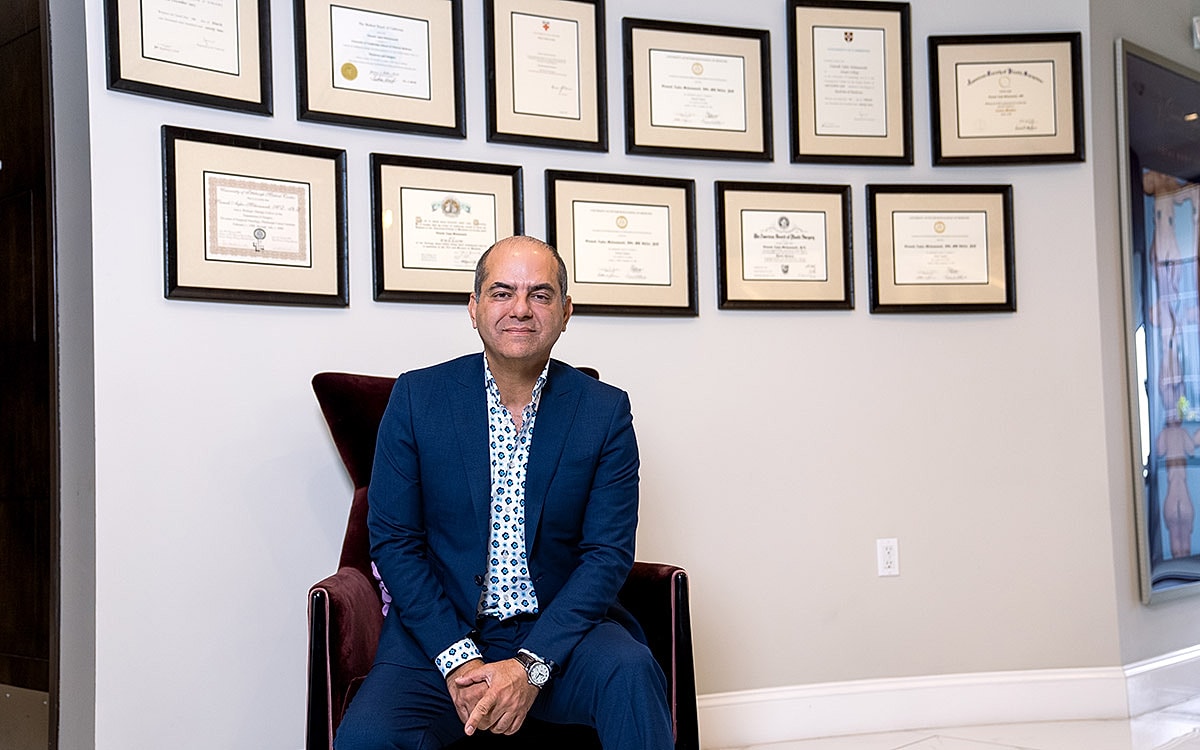
Board-certified plastic surgeon Dr. Siamak Agha of The One Plastic Surgery Center in Newport Beach represents exactly this kind of credential: training completed through an accredited residency, exams passed, and certification maintained over time rather than earned once and never revisited.
Why ABPS Certification Is Different From Other "Board Certified" Claims
Quick take: Certification bodies with names like "cosmetic surgery" in them are not recognized by the American Board of Medical Specialties and do not require a plastic surgery residency at all, which is a meaningfully different standard than ABPS certification.
This is the distinction that confuses most prospective patients, and understandably so, because the language sounds nearly identical on a glossy website. A surgeon can be legitimately board-certified in something like general surgery, emergency medicine, or family practice and still market themselves as a "cosmetic surgeon" performing facelifts or body contouring without ever completing a plastic surgery residency. Some certifications marketed toward cosmetic procedures set their own training and exam standards independently, and those standards don't require the years of plastic surgery-specific residency training that ABPS mandates.
- ABPS is the only plastic surgery board recognized by the American Board of Medical Specialties (ABMS)
- Certification from a board without ABMS recognition does not require a plastic surgery residency
- A physician can hold a legitimate medical board certification in an unrelated field and still legally perform cosmetic procedures in many states
- "Cosmetic surgeon" is a descriptive marketing term, not a protected medical specialty designation
None of this means every non-ABPS-certified provider is unqualified for every procedure.
But it does mean the burden is on you to ask precisely which board certified someone, because the phrase alone doesn't tell you.
How to Actually Verify a Surgeon's Certification
Quick take: You can verify ABPS certification directly and for free in a few minutes, and doing so before your first consultation makes it easier to vet a surgeon's credentials.
Verification doesn't require making calls or relying on a surgeon's word. The ABPS maintains a public lookup tool specifically so patients can confirm certification status themselves, and the American Board of Medical Specialties runs a parallel tool covering certification across all recognized medical specialties.
- Search the surgeon's name directly through the ABPS "Is Your Surgeon Certified" tool at abplasticsurgery.org
- Cross-check using the ABMS Certification Matters database, which tracks certification records across all ABMS member boards
- Confirm the surgeon operates in an accredited surgical facility, since the Aesthetic Society notes accreditation status is a separate but related safety marker
- Ask directly during your consultation which board certified the surgeon and in what specialty, and expect a clear, specific answer
- Check whether the surgeon is listed as a member of ASPS or the Aesthetic Society, both of which require ABPS certification for membership
Verifying credentials takes a few minutes online and can spare you a much longer recovery from the wrong decision.
Why This Distinction Matters Beyond a Website Badge
Quick take: Certification isn't a formality; it reflects whether a surgeon has demonstrated hands-on competence in the specific anatomy, techniques, and complication management relevant to the procedure you're considering.
Plastic surgery residency training is built around exposure to a broad range of aesthetic and reconstructive procedures under supervision, followed by an oral exam process where the surgeon has to walk examiners through real decision-making from their own recent cases.
That structure exists because the margin for error in facial and body procedures is unforgiving, and complication management requires training that isn't always covered in weekend certificate courses aimed at physicians from unrelated specialties.
- Depth of training affects how a surgeon plans for your specific anatomy and goals
- Oral exams require surgeons to defend real clinical decisions, not just pass a written test
- Ongoing Maintenance of Certification means credentials stay current rather than static
- Facility accreditation and certification together indicate a surgeon operates under recognized safety standards
This area is also where a practice's reputation and track record become useful context alongside certification itself. Reading through patient testimonials can give you a sense of how a certified surgeon's training translates into day-to-day patient experience, though it's never a substitute for verifying credentials directly.
What to Ask Before You Book a Consultation
Quick take: A short, direct list of questions during your research phase, before you're sitting in a consultation room, makes it far easier to compare surgeons on substance rather than marketing polish.
Coming prepared with specific questions also signals to a practice that you're an informed patient, which tends to get you more substantive answers.
- "Which board certified you, and in what specialty?"
- "How many years of accredited plastic surgery residency did you complete?"
- "Do you perform this specific procedure regularly, and can I see your ABPS certification directly?"
- "Where do you operate, and is that facility accredited?"
- "How do you handle recertification and continuing education?"
Bringing this list to your consultation turns a vague sense of trust into something you can actually confirm.
Conclusion
Choosing a surgeon based on the phrase "board certified" alone isn't enough, because the phrase can technically apply to physicians with no plastic surgery training at all. What actually matters is certification by the American Board of Plastic Surgery specifically, backed by years of accredited residency, rigorous written and oral exams, and ongoing recertification, all of which you can verify yourself in minutes before you ever set foot in an office.
Ready to work with a surgeon whose credentials you can verify yourself? Schedule a consultation with board-certified plastic surgeon Dr. Siamak Agha at The One Plastic Surgery Center in Newport Beach to discuss your goals, ask about his training directly, and get honest answers about whether a procedure is right for you.
Results and candidacy vary by patient, and a consultation is required to determine whether a given procedure is appropriate for your goals and anatomy.
FAQ
Is "board certified" the same thing as "board certified in plastic surgery"?
No. A physician can be legitimately board certified in an entirely different specialty, such as family medicine or emergency medicine, and still describe themselves as board certified while performing cosmetic procedures. Always ask which board and in what specialty before assuming the credential applies to plastic surgery.
What is the difference between the American Board of Plastic Surgery and the American Board of Cosmetic Surgery?
The American Board of Plastic Surgery is the only plastic surgery board recognized by the American Board of Medical Specialties and requires a full plastic surgery residency. Boards using terms like "cosmetic surgery" in their name are not ABMS recognized and set independent training standards that don't require a plastic surgery residency.
How long does it take to become board certified by the ABPS?
It typically takes at least six years of accredited surgical residency training after medical school, including dedicated plastic surgery training, followed by passing both a written qualifying exam and an oral certifying exam based on the surgeon's own submitted cases.
How can I check if a specific surgeon is actually ABPS certified?
You can search directly through the ABPS "Is Your Surgeon Certified?" tool on abplasticsurgery.org or cross-check using the ABMS Certification Matters database, which covers certification records for all ABMS-recognized specialty boards.
Does board certification expire, or is it permanent once earned?
For surgeons certified in 1995 or later, ABPS certification requires periodic renewal through a Maintenance of Certification process, generally every ten years. Certifications issued before 1995 followed different rules and may not carry the same expiration structure, which is one more reason to verify a surgeon's current status directly.
Recent Post
-

What a 2026 Mommy Makeover Can Really Do for Your Confidence
-

The Complete 2026 Guide to Mommy Makeovers in Newport Beach
-
Mini Facelift vs. Full Facelift: Which Is Right for You?
-

Tummy Tuck 2026: What’s New in Abdominal Contouring
-

The Ultimate Mommy Makeover Guide: Restoring Confidence After Motherhood