


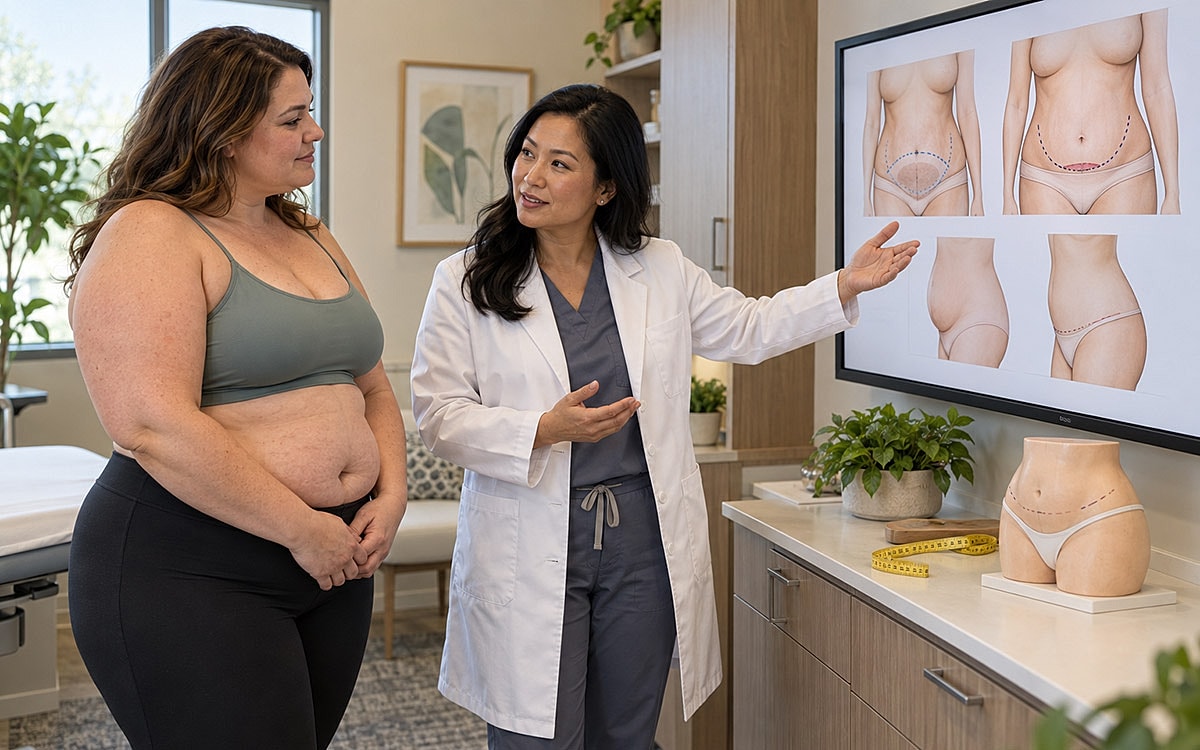
What being plus size means for tummy tuck safety, and how to prepare for the best possible outcome.
Being plus size doesn't automatically rule out a tummy tuck. Many people with a higher BMI can be candidates if they are at a stable weight and in optimal health. Research shows higher BMI raises the risk of complications, most often minor ones like fluid buildup, so careful planning matters. Some patients choose a panniculectomy, which removes hanging skin only.
A board-certified plastic surgeon can help you weigh benefits and risks.
"I've been told I'm too big for a tummy tuck. Is that true?" It's a question that often comes with frustration, and sometimes with years of hearing "come back after you lose more weight." At The One Plastic Surgery Center in Newport Beach, board-certified plastic surgeon Dr. Siamak Agha believes plus-size patients deserve a real evaluation, not an automatic no.
That doesn't mean every patient is a candidate. It means the decision should be based on your health, your weight history, and your goals, not a single number. This guide explains who may qualify for a plus-size tummy tuck, how BMI affects safety, and what you can do to prepare.
Key Takeaways
- A plus-size tummy tuck can be an option for many people with a higher BMI who are healthy and at a stable weight.
- Higher BMI is linked to more complications after abdominoplasty, especially minor issues such as seroma, or fluid buildup.
- Stable weight, controlled medical conditions, and not smoking are among the most important factors for safer surgery.
- A panniculectomy removes only hanging skin and fat and may sometimes be covered by insurance when medically necessary.
- Recovery usually takes several weeks, and following post-operative instructions closely helps reduce the risk of complications.
Can You Get a Tummy Tuck if You're Plus Size?
Quick take: Yes, in many cases. Being plus size does not automatically disqualify you. Your overall health, weight stability, and skin concerns matter more than any single measurement.
Our plus-size tummy tuck page is clear on this point: a higher body weight on its own isn't a reason to say no. Many patients carry excess skin and fat that cause real discomfort, from chafing and rashes to difficulty exercising.
What matters is whether surgery can be done safely and whether it can meet your goals. That requires a thorough exam and an honest discussion of risks.
It also helps to know where your weight journey stands. Some patients are at the end of a long weight-loss effort, including weight loss with GLP-1 medications, and have reached a weight they can maintain. Others are still losing. If you expect to lose a significant amount of additional weight, waiting may lead to a better and longer-lasting result, since further weight loss can create new loose skin.
For patients in Newport Beach and across Orange County, the consultation is where you sort out these questions. Your surgeon will review your medical history, examine your skin and abdominal wall, and explain which procedure, if any, fits your situation. You should leave with a clear sense of your options, including reasons to wait if that's the safer choice.
Who Is a Suitable Candidate for a Plus-Size Tummy Tuck?
Quick take: Good candidates are at a relatively stable weight, medically healthy enough for elective surgery, and bothered by excess abdominal skin and fat. Realistic expectations are just as important.
You may be a suitable candidate if you:
- Have been at a stable weight for at least several months
- Have excess abdominal skin and fat that causes discomfort or irritation
- Experience rashes, chafing, or hygiene challenges from skin folds
- Have weakened or separated abdominal muscles
- Don't smoke, or are willing to quit well before surgery
- Have well-controlled medical conditions, such as diabetes or high blood pressure
You may need to wait or explore other options if you:
- Are actively losing weight or plan to lose significantly more
- Have uncontrolled diabetes, advanced heart disease, or severe breathing problems
- Are currently smoking or using nicotine products
Emotional readiness matters too. A tummy tuck can improve comfort and confidence, but it isn't a substitute for a healthy lifestyle or a weight-loss plan.
How BMI Affects Tummy Tuck Safety
Quick take: Research consistently shows that higher BMI increases the risk of complications after a tummy tuck. Most of these complications are minor, but understanding the risk helps you and your surgeon plan carefully.
A study of 191 abdominoplasty patients published in Aesthetic Plastic Surgery found that obesity and higher BMI were the only independent risk factors for overall complications. In that study:
- Obese patients had a much higher overall complication rate than non-obese patients
- Most complications were minor, with seroma, or fluid collection under the skin, being the most common
- Past bariatric surgery alone did not significantly increase complication rates
A systematic review and meta-analysis similarly looked at obesity as a risk factor in cosmetic abdominoplasty, reinforcing the importance of careful patient selection.
Common complications to be aware of include:
- Seroma: fluid buildup that may need to be drained
- Wound healing problems: slow healing or small openings along the incision
- Infection: usually treatable with antibiotics
- Blood clots: a less common but serious risk that surgeons actively work to prevent
Knowing these risks doesn't mean surgery is unsafe. It means your plan should include steps to lower them.
Higher BMI doesn't rule out a tummy tuck; it just requires a more careful plan.
Plus-Size Tummy Tuck vs. Panniculectomy
Quick take: A tummy tuck reshapes the abdomen by removing skin and fat and often tightening the muscles. A panniculectomy removes only the hanging skin and fat, called the pannus, without muscle repair or cosmetic contouring.
Here's how they compare:
- Tummy tuck: removes excess skin and fat, tightens abdominal muscles, repositions the belly button, and is usually considered cosmetic
- Panniculectomy: removes the hanging apron of skin and fat below the belly button, focusing on relief from rashes, infections, and hygiene issues
- Insurance: a panniculectomy may be covered when it's medically necessary and well documented, while a tummy tuck usually isn't
Some patients choose a panniculectomy first, then consider further contouring later. Others choose an extended tummy tuck to address skin that wraps around the sides. For patients with loose skin around the entire midsection, a 360 tummy tuck may be an option.
Preparing for a Plus-Size Tummy Tuck
Quick take: Good preparation can meaningfully reduce your risk. Focus on stable weight, overall health, and planning for recovery before surgery day.
Helpful steps include:
- Maintain a stable weight for several months before surgery
- Stop smoking and nicotine at least several weeks before and after surgery, as advised by your surgeon
- Optimize medical conditions with your primary care doctor, especially blood sugar
- Eat enough protein to support healing
- Plan for help at home during the first one to two weeks
- Prepare your space with supplies, loose clothing, and easy access to essentials
Some patients also benefit from liposuction of the flanks or back, which can improve overall contour. Your surgeon will discuss whether the procedure is safe and appropriate for you.
Plus-Size Tummy Tuck Recovery
Quick take: Recovery takes patience. Most patients need a few weeks of downtime, and full recovery may take several months. Drains, compression garments, and regular walking are common parts of healing.
A typical recovery timeline:
- Week 1: Rest, short walks several times a day, pain medication, and drain care
- Weeks 2 to 3: Drains are usually removed. Light daily activity increases.
- Weeks 3 to 4: Many patients return to desk work.
- Weeks 6 to 8: Gradual return to exercise and lifting, as cleared by your surgeon
- Months 3 to 12: Swelling continues to fade, and scars mature
Walking early and often helps reduce the risk of blood clots. Wearing compression garments supports healing and helps control swelling. Keep all follow-up appointments so your surgical team can catch any issues early.
Medical disclaimer: This article is for educational purposes only and is not medical advice. Results and candidacy vary by patient. A consultation is required to determine whether a plus-size tummy tuck, panniculectomy, or another procedure is appropriate for you.
Conclusion
A plus-size tummy tuck can offer real relief and renewed comfort for many people who have been told they're not candidates. Higher BMI does raise the risk of complications, but careful planning, stable weight, and good health can make surgery safer.
The key is a thorough evaluation and an honest conversation about your goals and options.
Ready to find out if a plus-size tummy tuck is right for you? Schedule a consultation with board-certified plastic surgeon Dr. Siamak Agha at The One Plastic Surgery Center in Newport Beach to discuss your goals and options.
Frequently Asked Questions
Can you get a tummy tuck if you're overweight?
Often, yes. Being plus size does not automatically disqualify you. Stable weight, good overall health, and realistic expectations are the most important factors, and a consultation can determine whether surgery is safe for you.
Is there a BMI limit for a tummy tuck?
There is no single universal cutoff, and practices vary. Research shows higher BMI increases complication risk, so surgeons consider BMI alongside overall health, weight stability, and other factors when deciding if a tummy tuck is appropriate.
What is the difference between a tummy tuck and a panniculectomy?
A tummy tuck removes excess skin and fat and often tightens the abdominal muscles for a contoured result. A panniculectomy removes only the hanging skin and fat below the belly button, mainly to relieve rashes, infection, and hygiene problems.
Does insurance cover a plus-size tummy tuck?
A cosmetic tummy tuck is usually not covered. A panniculectomy may be covered when it is medically necessary, such as for recurring rashes or infections, and properly documented. Coverage depends on your insurance plan.
How long is recovery after a plus-size tummy tuck?
Most patients return to desk work within three to four weeks and resume exercise after about six to eight weeks. Swelling can take several months to fully resolve, and scars continue to mature for up to a year.






