
Hooded eyelids can come from extra skin, a lower brow, or a weak lid muscle, and the cause decides the fix.
Hooded eyes can be inherited or develop with age. They usually come from one or more of three causes: extra eyelid skin, a brow that has descended, or a stretched eyelid muscle. Each has a different fix. An in-person exam tells them apart, and upper eyelid surgery is the answer when the excess lies in the eyelid itself.
You may notice it first when applying makeup. Eyeshadow smudges onto a fold of skin, the crease seems to disappear, and your eyes look more tired than you feel. For some people, hooded eyes have been there since childhood. For others, they appear gradually over the years.
Interest in correcting them is growing. According to the American Society of Plastic Surgeons, eyelid surgery rose 19 percent in 2025, placing it among the five most popular cosmetic surgeries in the country.
But hooded eyes don't always call for the same procedure. This guide explains what causes them and how those causes shape the treatment. It reflects the approach of board-certified plastic surgeon Dr. Siamak Agha in Newport Beach, who begins every eyelid consultation with a careful diagnosis.
What Are Hooded Eyes?
Hooded eyes describe an upper eyelid where a fold of skin hangs over the natural crease, partly or fully hiding it. Some people are born with this eye shape. Others develop it as skin loosens and the brow descends with age. Both are common, and neither is a medical problem on its own.
Born With Them vs. Developing Them
Genetics largely determine eye shape, and Medical News Today notes that some people naturally have hooded eyes from a young age. Others notice the hooding appear later. The distinction matters, because inherited hooding often reflects how the eyelid and brow are built, while age-related hooding usually involves tissue that has stretched or descended.
Why Hoods Get Heavier With Age
Over time, eyelid skin thins and loses elasticity, and the brow can gradually move lower.
A 2024 study in Scientific Reports lists age, gravity, brow descent, smoking, and fair skin among the factors that contribute to excess upper eyelid skin. Those changes add up and make the hood heavier.
The Three Causes Surgeons Look For
Hooded eyes usually come from one or more of three causes. The first is excess eyelid skin.
The second is a brow that has descended. The third is a weakened eyelid muscle that lets the lid itself droop. Many people have more than one, which is why the diagnosis matters so much.
Excess Eyelid Skin (Dermatochalasis)
Dermatochalasis is the medical term for excess skin on the upper eyelid. The extra skin folds over the crease and creates the hooded look. In more advanced cases, it can rest on the lashes and block part of your field of vision.
A Descended Brow (Brow Ptosis)
Brow ptosis means the eyebrow has moved lower than its natural position. As the brow descends, it pushes skin down onto the upper lid. According to StatPearls, brow ptosis is mostly caused by aging and often appears alongside excess eyelid skin. A low brow tends to create hooding toward the outer corner of the eye.
A Weak or Stretched Lid Muscle (Eyelid Ptosis)
Eyelid ptosis is different. Here, the eyelid margin itself sits too low. The American Academy of Ophthalmology explains that in adults, the muscle that lifts the lid can stretch or separate from the eyelid, mostly with age. Ptosis can limit vision and is treated differently from excess skin.
When More Than One Is Present
It's common to have extra eyelid skin and a lower brow at the same time, and occasionally a mild ptosis too. Treating only one cause can leave the others untouched.
Two people with the same hooded look can need completely different operations.
How a Surgeon Tells Them Apart
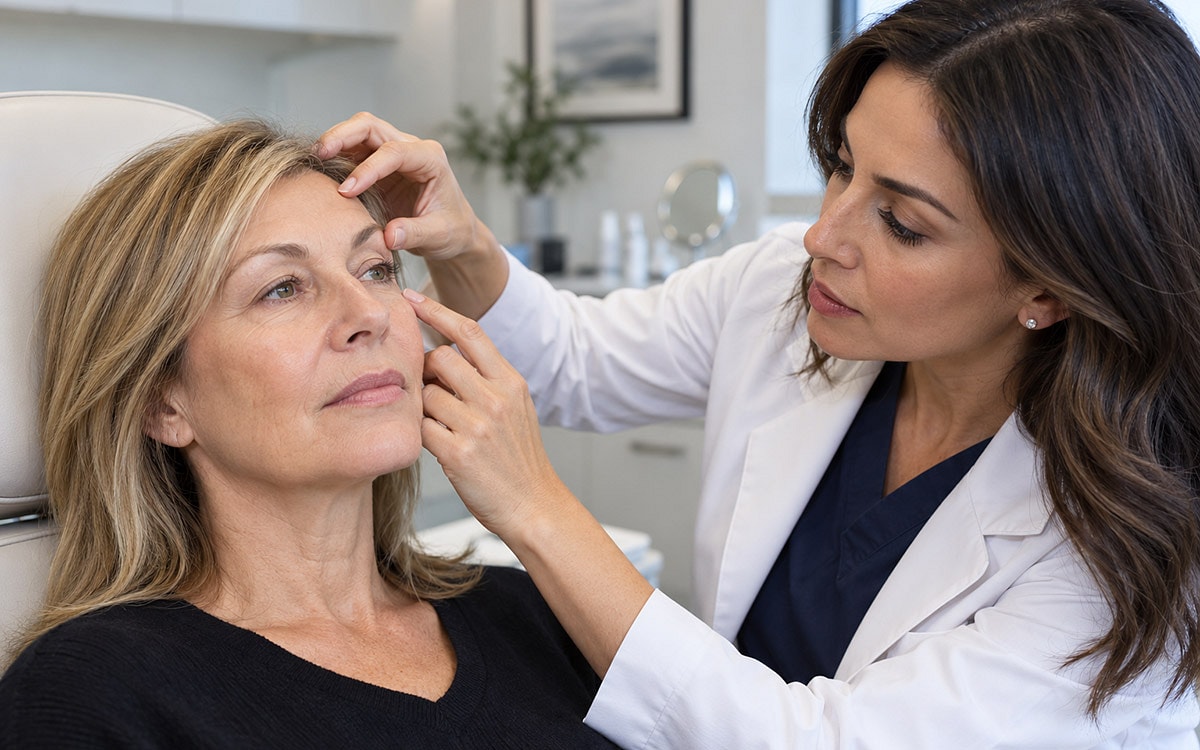
During your consultation, Dr. Agha examines how your brow, eyelid skin, and lid position relate to each other. One simple step is gently lifting the brow into its natural position. If the hooding mostly disappears, the brow is a major contributor. StatPearls notes that a lid that still droops after the brow is raised points to true eyelid ptosis.
Your surgeon will also look at where the lid margin sits relative to the pupil and how much skin remains after the brow is supported. Together, these observations reveal which cause is driving your hooded eyes. You can learn more about the differences in our guide to brow lift vs. eyelid lift.
Matching the Hooded Eyes Treatment to the Cause
The right hooded eye treatment depends on what's causing the hood. Upper blepharoplasty removes excess eyelid skin. A brow lift raises a descended brow. Ptosis repair tightens the muscle that lifts the lid. For mild brow-related hooding, Botox can offer a small, temporary lift. Many patients benefit from a combination.
Upper Blepharoplasty
When excess skin is the main cause, upper eyelid surgery in Newport Beach removes the extra skin and occasionally a small amount of fat through an incision hidden in the natural crease.
The ASPS notes that loose upper eyelid skin can sometimes impair vision, which surgery can improve. The result is a more open, rested look.
Brow Lift
If a low brow is pushing skin onto the lid, a brow lift restores the brow to a more natural position. According to StatPearls, a descended brow can cause hooding at the outer upper eyelid, and when both procedures are planned, the brow is usually addressed first.
If your brow is doing the drooping, removing eyelid skin alone may not solve it.
Ptosis Repair
When the eyelid muscle has stretched or detached, the lid is repaired by tightening or reattaching that muscle. The American Academy of Ophthalmology explains that a prescription eye drop can help some adults with mild ptosis. Ptosis repair is often performed by surgeons who specialize in eyelid anatomy, and your consultation will clarify whether it's part of your plan.
Botox Brow Lift for Mild Cases
For very mild hooding caused by a slightly low brow, a Botox brow lift can raise the outer brow a little by relaxing the muscles that pull it down. The effect is subtle and temporary, and it doesn't remove excess skin. It can be a good option for patients who are not ready for surgery.
When Hooded Eyelids Affect Your Vision
Hooded eyes aren't always only a cosmetic concern. When excess skin or a drooping lid rests near or on the lashes, it can narrow your field of vision, especially toward the top and sides.
Signs the Hood Is Blocking Your View
You might find yourself raising your eyebrows to see better, tilting your head back, or feeling tired eyes and forehead by the end of the day. Some people notice it most when driving or reading. These are worth mentioning at your consultation.
Does Insurance Cover Hooded Eyelid Surgery?
Insurance generally doesn't cover cosmetic eyelid surgery. However, Cleveland Clinic notes that upper blepharoplasty may be considered medically necessary when it improves peripheral vision. Insurers typically require testing that documents the vision loss. Coverage varies by plan, so check with your insurer before surgery.
Recovery After Surgery for Hooded Eyes
Recovery after upper eyelid surgery is usually manageable. At The One Plastic Surgery Center, stitches are typically removed around one week after surgery, and many patients return to work within about five to ten days. Swelling and bruising fade steadily over the first couple of weeks.
The First Two Weeks
Expect some swelling, bruising, and tightness. Cold compresses, rest with your head elevated, and prescribed eye care help you heal comfortably. Most people feel ready for their normal routine within one to two weeks.
When Results Settle
Cleveland Clinic notes that full recovery takes a few months. The incision fades gradually within the natural crease, and your final, refreshed result becomes clearer as residual swelling resolves.
Is Upper Eyelid Surgery Right for Your Hooded Eyes?
You may be a suitable candidate for upper eyelid surgery if excess eyelid skin is the main cause of your hooding, you're in good overall health, and you have realistic expectations. If your brow or eyelid muscle is a larger factor, another procedure, or a combination, may suit you better.
Questions to Ask at Your Consultation
Ask which of the three causes you have, whether a brow lift should be considered alongside eyelid surgery, and what recovery will look like for your schedule. Reviewing blepharoplasty before-and-after photos can help you talk about the result you'd like. Patients in Newport Beach and across Orange County often find that a clear diagnosis makes the decision much easier.
The Bottom Line on Hooded Eyes
Hooded eyes can come from excess eyelid skin, a descended brow, a weakened eyelid muscle, or a mix of all three. The right diagnosis comes before the right procedure. When the excess lies in the lid itself, upper eyelid surgery can restore a brighter, more open look.
Ready to find out if upper eyelid surgery is right for you? Schedule a consultation with board-certified plastic surgeon Dr. Siamak Agha at The One Plastic Surgery Center in Newport Beach to discuss your goals and options.
Frequently Asked Questions
Can hooded eyes be fixed without surgery?
For very mild hooding caused by a slightly low brow, a Botox brow lift can offer a small, temporary improvement. Makeup techniques can also minimize the look. Non-surgical options can't remove excess eyelid skin, so surgery is the most effective solution when skin is the main cause.
Does insurance cover hooded eyelid surgery?
Insurance generally doesn't cover cosmetic eyelid surgery. It may cover upper blepharoplasty when excess skin blocks your field of vision, and testing documents the problem. Coverage varies by plan, so confirm with your insurer before scheduling.
What's the difference between eyelid ptosis and dermatochalasis?
Dermatochalasis is excess skin on the upper eyelid that folds over the crease. Eyelid ptosis means the eyelid margin itself sits too low, usually because the muscle that lifts it has stretched. They can look similar, but they're treated with different procedures.
Do hooded eyes come back after blepharoplasty?
Upper eyelid surgery results are long-lasting, but the face continues to age. Over many years, some skin laxity or brow descent may return gradually. Protecting your skin from the sun and avoiding smoking help preserve your results.
Will a brow lift fix hooded eyes on its own?
A brow lift can resolve hooding when a descended brow is the main cause. If you also have excess eyelid skin, combining a brow lift with upper eyelid surgery often gives a more complete result. Your surgeon will recommend the right combination.
Medical disclaimer: This article is for educational purposes only and is not medical advice. Results and candidacy vary by patient, and a consultation with a qualified plastic surgeon is required to determine whether upper eyelid surgery or another treatment is right for you.