


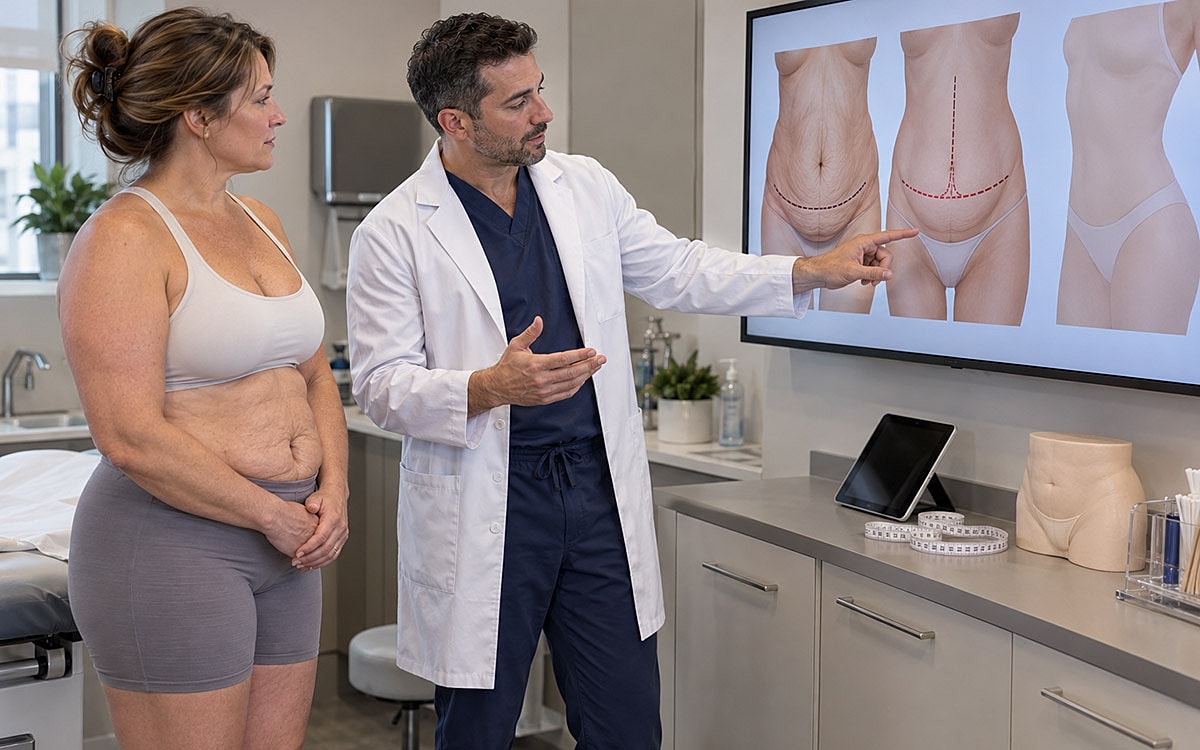
When removing skin, both up-and-down and side-to-side make sense after major weight loss, and occasionally another approach may be better.
A fleur-de-lis tummy tuck removes loose abdominal skin in two directions using a low horizontal incision plus a vertical incision down the middle of the abdomen. It is designed for people, often after major weight loss, who have excess skin both from top to bottom and from side to side. The tradeoff is a visible vertical scar. For some patients, alternatives such as flankplasty may offer better contouring with more concealable scars.
After major weight loss, many people are surprised to hear a surgeon mention a "fleur-de-lis" tummy tuck. The name sounds elegant, but the question that usually follows is practical: "Do I really need a scar down the middle of my stomach?" It's a fair question, and the answer depends on how your skin has changed.
At The One Plastic Surgery Center in Newport Beach, board-certified plastic surgeon Dr. Siamak Agha has performed hundreds of body lift procedures for patients after significant weight loss. He takes time to explain when a fleur-de-lis tummy tuck is the right tool and when another technique may serve a patient better.
This guide explains what a fleur-de-lis tummy tuck is, how it differs from a standard tummy tuck, who is a suitable candidate, and what to expect from scars and recovery.
Key Takeaways
- A fleur-de-lis tummy tuck combines a low horizontal incision with a vertical midline incision to remove skin in two directions.
- It is mainly used after massive weight loss, when loose skin exists both vertically and horizontally across the abdomen.
- The vertical scar is permanent and visible, so candidates should weigh improved contour against additional scarring.
- Flankplasty and other body lift approaches may offer strong contouring with scars that are easier to conceal for some patients.
- Recovery is similar to a traditional tummy tuck but may take slightly longer because of the extent of surgery.
What Is a Fleur-de-Lis Tummy Tuck?
A fleur-de-lis tummy tuck, also called a fleur-de-lis abdominoplasty, is a tummy tuck that removes excess skin both horizontally and vertically. It uses two incisions: a low horizontal incision across the lower abdomen and a vertical incision along the midline, together forming an inverted "T" shape.
The name comes from the shape of the skin removed, which resembles the stylized lily used in heraldry. A standard tummy tuck removes a wedge of skin from the lower abdomen and pulls the remaining skin downward. That works well when skin is loose, mainly from top to bottom.
After massive weight loss, however, skin often becomes loose in every direction. The abdomen may be wide as well as long, with folds that wrap toward the sides. A fleur-de-lis design allows the surgeon to tighten the abdomen inward toward the midline as well as downward.
How It Differs From a Standard Tummy Tuck
The main difference is direction. A standard tummy tuck tightens skin vertically, while a fleur-de-lis tummy tuck tightens both vertically and horizontally.
Horizontal Tightening Only: The Standard Approach
In a traditional tummy tuck, the surgeon makes a low incision from hip to hip, lifts the skin, repairs separated abdominal muscles when needed, and removes excess lower skin. The belly button is repositioned through a small opening. The result is a flatter abdomen with a scar that can usually be hidden under underwear or a swimsuit. You can read more on our extended tummy tuck page for cases where the horizontal incision needs to extend farther around the sides.
Adding the Vertical Component
In a fleur-de-lis tummy tuck, a vertical wedge of skin is also removed from the center of the abdomen, from the lower chest area down to the horizontal incision. This narrows the waist and addresses loose skin in the upper abdomen that a standard tummy tuck cannot reach.
The Inverted-T Scar
Because of the combined incisions, the final scar forms an inverted "T." The horizontal portion sits low, while the vertical portion runs up the center of the abdomen. As our fleur-de-lis tummy tuck page notes, the vertical scar is permanent and visible, which is the most important tradeoff to consider.
Who Needs the Vertical Incision?
A fleur-de-lis tummy tuck is best suited for people with significant excess skin in both the upper and lower abdomen, along with horizontal laxity that makes the waist look wide. This most often occurs after massive weight loss, including weight loss from bariatric surgery or GLP-1 medications.
You may be a candidate if:
- You have loose skin above and below the belly button, not just in the lower abdomen
- Your waist remains wide because of hanging skin at the sides
- You have a pre-existing vertical scar, such as from prior abdominal surgery, that can be incorporated
- Your weight has been stable for several months
- You are healthy enough for a longer surgery
A study published in Plastic and Reconstructive Surgery described the fleur-de-lis abdominoplasty as a safe alternative to traditional abdominoplasty for patients after massive weight loss. Research in the Aesthetic Surgery Journal Open Forum has also examined how health conditions affect outcomes after vertical abdominoplasty techniques, reinforcing the importance of careful patient selection.
This procedure is not intended for people seeking subtle refinement or minimal scarring. If your loose skin mainly affects the lower abdomen, a standard or extended tummy tuck is usually a better fit.
The right tummy tuck is the one designed around how your skin actually changed.
Fleur-de-Lis Tummy Tuck vs. Flankplasty and Other Options
For some patients, a fleur-de-lis tummy tuck isn't the only option. Dr. Agha often discusses flankplasty as an alternative for certain patients after weight loss. Flankplasty removes excess skin and tissue from the sides and flanks, which can narrow the waist with scars that are easier to conceal than a vertical midline scar.
Other options include:
- Post-bariatric abdominoplasty: a tummy tuck tailored to skin changes after weight loss
- Extended tummy tuck: a longer horizontal incision that wraps farther around the flanks
- Lower body lift: a circumferential approach that addresses the abdomen, flanks, and buttocks together
The best approach depends on where your excess skin is, your tolerance for scarring, and your overall body contouring goals. A detailed consultation, including an exam in standing and seated positions, helps determine which technique gives you the best balance of shape and scar placement.
Risks, Scars, and Realistic Expectations
Like any major body contouring procedure, a fleur-de-lis tummy tuck carries risks. These can include seroma (fluid buildup), wound healing problems, infection, bleeding, blood clots, changes in skin sensation, and scarring. The junction where the vertical and horizontal incisions meet is an area surgeons monitor closely, since healing can be slower at that point.
Scars fade and flatten over 12 to 18 months, but the vertical scar will remain visible. Many patients feel that a flatter, narrower abdomen and relief from hanging skin are worth the tradeoff. Others prefer to avoid a vertical scar and choose an alternative. There's no single right answer.
Many patients find it helpful to think about how they dress and what matters most to them. Someone who wears high-waisted clothing and wants relief from chafing may accept a vertical scar easily. Someone who prioritizes wearing a two-piece swimsuit may prefer an approach that keeps scars lower or along the sides. Your surgeon can show you where each incision would sit on your body.
Setting realistic expectations also means understanding that some residual looseness may remain, especially in patients with destitute skin elasticity. Additional procedures, such as an arm lift or thigh lift, may be part of a staged body contouring plan after major weight loss.
Fleur-de-Lis Tummy Tuck Recovery
Recovery from a fleur-de-lis tummy tuck is similar to a traditional tummy tuck but may take slightly longer because more tissue is removed. Most patients return to light activities within a few weeks.
A general recovery timeline:
- Week 1: Rest, short walks, and pain medication. Drains are common. You may walk slightly bent at first.
- Weeks 2 to 3: Drains are usually removed. Many patients return to desk work.
- Weeks 4 to 6: Gradual return to more activity. Heavy lifting and strenuous exercise are usually avoided.
- Months 3 to 12: Swelling continues to resolve, and scars begin to mature.
Wearing a compression garment, walking regularly to reduce clot risk, and avoiding smoking are key parts of healing. Your surgeon will give you specific instructions based on your procedure.
Medical disclaimer: This article is for educational purposes only and is not medical advice. Results and candidacy vary by patient. A consultation is required to determine whether a fleur-de-lis tummy tuck or an alternative procedure is appropriate for you.
Conclusion
A fleur-de-lis tummy tuck is a powerful option for people with loose skin in two directions, most often after major weight loss. The vertical incision allows surgeons to narrow the waist and tighten the upper abdomen in ways a standard tummy tuck cannot. The tradeoff is a visible vertical scar, which is why it's important to explore alternatives like flankplasty before deciding.
The right choice depends on your anatomy, goals, and comfort with scarring.
Ready to find out if a fleur-de-lis tummy tuck is right for you? Schedule a consultation with board-certified plastic surgeon Dr. Siamak Agha at The One Plastic Surgery Center in Newport Beach to discuss your goals and options. Schedule Your Consultation
Frequently Asked Questions
What is a fleur-de-lis tummy tuck?
A fleur-de-lis tummy tuck is an abdominoplasty that removes excess skin both horizontally and vertically. It uses a low horizontal incision plus a vertical midline incision, forming an inverted "T" scar. It is most often used after major weight loss.
Who needs a fleur-de-lis tummy tuck?
It is best for people with loose skin in both the upper and lower abdomen and a wide waist caused by horizontal skin laxity. This most commonly occurs after bariatric surgery or significant weight loss. People with mostly lower abdominal skin usually do well with a standard or extended tummy tuck.
Will the vertical scar fade?
The vertical scar fades and flattens over 12 to 18 months, but it remains permanent and visible. Scar care, sun protection, and avoiding smoking can help it heal as well as possible.
Is flankplasty an alternative to a fleur-de-lis tummy tuck?
For some patients, yes. Flankplasty removes excess skin from the sides and flanks, which can narrow the waist with scars that are easier to conceal. Your surgeon will recommend the best option based on your anatomy.
How long is recovery after a fleur-de-lis tummy tuck?
Most patients return to desk work within two to three weeks and gradually resume more activity after about six weeks. Recovery may take slightly longer than a standard tummy tuck because more tissue is removed.






