


A facelift addresses sagging skin, jowls, and deep folds by repositioning the deeper tissues of the face and neck, not just tightening skin. Good candidates are healthy non-smokers with realistic goals, usually in their 40s to 60s. Surgery typically takes a few hours under anesthesia, initial healing takes 10 to 14 days, and full results settle over several months. Choosing a board-certified surgeon matters as much as the technique itself.
If you have spent hours comparing before-and-after photos and searching for a facelift Newport Beach patients actually trust, you are probably somewhere between curious and cautious. That is a healthy place to start. A facelift is one of the more involved procedures in facial plastic surgery, and understanding what really happens before, during, and after surgery can make the decision feel far less overwhelming. This guide walks through candidacy, the surgery day experience, recovery, and how to evaluate a surgeon so you can approach a consultation with clear, informed questions.
What Is a Facelift, and What Can It Actually Do?
A facelift, medically called a rhytidectomy, is a surgical procedure designed to reduce visible signs of aging in the lower face and neck by repositioning underlying tissue and removing excess skin, rather than simply pulling the skin tighter. According to the American Society of Plastic Surgeons, the technique addresses sagging skin, deepening folds between the nose and mouth, and loss of a defined jawline.
Most modern facelift techniques operate beneath the skin. A traditional incision typically begins near the hairline at the temple, follows the natural contour around the ear, and ends in the lower scalp, which allows the surgeon to lift and reposition deeper facial tissue rather than just the skin. Many surgeons, including those who perform a deep plane facelift, go a step further by releasing and repositioning the structural layers beneath the surface for a result that tends to look more natural and hold up over time. Fat may also be sculpted or redistributed along the jawline and neck during the same procedure.
It is worth knowing that a facelift primarily targets the lower two-thirds of the face and the neck. It does not address the eyes, brow, or fine surface wrinkles, which is why some patients pair it with complementary procedures or nonsurgical skin treatments.
Who Is a Good Candidate for a Facelift in Newport Beach?
Good facelift candidates are generally healthy adults, most often between their 40s and 60s, who have noticeable jowling or loose skin along the jawline and neck but still retain enough skin elasticity to heal well. Non-smokers with realistic expectations tend to see the most predictable, natural-looking outcomes.
Age is a guideline, not a hard rule. Some patients in their late 30s pursue a facelift Newport Beach surgeons describe as "early intervention" because they are already seeing jowling or neck laxity, while others in their 70s are excellent candidates because of good skin quality and overall health. What matters more than a number on a chart is skin elasticity, bone structure, and how well your body handles healing.
Health conditions that affect circulation or wound healing, such as uncontrolled diabetes, and habits like smoking can increase the risk of complications and are usually addressed before a surgery date is even considered. During a consultation, your surgeon will review your medical history, current medications, and goals to determine whether a facelift, a more limited procedure, or a nonsurgical option is the better fit.
The best facelift candidates want to look like a rested version of themselves, not a different person entirely.
What to Expect on the Day of Your Facelift Surgery
Facelift surgery is typically performed under general anesthesia or IV sedation and takes anywhere from two to five hours, depending on the technique and whether additional procedures are combined with it. Most patients go home the same day or the following morning with a companion to help with the drive and first night of care.
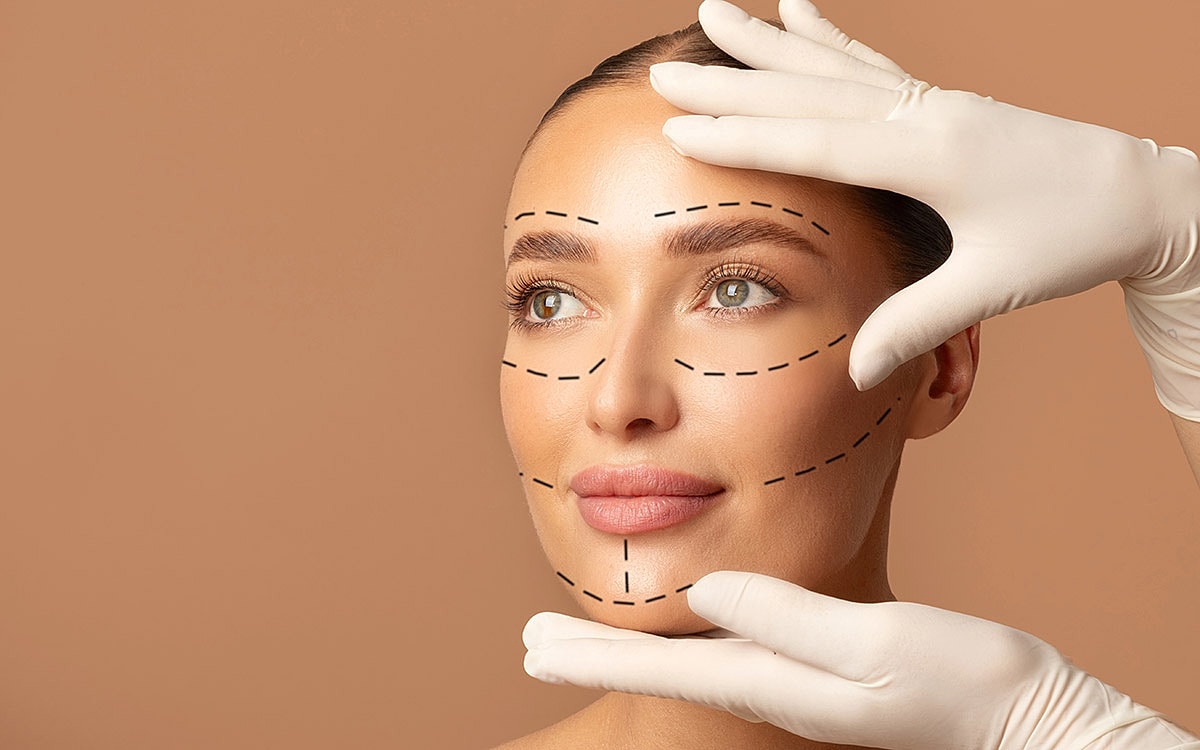
Before your procedure begins, your surgical team will mark the planned incision lines and confirm the surgical plan discussed at your consultation. Incisions are placed along the hairline and around the ear so that resulting scars are well hidden once healed. During surgery, the surgeon repositions the deeper tissue layer of the face, removes excess skin, and may address the neck at the same time if submental fullness or "turkey neck" laxity is part of your concern.
Once the procedure is complete, a soft compression dressing is usually applied around the face to control swelling, and small drainage tubes may be placed temporarily to remove excess fluid. You will be given clear instructions on wound care, medications, and warning signs to watch for before you are discharged, along with a follow-up appointment scheduled within the first week.
Facelift Recovery Timeline: What Happens Week by Week
Facelift recovery generally follows a predictable arc: swelling and bruising peak in the first few days, stitches come out around day seven, most patients feel comfortable in public within 10 to 14 days, and full internal healing continues for several months afterward.
The first three days after surgery are about rest. Swelling, bruising, and facial tightness are most pronounced during this window, and most patients spend this time sleeping with their head elevated and keeping activity to a minimum. By the end of the first week, sutures are typically removed and the worst of the visible bruising begins to fade.
Weeks two and three usually bring a noticeable turning point. Many patients return to work or light social activities around this time, often with the help of makeup to camouflage any remaining discoloration. Swelling continues to resolve gradually through the first month, and by the six to twelve-week mark, most people feel that their face looks and feels close to normal, though subtle refinement continues beneath the surface. According to ASPS recovery guidance, it can take two to three months before the skin's texture and sensation fully return to what feels like "normal," and the final, softened results generally continue to settle for up to six to twelve months.
Every patient heals on a somewhat different timeline based on their overall health, the extent of surgery, and how closely they follow post-operative instructions.
What Are the Risks of Facelift Surgery?
Like any surgical procedure, a facelift carries real risks, including bleeding, infection, changes in skin sensation, and scarring, even though serious complications are uncommon among healthy, well-screened patients. Being informed about these risks before surgery is part of making a confident decision.
The most frequently reported complication is a hematoma, a collection of blood beneath the skin that typically forms within the first 24 hours after surgery, according to the American Society of Plastic Surgeons. Other possible risks include temporary numbness or tingling near the incisions, hair thinning at the incision sites, and, rarely, injury to a facial nerve. Incision scars are permanent, though they are typically positioned within the hairline and natural contours of the ear so they fade and stay well concealed as healing progresses.
Understanding the real risks, not just the ideal outcome, is part of choosing a facelift with confidence.
Choosing an experienced, board-certified surgeon and following pre- and post-operative instructions closely, including avoiding smoking and certain medications before surgery, are among the most effective ways to reduce these risks. No responsible surgeon can promise a specific result or guarantee zero complications, and results and candidacy vary meaningfully from patient to patient.
How to Choose the Right Surgeon for Your Facelift in Newport Beach
The single most important factor in facelift safety and outcome is choosing a surgeon who is board-certified in plastic surgery, has extensive facelift-specific experience, and operates in an accredited surgical facility. Credentials matter more here than marketing claims.
According to the American Society of Plastic Surgeons, board certification through the American Board of Plastic Surgery requires at least six years of surgical training after medical school, including a dedicated plastic surgery residency, along with ongoing adherence to strict safety and ethics standards. It is worth confirming these credentials directly rather than assuming a title like "cosmetic surgeon" carries the same weight, since that phrase is not a recognized board specialty.
Beyond certification, ask to see before-and-after photos of patients with a facial structure similar to yours, ask how many facelifts the surgeon performs each year, and pay attention to whether they listen to your goals rather than pushing a one-size-fits-all approach. Board-certified plastic surgeon Dr. Siamak Agha of The One Plastic Surgery Center brings this kind of individualized evaluation to every facelift consultation in Newport Beach, discussing SMAS and deep plane techniques, realistic goals, and honest expectations before recommending a surgical plan. If you are still exploring your options, it can also help to compare surgical facelifts with related procedures, such as a breast lift or tummy tuck, if body contouring is also part of your longer-term goals.
Facelift Recovery and Results: Setting Realistic Expectations
A facelift can meaningfully soften jowls, sagging, and deep folds, but it will not stop the aging process or make every wrinkle disappear, and results depend on your skin quality, bone structure, and how your body heals. Patients who go into surgery with grounded, specific expectations tend to be the happiest with their results.
Rather than aiming for a dramatically different appearance, most patients describe their goal as looking like a well-rested, more refreshed version of themselves. This is a fair and achievable expectation for most healthy candidates, though no surgeon can guarantee a specific outcome, and final results are only apparent once swelling has fully resolved, often six months to a year after surgery.
Results and candidacy vary by patient. Nothing in this article should be taken as a guarantee of outcome, and a formal consultation is required to determine whether a facelift is appropriate for your anatomy, health history, and goals.
Ready to Learn More?
A facelift is a significant decision, and the right answer depends entirely on your anatomy, health, and goals, which is why an in-person evaluation matters more than anything you read online. The most reliable next step is a conversation with a surgeon who can examine your skin, structure, and concerns directly and walk you through which technique, if any, makes sense for you.
Ready to find out if a facelift is right for you? Schedule a consultation with board-certified plastic surgeon Dr. Siamak Agha at The One Plastic Surgery Center in Newport Beach to discuss your goals and options.
Frequently Asked Questions
How long does facelift surgery take?
Most facelift procedures take between two and five hours, depending on the technique used and whether the neck or additional areas are addressed at the same time. Your surgeon will give you a more precise estimate based on your specific surgical plan during your consultation.
At what age should I get a facelift?
There is no single ideal age. Most facelift candidates are in their 40s to 60s, when skin has begun to lose elasticity but still retains enough to heal well, though some patients in their late 30s or 70s are also excellent candidates depending on their skin quality and health.
How long is facelift recovery before I look presentable in public?
Most patients feel comfortable in social settings within 10 to 14 days, once major swelling and bruising have subsided. Full healing, including subtle internal changes and final results, typically continues for several months.
Will a facelift make me look "overdone" or unnatural?
Modern techniques, including deep plane and SMAS facelifts, are designed to reposition deeper facial tissue rather than simply pulling skin tight, which supports a more natural-looking result. Choosing an experienced, board-certified surgeon and discussing your goals honestly at your consultation are the best ways to avoid an overly tight or altered appearance.
Does a facelift address wrinkles around the eyes or forehead?
No, a standard facelift focuses on the lower two-thirds of the face and neck, including jowls, nasolabial folds, and neck laxity. Concerns around the eyes or forehead are typically addressed with complementary procedures, which your surgeon can discuss during your evaluation.
Recent Post
-
Mini Facelift vs. Full Facelift: Which Is Right for You?
-

The Art of the Modern Facelift: Subtle Enhancements for Natural Results
-
Combining Facelift and Neck Lift: Achieving Complete Facial Harmony
-

Mini Tummy Tuck vs. Full Tummy Tuck: Understanding the Difference
-

The Ultimate Mommy Makeover Guide: Restoring Confidence After Motherhood