

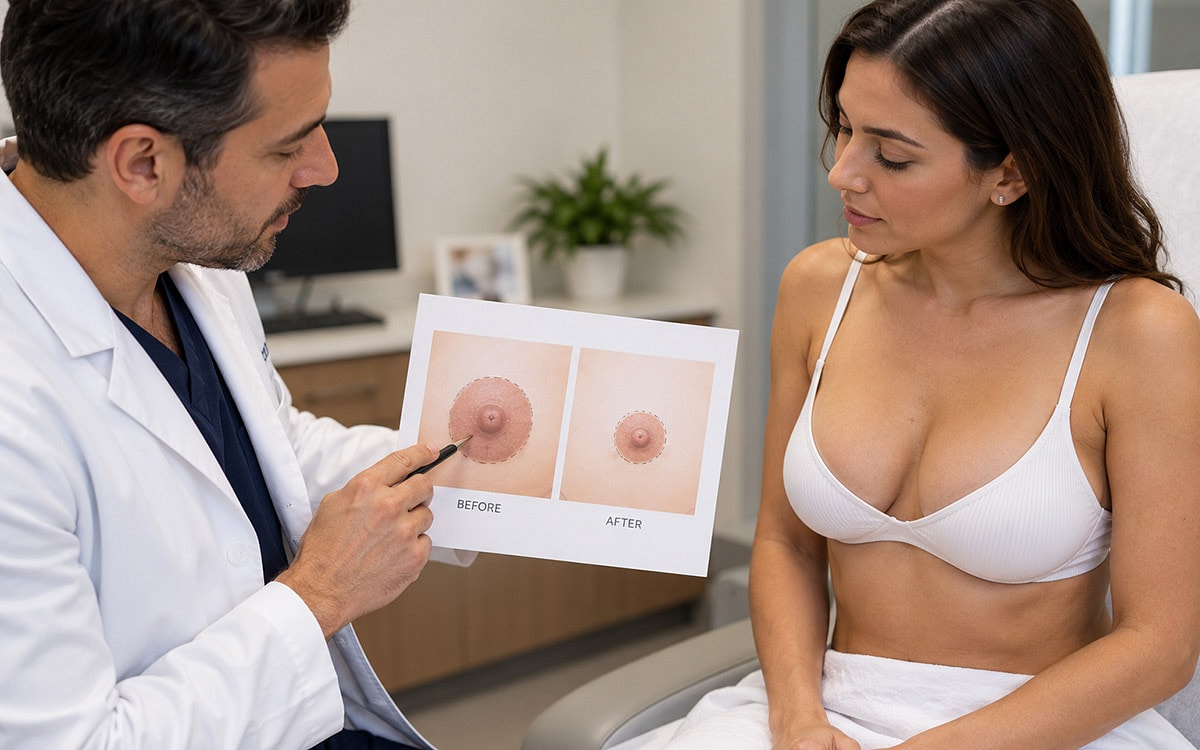
How a small, precise procedure resizes enlarged or uneven areolas, and what recovery and scarring really look like.
Areola reduction surgery removes a ring of pigmented skin around the areola and closes the edge around a smaller circle. It can help with asymmetry, puffy areolas, or tuberous breasts, as well as after pregnancy, breastfeeding, or weight changes. It can be done alone or with a breast lift, augmentation, reduction, or gynecomastia surgery. Recovery is usually short, and the scar sits at the areola border.
Areolas naturally vary in size, shape, and color from person to person, and there's no single "right" size. If you're curious about the typical range, our guide to what's considered a normal areola size covers it in detail.
Still, many people notice their areolas change over time. Pregnancy, breastfeeding, weight changes, and aging can stretch the skin, and some people have always felt their areolas were out of proportion or uneven. For them, areola reduction can be a small procedure with a meaningful impact on confidence.
This guide explains what areola reduction involves, who it helps, and what to expect. It reflects the approach of board-certified plastic surgeon Dr. Siamak Agha in Newport Beach, who plans each procedure around the patient's own breast proportions.
What Is Areola Reduction?
Areola reduction is a procedure that makes the areola smaller by removing a ring of pigmented skin from its outer edge. The remaining skin is then closed around a new, smaller circle. According to the ASPS, the surgeon marks the new size with centered circles before removing the excess skin.
The Periareolar "Donut" Technique
The most common approach is often called the "donut" technique. The surgeon marks two circles, one at the current border and one at the desired new size, and removes the ring of skin between them. This technique is described on our page for nipple and areola surgery in Newport Beach.
Why a Purse-String Stitch Is Used
The outer skin circle is larger than the new areola, so the surgeon gathers it in with a deep, circular stitch, often called a purse-string suture. At The One Plastic Surgery Center, a permanent purse-string stitch beneath the skin helps resist stretching over time, while the skin itself is closed with fine sutures.
Who Areola Reduction Helps
Areola reduction can help anyone who feels their areolas are too large, uneven, or puffy for their breasts. It's often requested after life changes that stretch the skin, but some people simply want better proportion.
After Pregnancy, Breastfeeding, Weight Change, or Aging
Pregnancy and breastfeeding can enlarge the areolas, and they don't always return to their earlier size. Weight gain and loss, as well as natural aging, can also stretch the skin around the nipple.
Asymmetry and Genetics
It's common for one areola to be larger than the other. Genetics also play a role in areola size. Areola reduction can help bring the two sides into closer balance, sometimes as part of breast asymmetry correction.
Puffy Areolas and Tuberous Breasts
Some people have areolas that look domed or puffy. In tuberous breasts, a developmental condition, breast tissue may push into the areola and make it appear enlarged. The ASPS notes that tuberous cases are usually treated along with a lift or augmentation. Learn more about tuberous breast correction.
Areola Reduction for Men
Men can have enlarged or puffy areolas too, often along with gynecomastia, or enlarged male breast tissue. In men, areola concerns are often addressed alongside gynecomastia surgery using similar incisions.
Areola reduction is less about hitting a number and more about restoring proportion to your own breasts.
Stand-Alone or Combined With Other Breast Surgery
Areola reduction can be done on its own or combined with another breast procedure. When areola size is the only concern, it can be a stand-alone procedure. When the breasts also sag, need more volume, or are too large, it's often performed during a lift, augmentation, or reduction.
With a Breast Lift
A periareolar breast lift uses an incision around the areola, which allows the surgeon to reduce the areola's size at the same time. Many patients seeking a lift also want smaller areolas, so the two are often combined.
With Augmentation or Reduction
Breast augmentation can stretch the areola slightly, and some patients choose to reduce it during the same surgery. Breast reductions typically resize the areola as part of reshaping the breast.
With Gynecomastia Surgery
For men, reducing enlarged areolas during gynecomastia surgery can help create a flatter, more masculine chest in a single procedure.
The Procedure and Anesthesia
Areola reduction is a relatively short procedure. When it's done on its own, it is often performed under local anesthesia, sometimes with sedation. When combined with a breast lift, augmentation, or reduction, it's usually done under the anesthesia used for the larger procedure.
Consultation and Marking the New Size
During your consultation, you'll discuss your goals and the size that would look most balanced on your breasts. Before surgery, your surgeon carefully marks the new areola diameter so both sides are as even as possible.
What Happens During Surgery
The surgeon removes the ring of skin, places the purse-string stitch, and closes the incision around the edge of the new areola. Because the incision follows the natural border between pigmented and lighter skin, the scar is designed to blend in as it heals.
Areola Reduction Recovery and Scars
Recovery after a stand-alone areola reduction is usually quick. Most people return to light daily activities within a few days and feel close to normal within about two weeks. Combined procedures take longer, depending on the larger surgery. The scar sits around the edge of the areola and typically fades over many months.
The First Two Weeks
Expect some swelling, tenderness, and bruising. You'll likely wear a soft, supportive bra and keep the area clean as directed. Stitches or dressings are typically checked about a week after surgery. Avoid strenuous exercise until your surgeon clears you, usually after a couple of weeks.
How the Scar Matures
At first, the scar may look pink or slightly raised. Over the following months, it usually softens and lightens. It often becomes difficult to notice because it sits at the natural color border of the areola.
The scar sits where pigmented skin meets lighter skin, a natural border that helps it fade from view.
Risks, Breastfeeding, and Realistic Expectations
Like any surgery, areola reduction carries some risks. The ASPS lists risks for breast procedures that include changes in nipple or breast sensation, unfavorable scarring, asymmetry, pigment changes, and a possible inability to breastfeed. Understanding these helps you set realistic expectations.
Widening, Sensation, Asymmetry, and Pigment Changes
Even with a purse-string stitch, the areola can stretch somewhat over time, and the scar may widen. Sensation in the nipple or areola can change, temporarily or permanently. Slight differences between the two sides can remain, and the scar may heal lighter or darker than surrounding skin. A small revision is occasionally needed.
Can You Breastfeed After Areola Reduction?
Many people can still breastfeed after areola reduction, but no surgeon can guarantee it.
According to the ASPS, the milk ducts and nerves reach the nipple from below, so incisions at the edge of the areola can often avoid them. A large study in the Aesthetic Surgery Journal found that periareolar incisions alone did not raise lactation problems compared with other incisions, while procedures that removed breast tissue carried more risk. If you plan to breastfeed, discuss it during your consultation.
Choosing a Board-Certified Plastic Surgeon
Careful planning and precise technique help reduce risks and create even, natural results. Board-certified plastic surgeon Dr. Siamak Agha performs areola reduction both on its own and as part of breast lift, augmentation, and reduction procedures in Newport Beach.
The Bottom Line on Areola Reduction
Areola reduction is a small, precise procedure that can restore proportion when areolas are enlarged, uneven, or puffy. It can be done alone or with other breast surgery; recovery is usually short, and the scar sits at the areola's natural border. A consultation helps you decide on the right size and approach.
Ready to find out if areola reduction is right for you? Schedule a consultation with board-certified plastic surgeon Dr. Siamak Agha at The One Plastic Surgery Center in Newport Beach to discuss your goals and options.
Frequently Asked Questions
How long does areola reduction recovery take?
For a stand-alone areola reduction, most people return to light activities within a few days and feel close to normal within about two weeks. When it's combined with a breast lift, augmentation, or reduction, recovery follows the timeline of the larger procedure.
Will the areola stretch back after surgery?
A permanent purse-string stitch beneath the skin helps the areola resist stretching. Some widening can still happen over time, particularly with weight changes or pregnancy. A small revision is occasionally needed.
Can you breastfeed after areola reduction?
Many people can breastfeed because the incision follows the edge of the areola, and the milk ducts extend from below to the nipple. However, no surgeon can guarantee the ability to breastfeed, and the risk is higher when breast tissue is also removed. Discuss your plans during your consultation.
Is nipple reduction the same as areola reduction?
No. Areola reduction makes the pigmented circle around the nipple smaller, while nipple reduction reduces the size or projection of the nipple itself. The two procedures can be performed together.
Can men get areola reduction?
Yes. Men with enlarged or puffy areolas, often related to gynecomastia, can benefit from areola reduction. It's frequently performed alongside gynecomastia surgery to create a flatter, more masculine chest.
Medical disclaimer: This article is for educational purposes only and is not medical advice. Results and candidacy vary by patient, and a consultation with a qualified plastic surgeon is required to determine whether areola reduction is right for you.