Accessibility Accessibility icon
Consultation (949) 644-2442
Accent Image
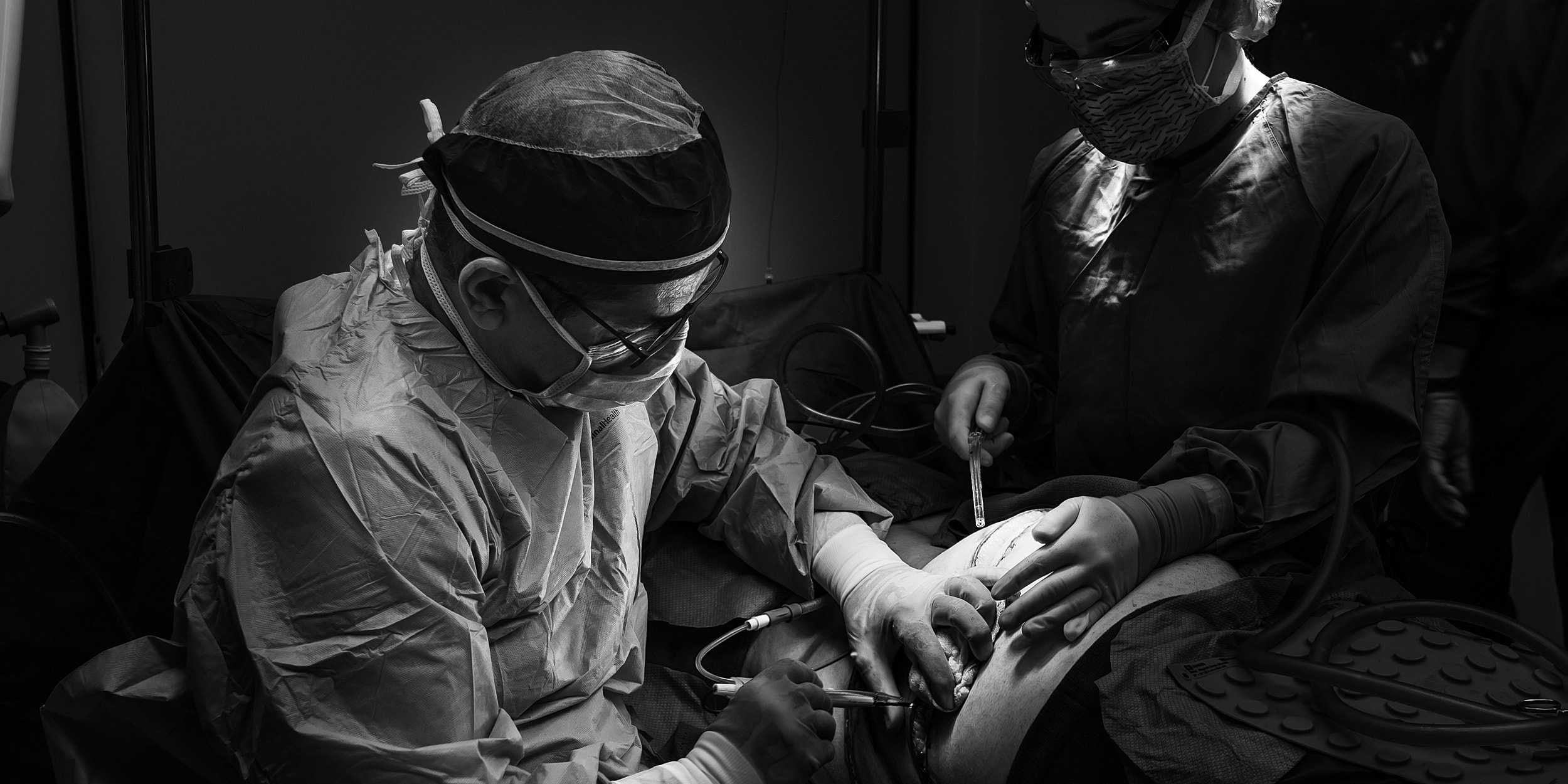
Surgeons performing a medical procedure in operating room.

Surgery Journal - 2025

Lower Body Lift Redo with Buttock Lift & Enhancement, Tummy Tuck Scar Revision and Spiral Thigh Lift Redo - August 2025

SURGERY INFORMATION:

LEARN MORE ABOUT: High-Definition Lower Body Lift™, High-Definition Tummy Tuck™, Thighplasty, Buttock Enhancement, Revision Plastic Surgery

PATIENT AGE: Early 50s

SURGEON: Dr. Siamak Agha MD, PhD, FACS
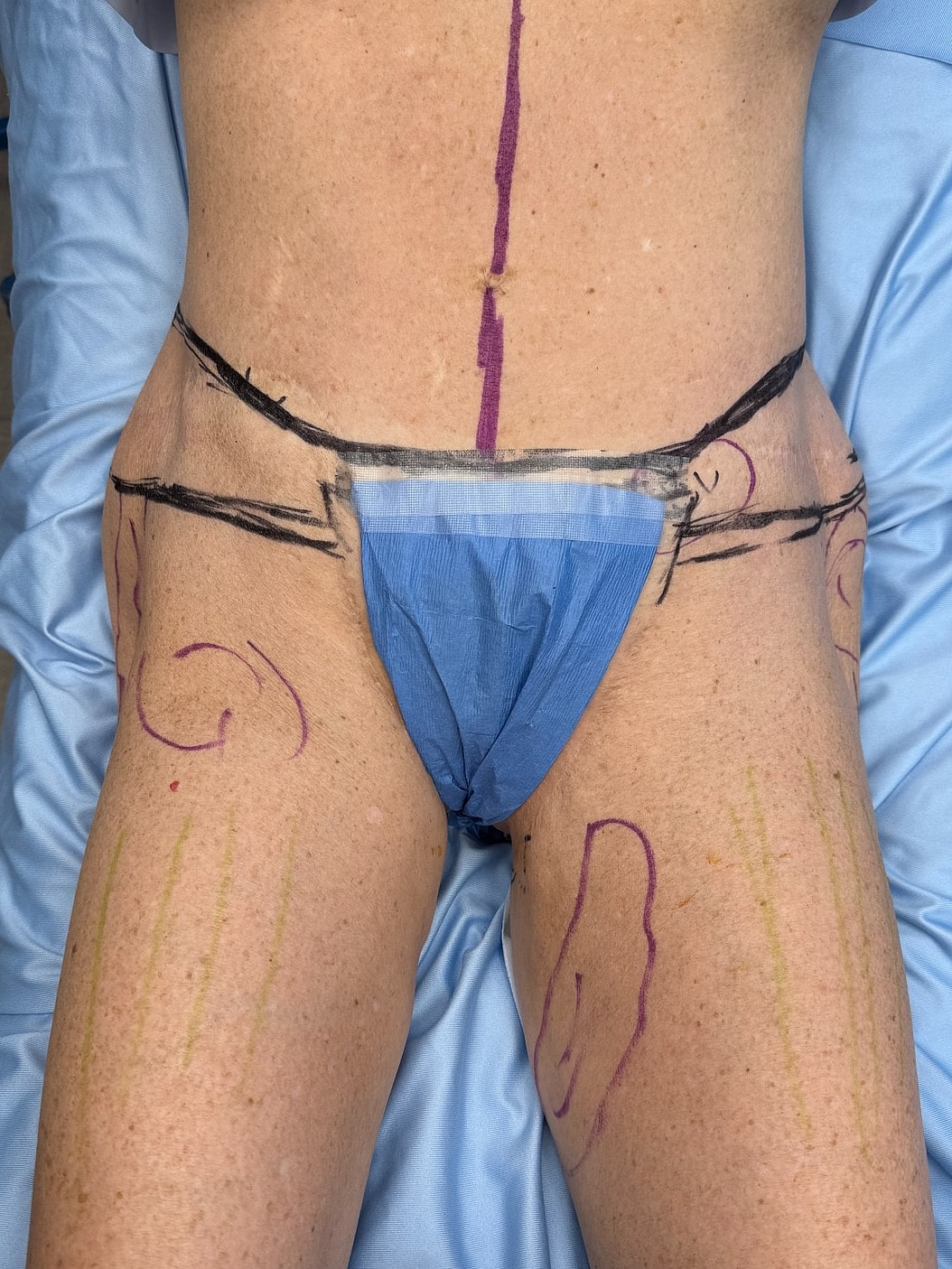
2½-WEEK FOLLOW-UP TRANSCRIPT:

So we are two and a half weeks out from her lower body lift revision, spiral thigh lift revision. What do you think? I'm in love. Literally in love with myself now. I love it. Look how beautiful these buttocks look, and some of that has to do with the fact that we actually planned it correctly.
Read More

But what you saw on the operating room table was not the final result, meaning that I'll give you an example. On the operating room table, she appeared to be wider here and shorter here, but I had just liposuctioned these areas because she had told me prior to surgery that, "I want to be more linear. I don't want to have hips."

So to me, I'm able to follow what my patients want, and nothing I do is cookie-cutter procedures anymore. These are all customized to what the patient wants or what you want. So when she said, "I don't want to have hips," I took the hips down. But what you see on the operating room table is swelling in that area, which makes her buttocks appear to be wider.

Another thing to take into consideration is the fact that I have to work with prior surgeries and prior incisions that previous surgeons have placed on her. If she has an incision here, I cannot put another one here because the skin in between will die. You have to utilize that previous incision. So if that incision was placed here, then I would have had to use that here and then brought it up here.

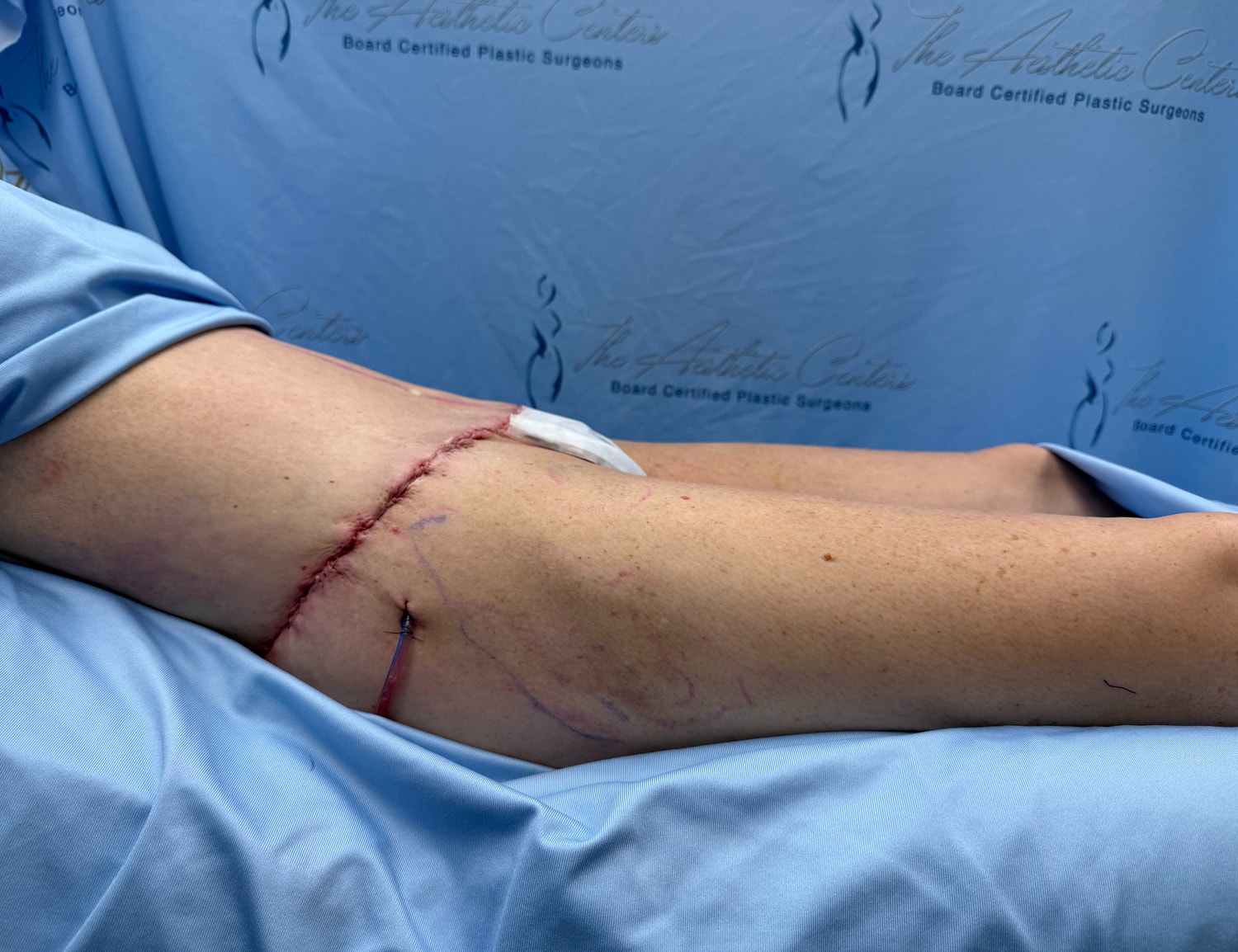
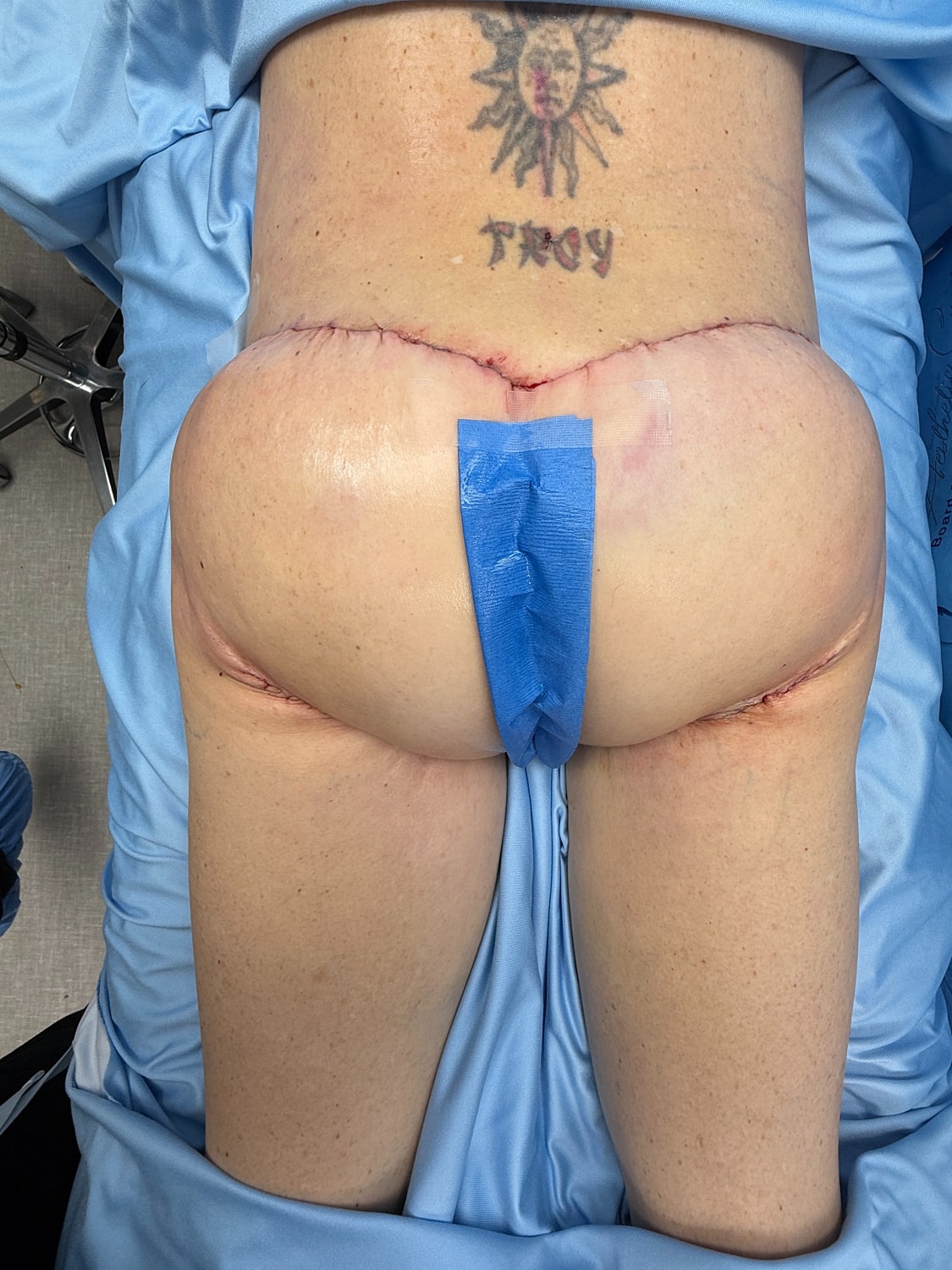
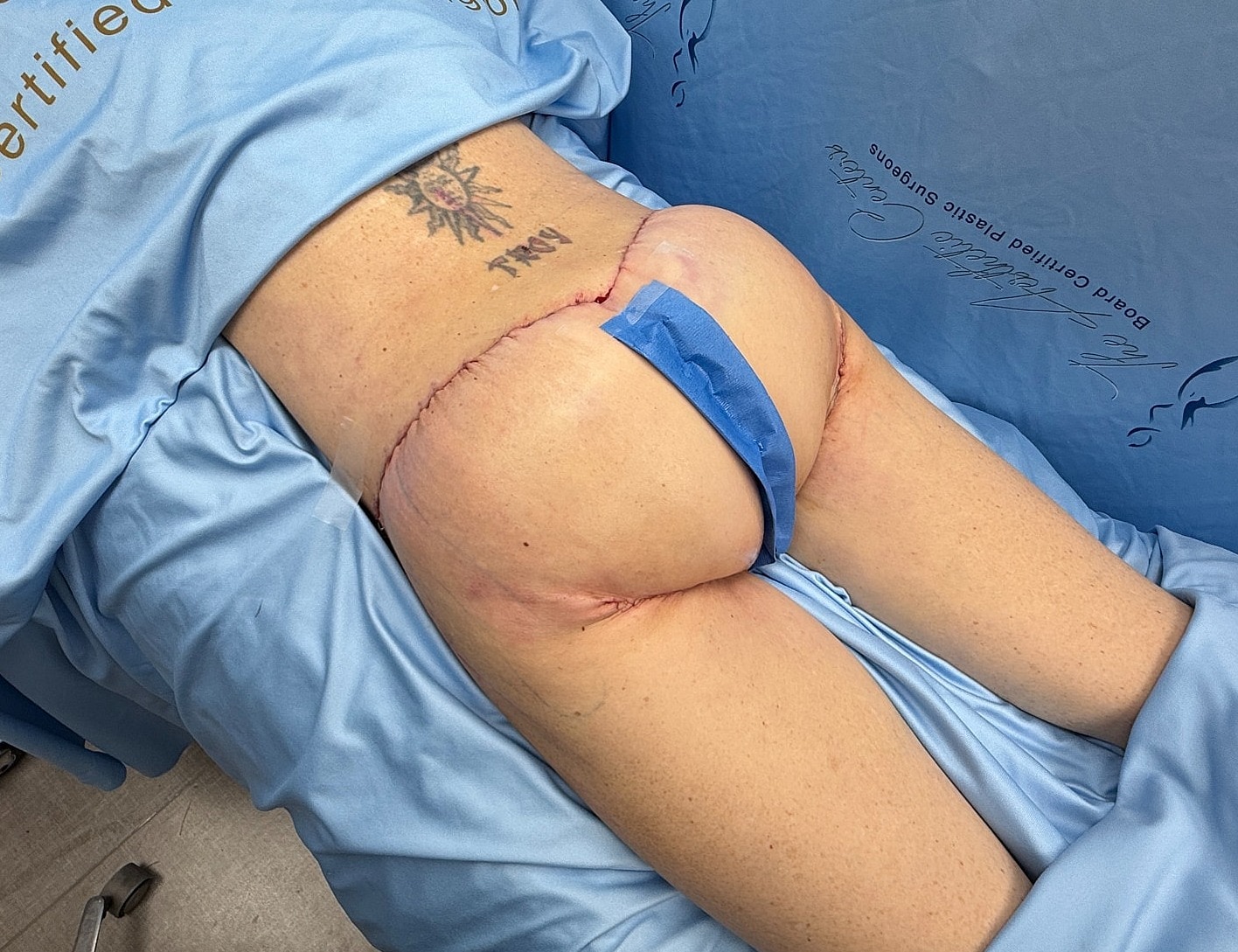
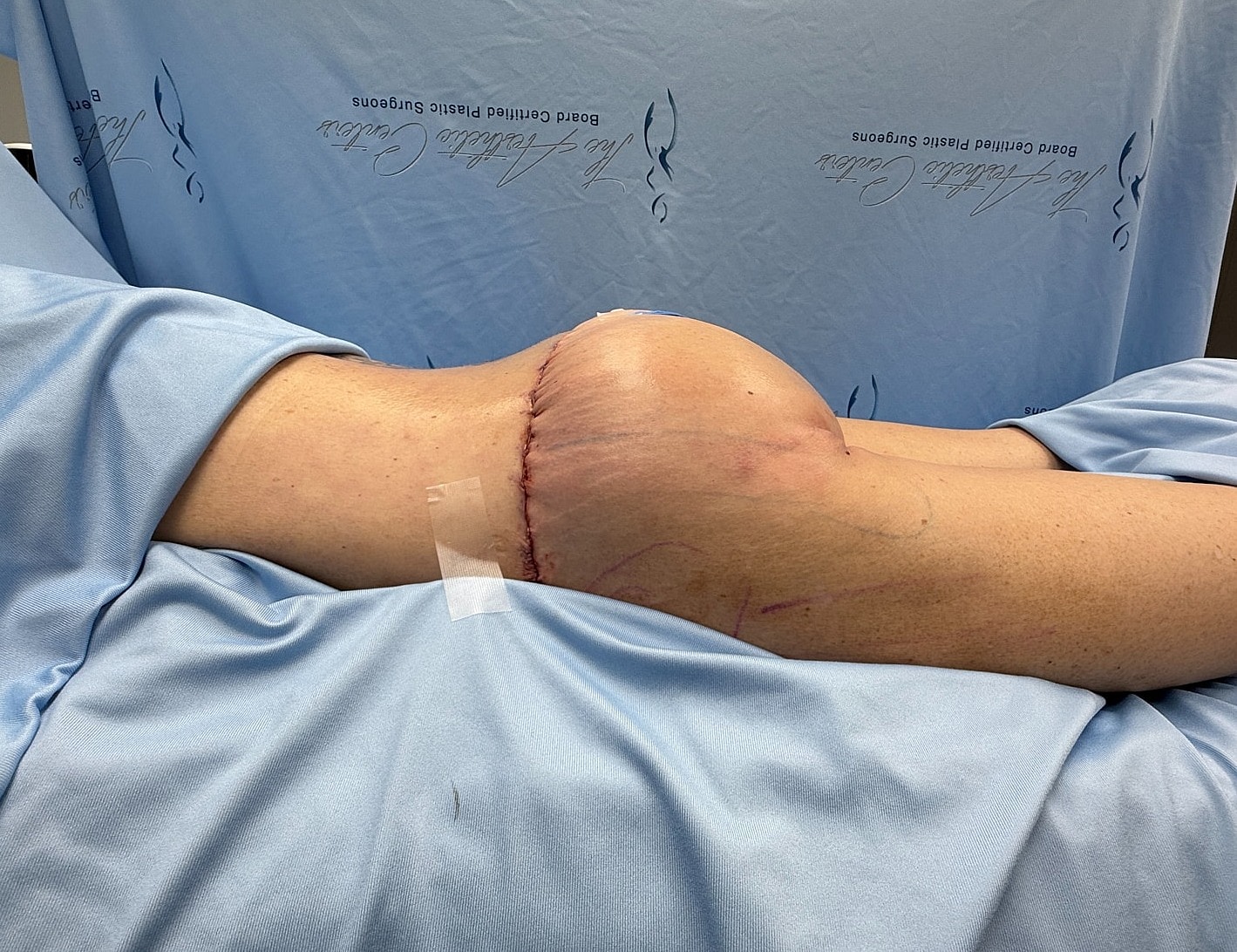
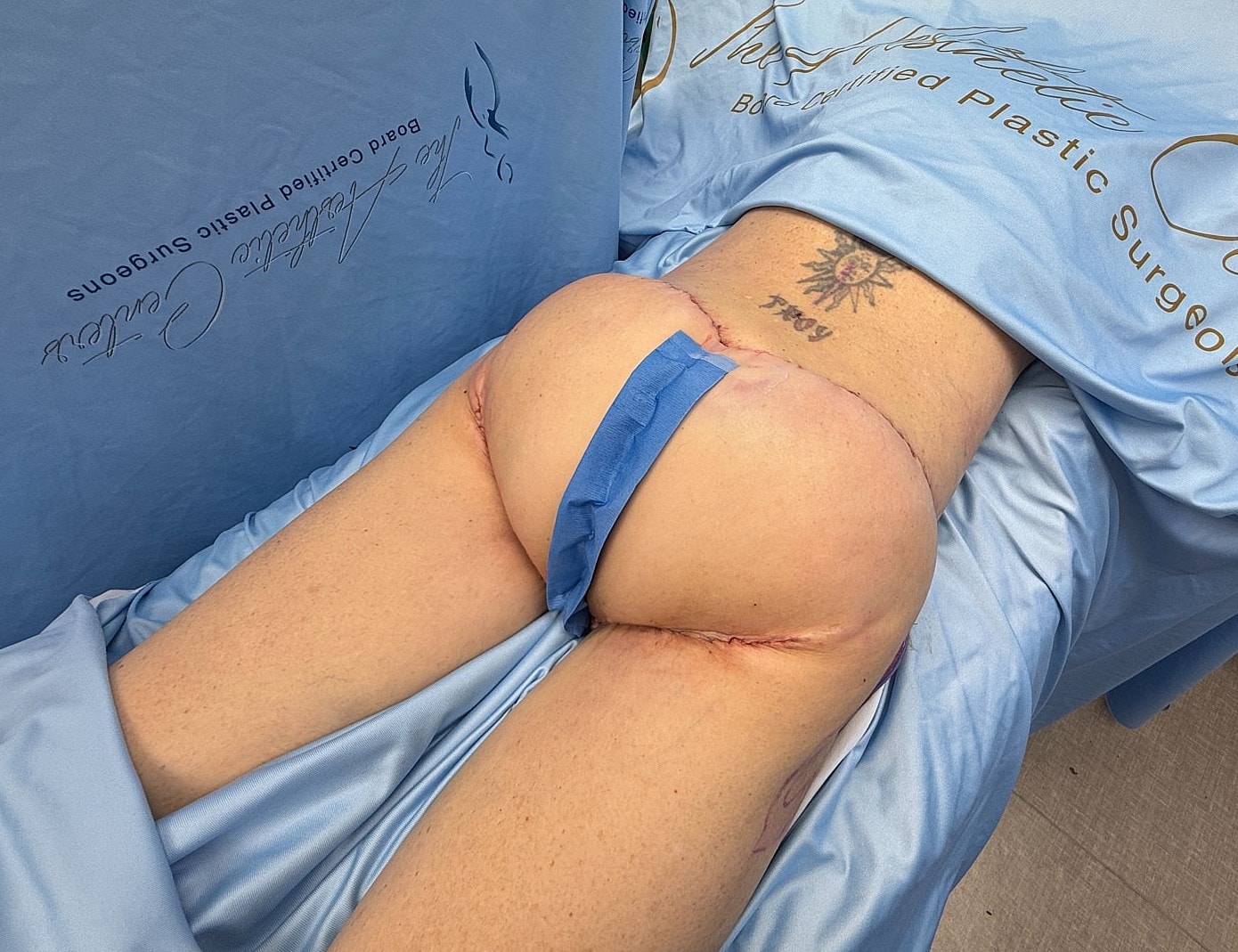
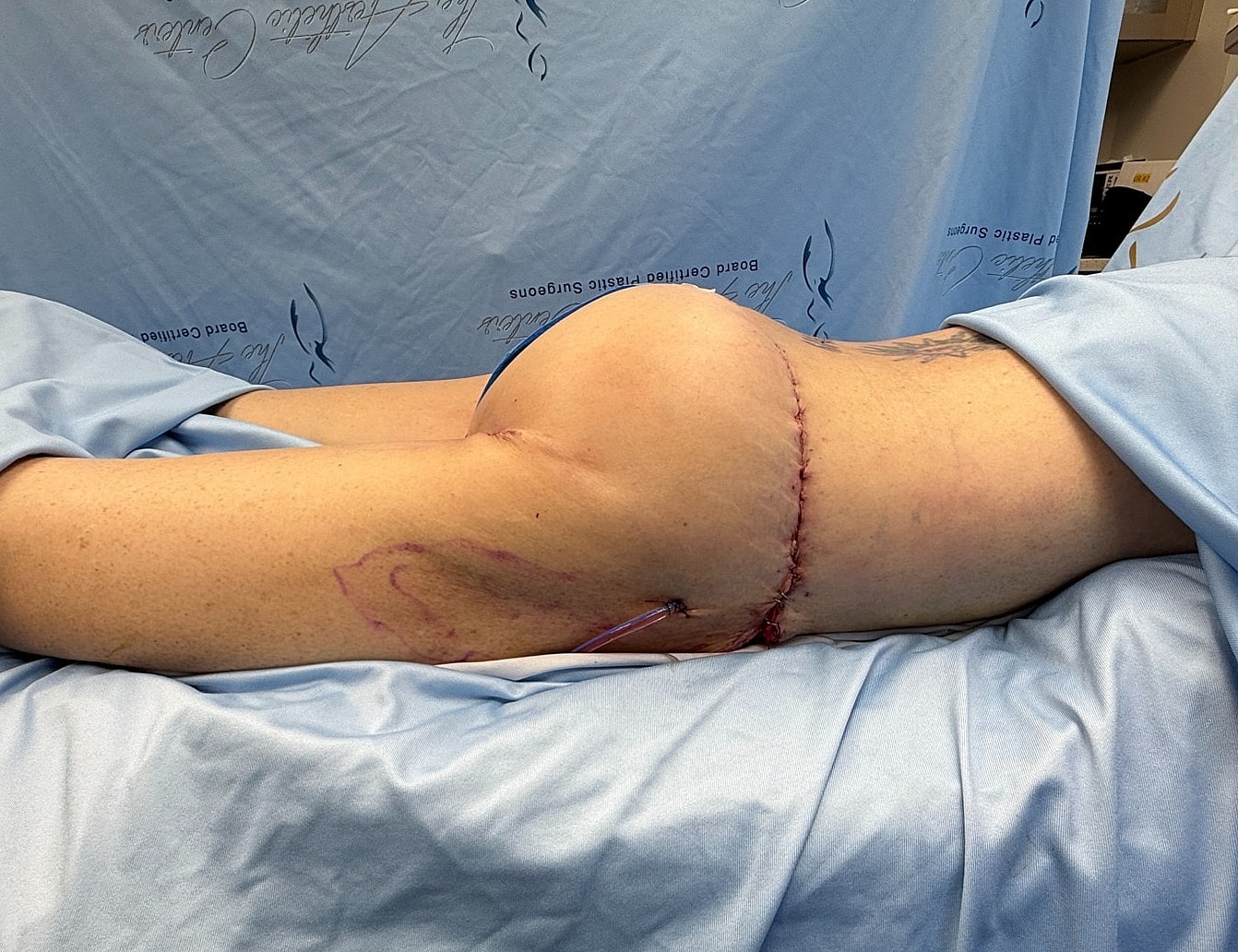
So fortunately, we were able to bring it high enough to create these beautiful round buttocks, which is the ideal buttock. You want to have a round buttock shape, and that's what she has. Her posterior thigh lift incision was here, and I brought it high enough. Again, this incision and this incision control her buttock height, and the width can also be controlled by rotation.

So we've controlled everything, and it turns out to be pretty magnificent in her case, and you can see as she turns, she looks beautiful. Prior to my surgery, the left buttock was slightly bigger than the right one. We tried to make it more symmetrical, but time will tell whether I need to go back and do additional fat transfer to the right one. We are somewhat limited by the amount of fat she has.

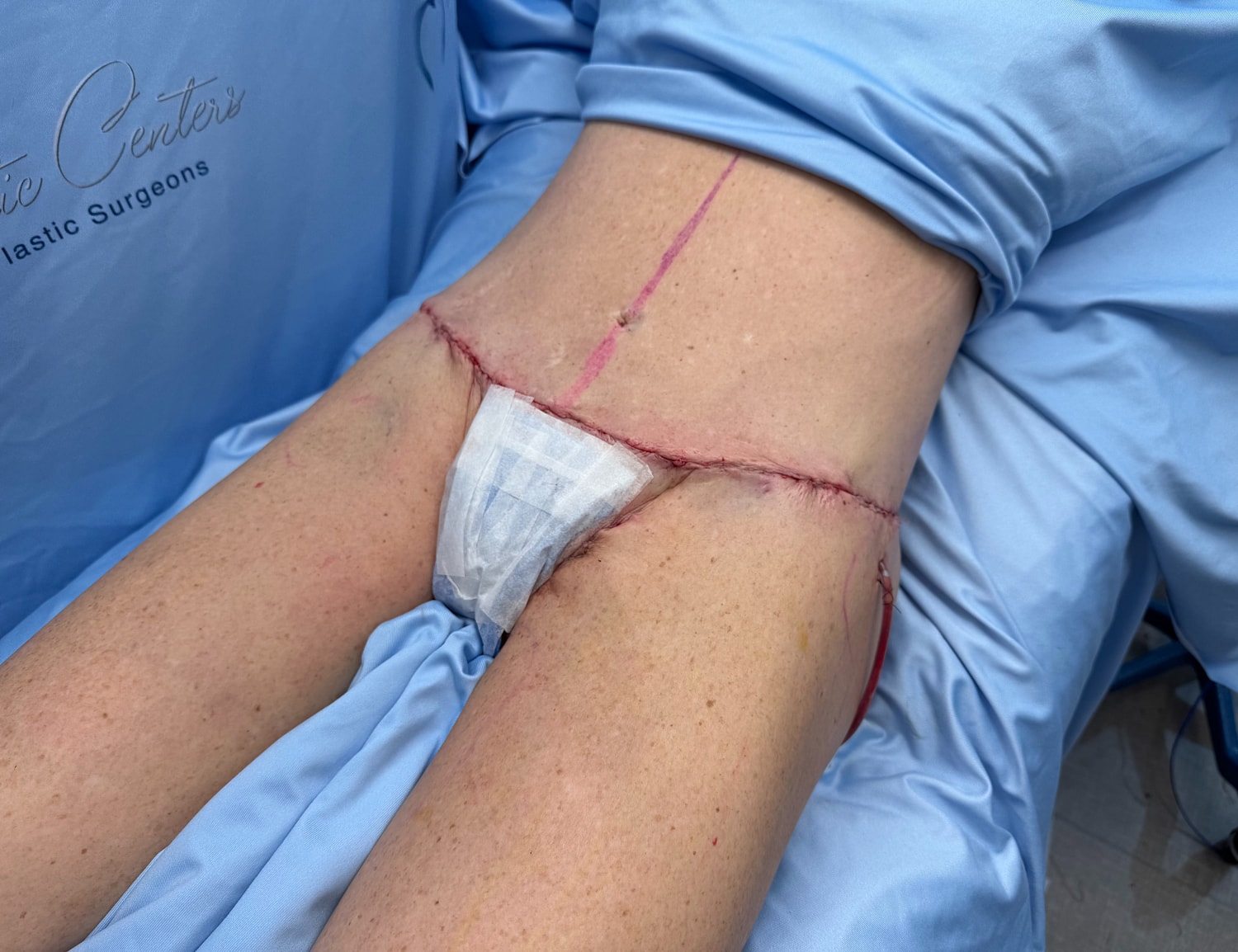
I also lifted the outer thighs, the front of the thighs, the inner thighs, and did an inner thigh lift revision. The navel is from her previous surgeries. It's not mine. I do not like round navels. But she's healing beautifully. This is two and a half weeks out.

And then the inner thigh incisions, any comments about those? I'm glad just to have them. I didn't have any before. She's talking about her labia because they had placed these incisions lower, and she had labial spreading. So in the process of redoing the lift and bringing the inner thigh skin higher, we actually recreated the fullness of her labia.

Essentially, what happens is that when the incision is too low here, it pulls on the labia, alters the shape and the fullness of the labia by spreading it and making it wider and more of a flatter labia. So when you correct this, when you bring this up, when you reconstruct the groin crease, you not only are placing the inner thigh lift incision in the proper anatomical position, but also you're recreating the fullness that is part of the labia as a result of it, and that's what she's referring to. Thank you. Thank you.

Surgery Plan

SURGERY PLAN TRANSCRIPT:

So today we'll be doing a lower body lift revision. Our patient wanted everything videotaped for her journey. So if you're seeing her face, that's actually by her desire. Tell us what happened. I went in, I had some loose skin. I had fluctuated in weight on and off. But you weren't a weight loss patient. No, I was not a weight loss patient. I just had four children, and so I wanted a tummy tuck, and my thighs were drooping.
Read More

So I went in. I have had multiple surgeries to correct a thigh lift and a lower body lift. I spent over $85,000 prior to coming here, and I just want other people to know that it is possible. I have always nicknamed myself because of the inner thigh and what it looks like. It has been something that has bothered me very much. Nobody should have their private area down their leg. It should be where it's supposed to be, and this should not be the outcome.

And I hope that I can be an inspiration to others, that there is hope out there, and Dr. Agha is the best. I have researched and researched, and this is what he does. Sadly, he fixes other people's work, but he does amazing work. So I would take any percentage of improvement over what I have now. Thank you.

So she's from out of state, as you can appreciate. She had these surgeries two years ago. It's only been two years, and she went to somebody who she had researched locally and who was meant to be an expert in body lift and thigh surgeries. And as you'll see, we have multiple issues still remaining.

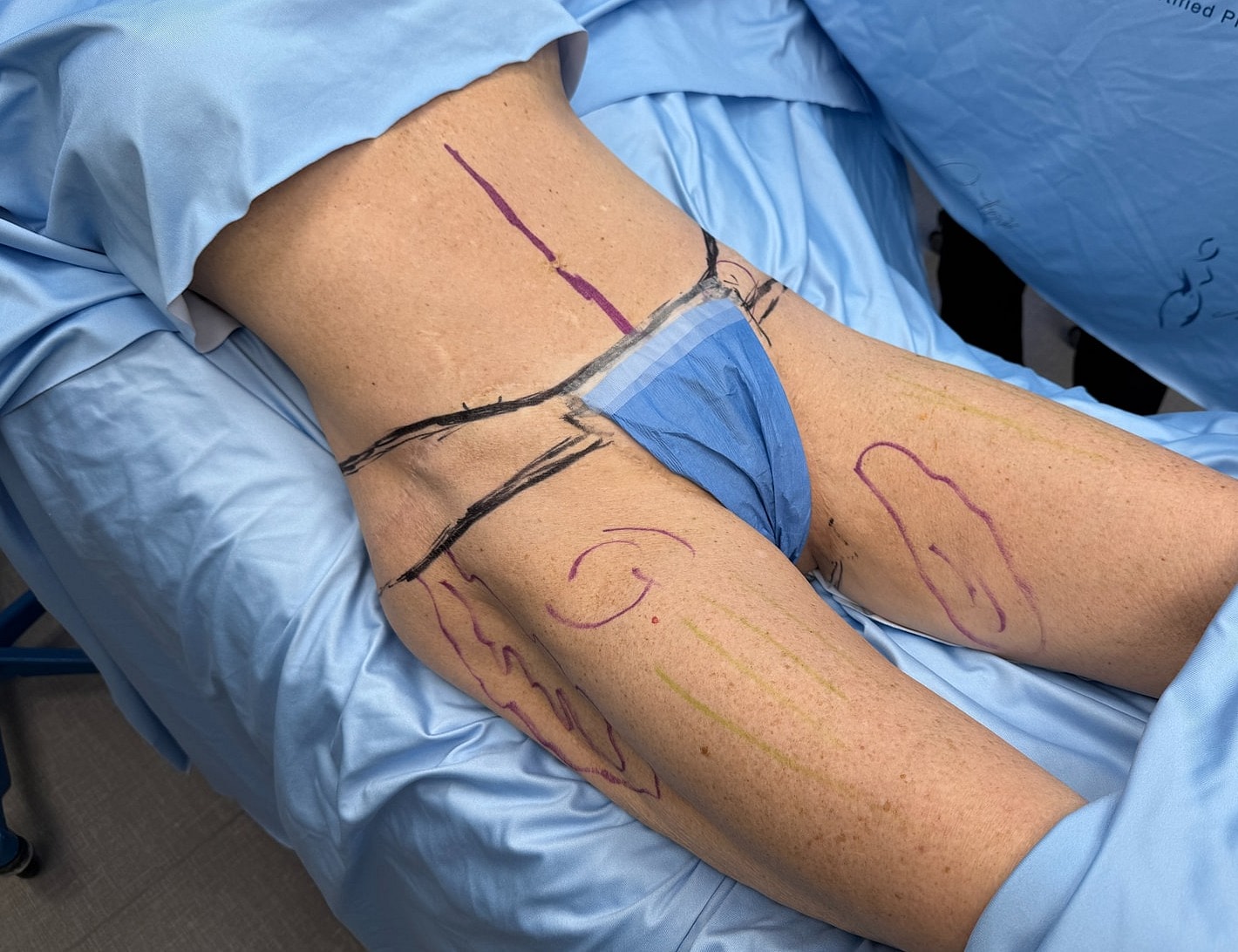
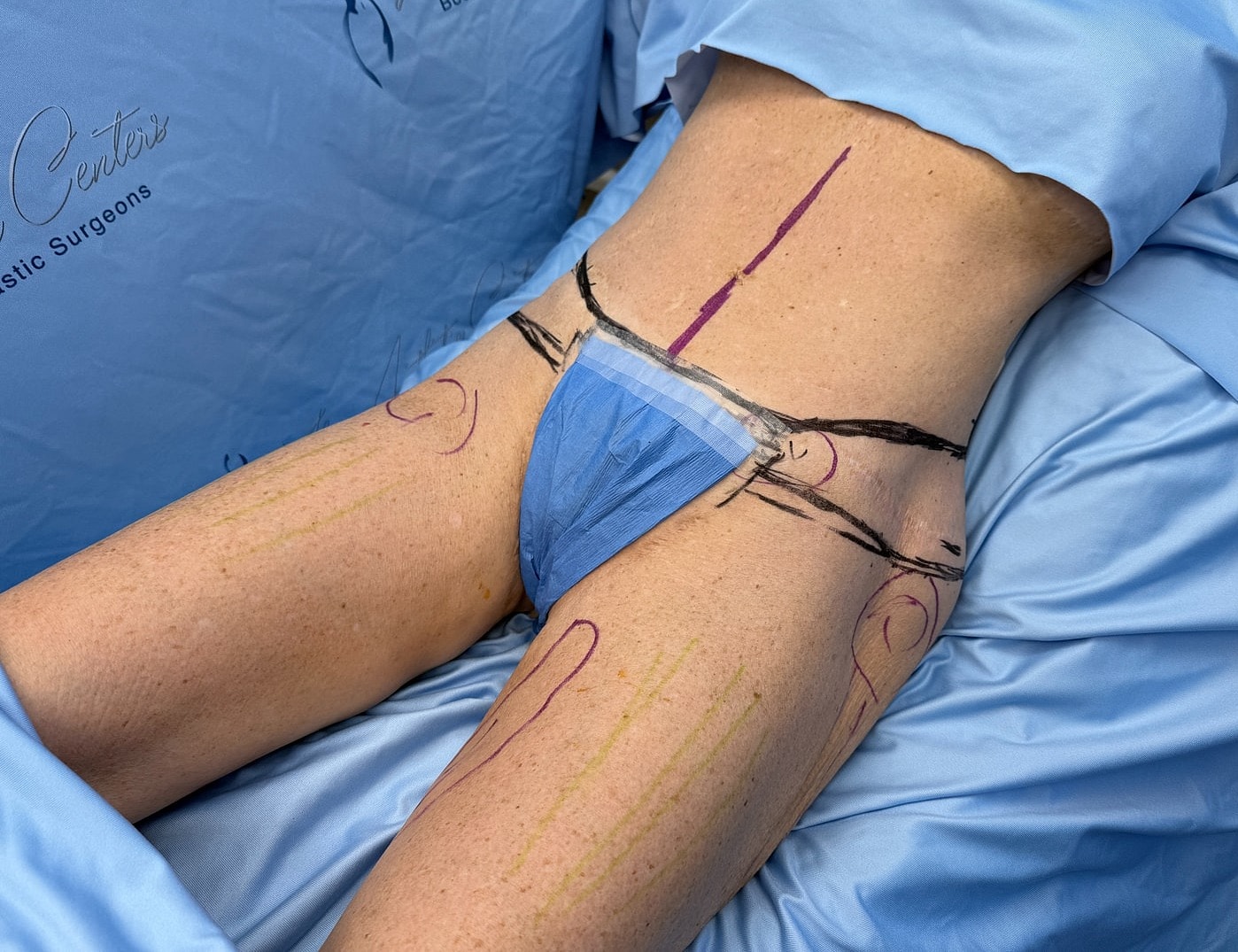
Number one, we'll start with the front. Look at her scars. The scar starts here and then waves up and then waves down, and here it's like a step-off deformity. What she's referring to about the inner thighs is this scar. So you see her inner thigh scar is actually lower than ideal. It's not in the groin crease. Her groin crease is up here. So she has about one inch of labial spreading on each side, and one side is worse than the other.

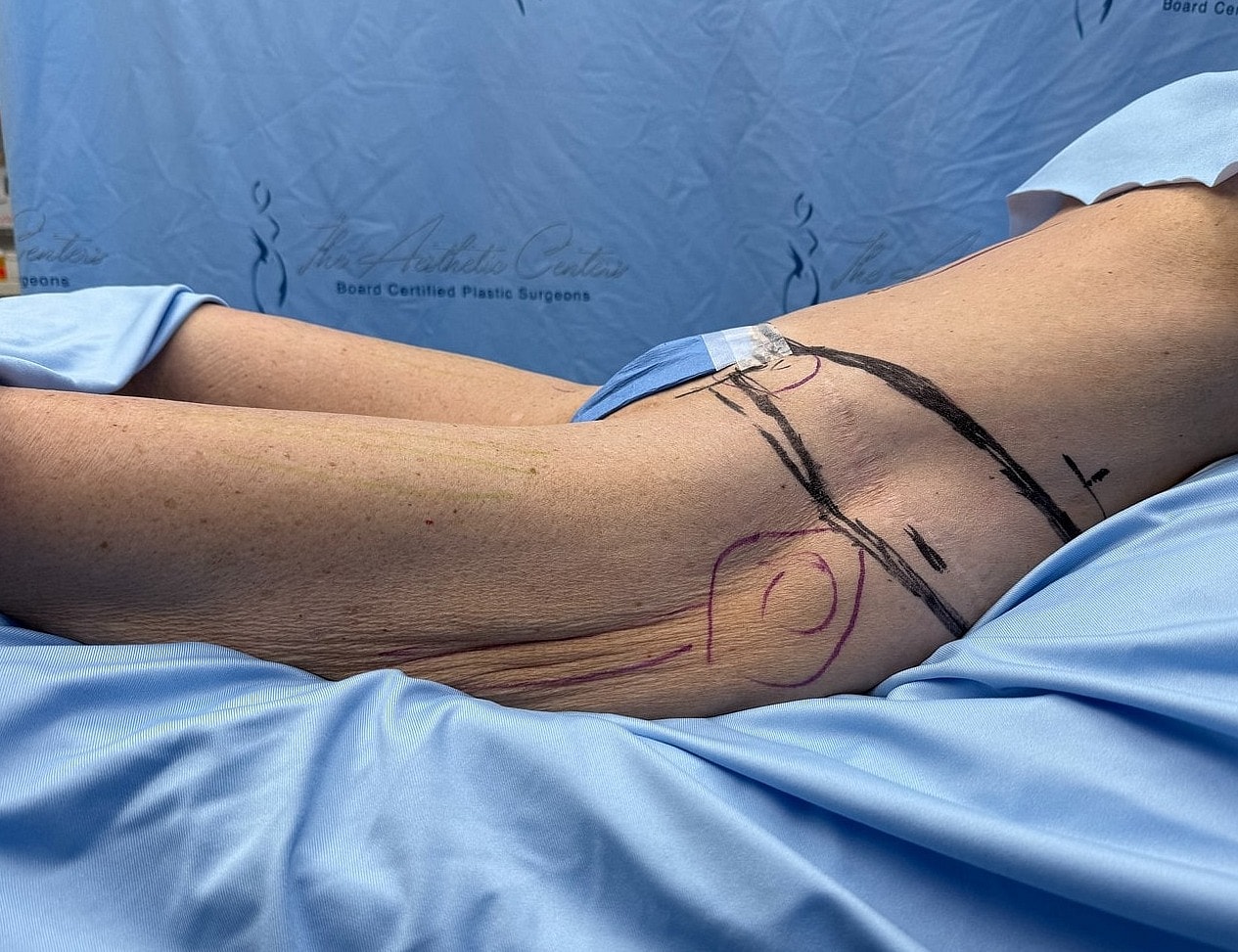
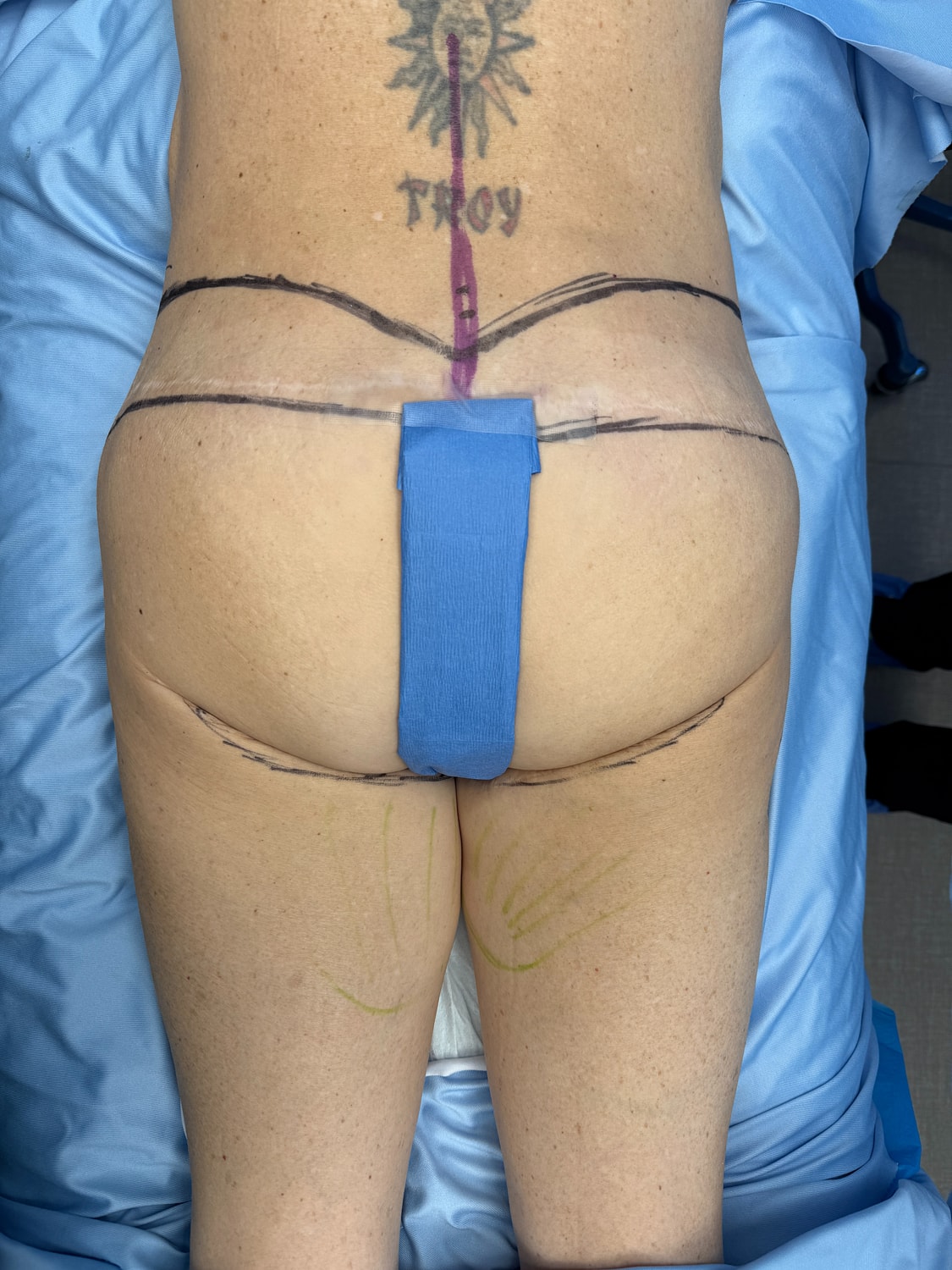
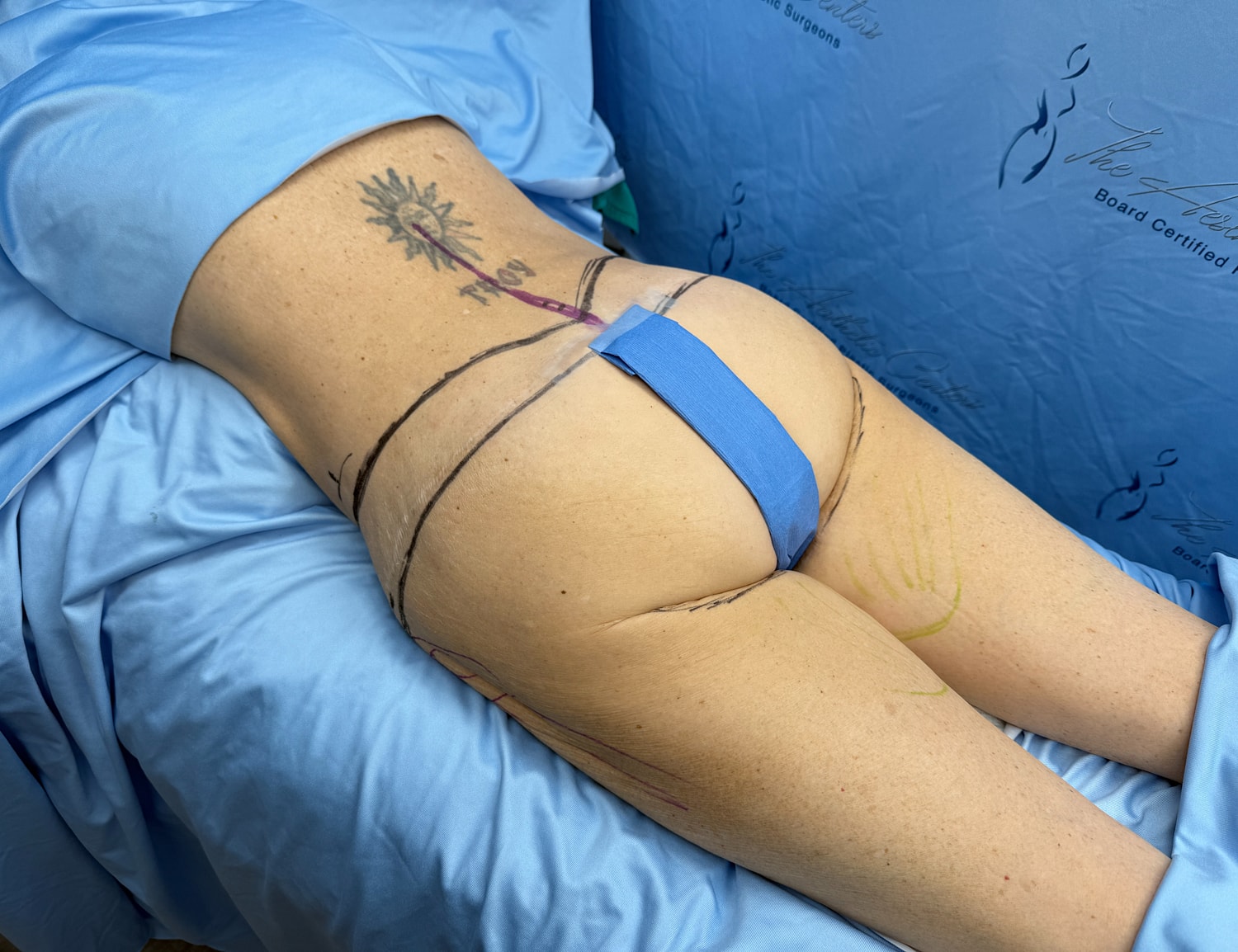
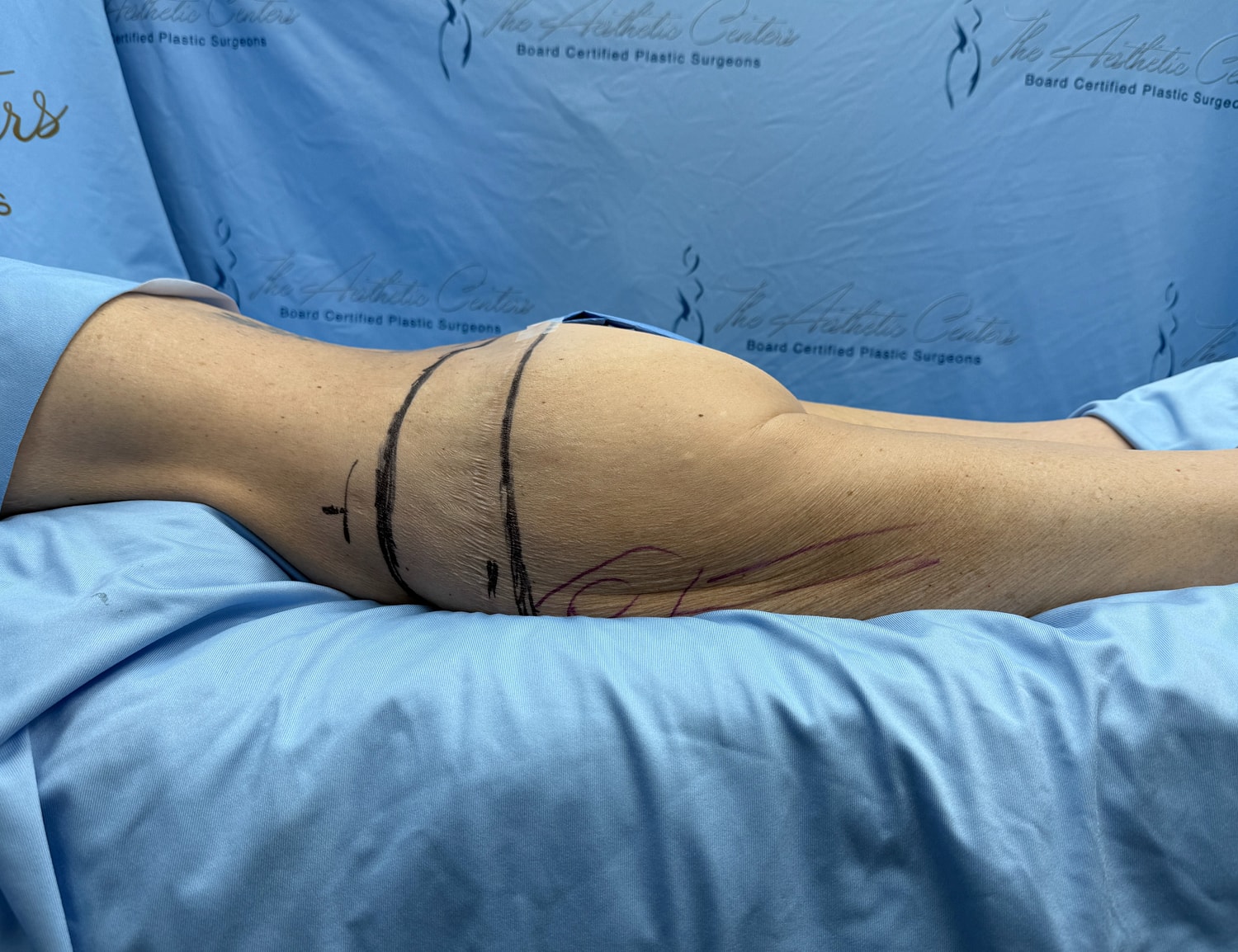
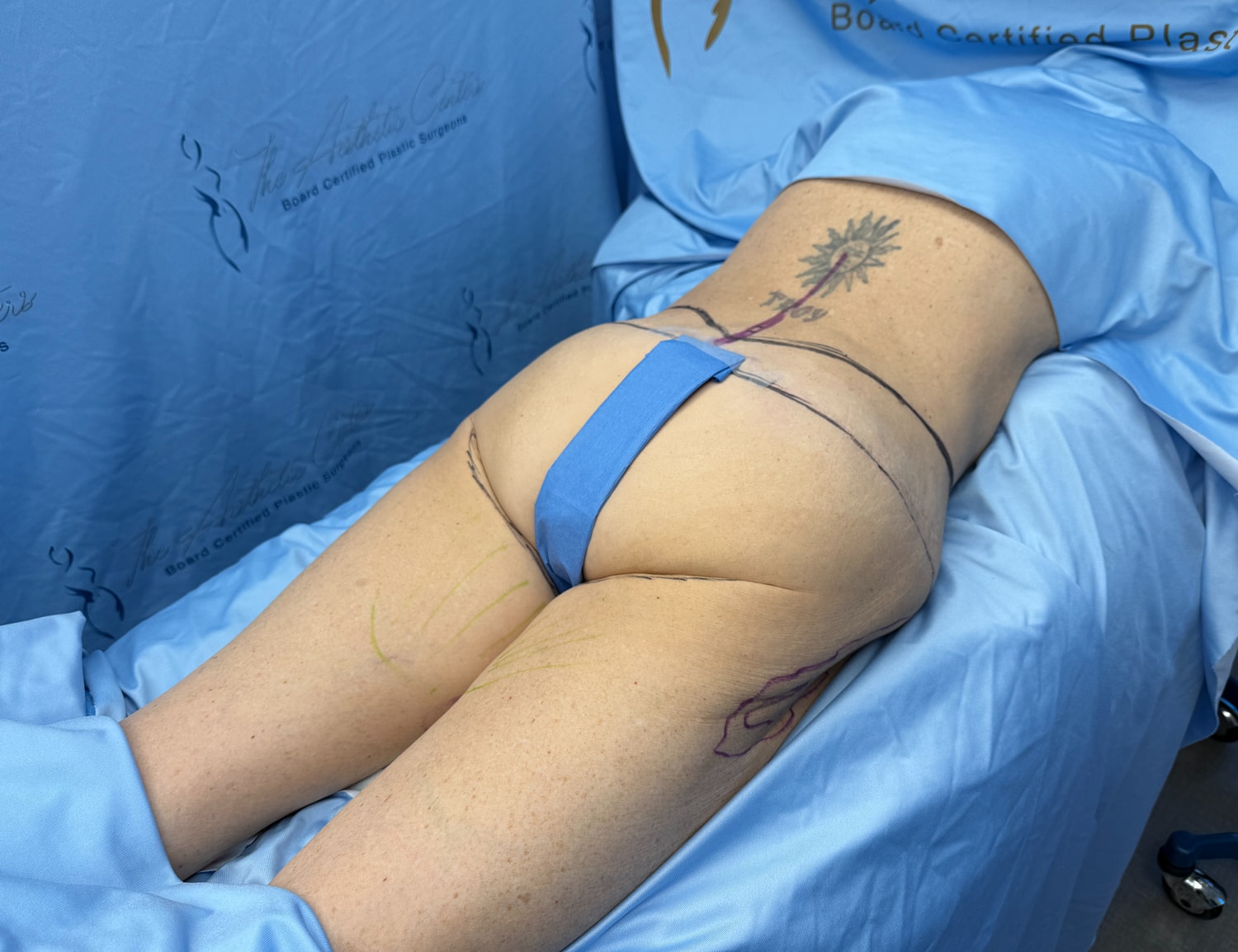
She still has, let's turn this slightly, she still has this much skin that I can cut from her thighs. And then as we turn towards her back, a low-cut buttock incision, which I don't really like because it results in drooping of the buttocks over time. This is what she needs. So we have to elevate everything again.

Again, only two years out, and I can cut, just like the patient that we posted a few days ago, four or five inches. Well, maybe four inches from the buttocks, elevate it, and anchor suture it to the higher position. And then look at this. So she has had all these surgeries. She has had a lower body lift. She has had a thigh lift. She has had an inner thigh lift. She has had a posterior thigh lift, or a spiral procedure, two years out, and it's not done optimally.

And there are reasons for it. One reason could be because the surgeon doesn't do this as often as they should. The second reason has to do with the way that the body lift is being done, and there are three different ways that plastic surgeons do body lifts. Some employ a lot of liposuction, some just remove skin and suture, and some apply anchoring sutures. And ultimately, that makes a difference. The technique makes a difference.

And most patients don't really know what technique a plastic surgeon is employing. And half the time, unfortunately, most plastic surgeons don't do a ton of body lifts, so they are really just removing skin and suturing everything together. And employing skin as your support without any foundational correction is like remodeling the exterior of your house without remodeling the interior and creating a foundation for the exterior of the house.

When we do body lift surgery, we actually build it from the bottom up, and that gives you longevity. So despite her previous lower body lift done two years ago, we can still cut this much skin out. During the surgery, I will be correcting all of her previous scars. Areas that have been over-liposuctioned and indented will be filled with fat. We'll take some fat from here and here for the fill.

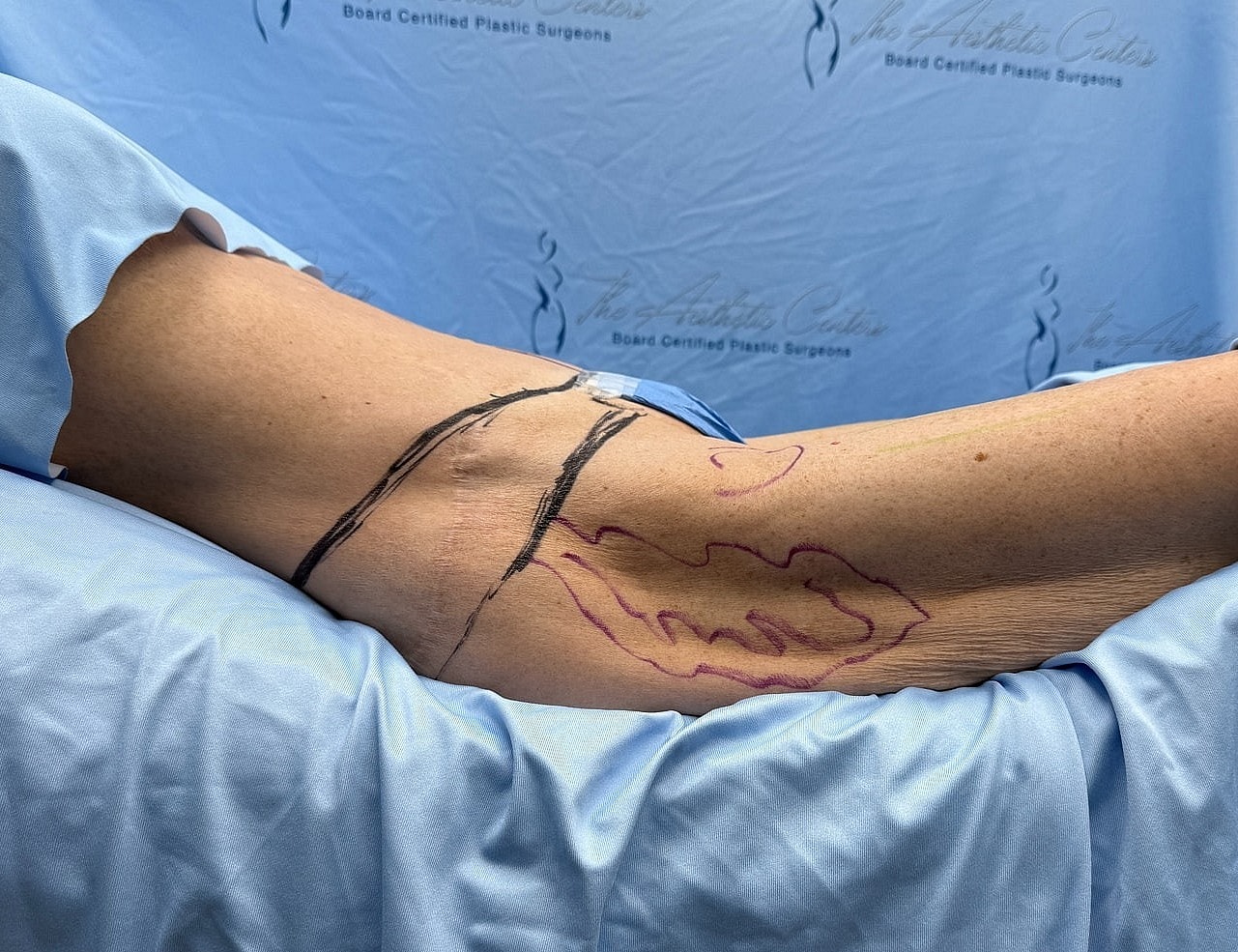
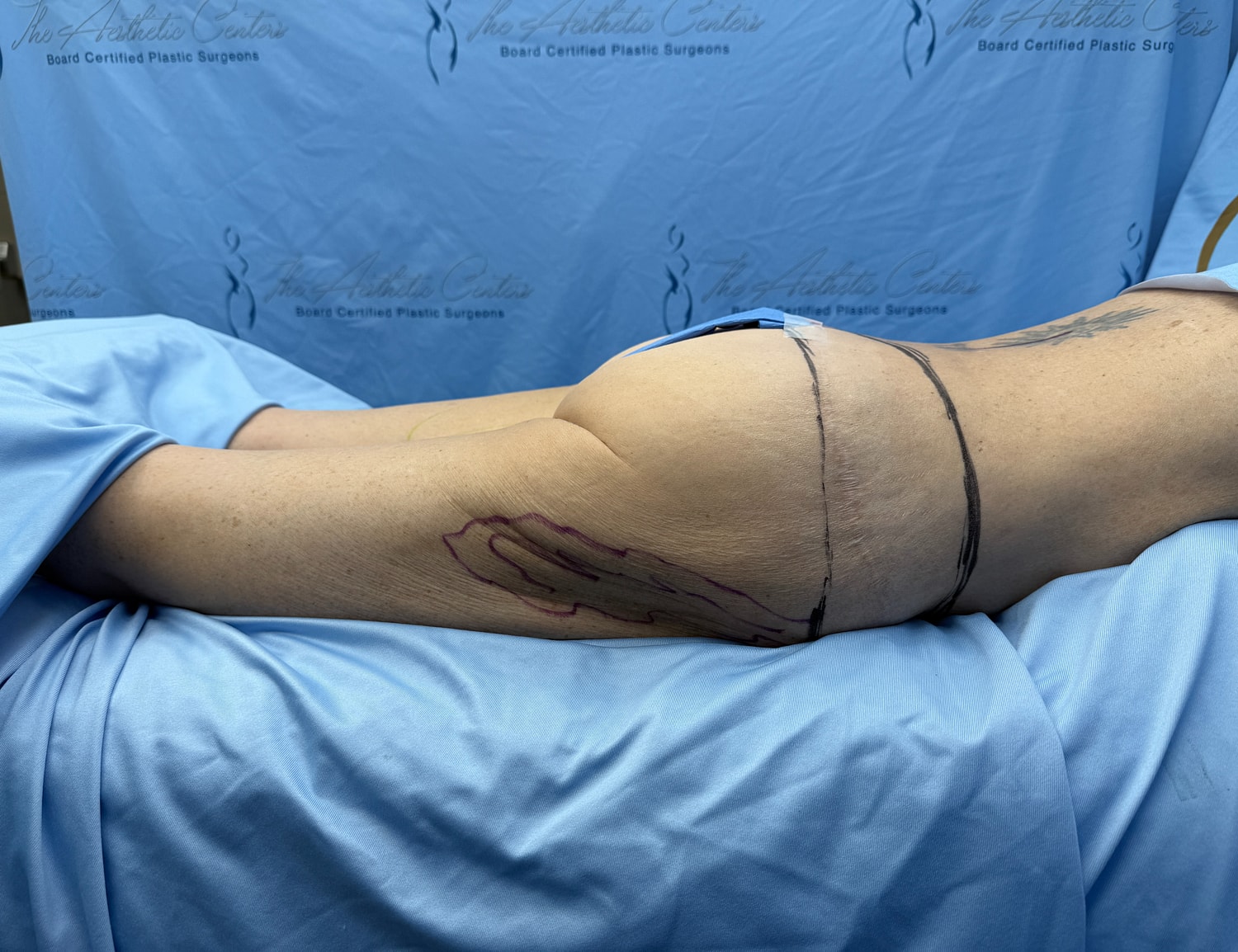
And on the back, what I want you to see is how incorrectly this scar has been placed. This is her infragluteal crease, and this scar is about an inch lower on each side. A little better there, but down here is actually about an inch and a half lower. The scar should be here, and it's here. So we'll be fixing the spiral thigh lift scar at the same time and creating and reconstructing her infragluteal crease.

And as I come to the front, I will be elevating the inner thigh scar up and reconstructing the groin crease. This is the hardest reconstructive procedure because if too much skin has been previously cut, which has been, it's going to pull the labia back down. So I'm going to put a series of anchoring sutures, and after that, I'm at the mercy of whomever she believes in.

I can only do what I can do. Once too much skin has been removed, you are limited in what you can do in terms of reconstruction and revision. So what you'll see, look at the sides. They have over-liposuctioned this area. So I'm going to put some fat back into this area. Same thing on the other side.

And then look at the inner thigh scar. So her legs are together, but her inner thigh lift scar is this much lower. That's her groin crease, so about one inch lower than ideal. It's a little bit better here. There you go. About a centimeter and a half here and about two and a half, maybe three centimeters there. And there isn't a ton of skin left. So this is going to be a tight correction, but I've done this before.

Before & After Surgery Photos

Marked skin for a surgical procedure or treatment.
Surgical site on lower abdomen with dressings.
Surgical markings on patient’s abdomen and thighs.
Post-surgery recovery with stitches on abdomen.
Marked leg preparation for surgical procedure.
Surgical incision on a patient's arm.
Patient preparation for cosmetic surgery procedure.
Surgical incision on lower abdomen post-operation.
Surgical markings on a patient's arm pre-procedure.
Surgical wound on a patient's thigh.
Patient's back with markings for a procedure.
Post-surgery view of stitches on rear end.
Patient preparation for cosmetic body surgery procedure.
Patient post-surgery with visible stitches.
Surgical markings on a patient's side.
Post-surgery knee with visible incision line.
Patient preparing for a cosmetic procedure in surgery.
Post-surgery view of a patient's lower back.
Surgical markings on patient’s arm during procedure.
Surgical procedure on patient's hip area.

Surgery Result - Back

TRANSCRIPT

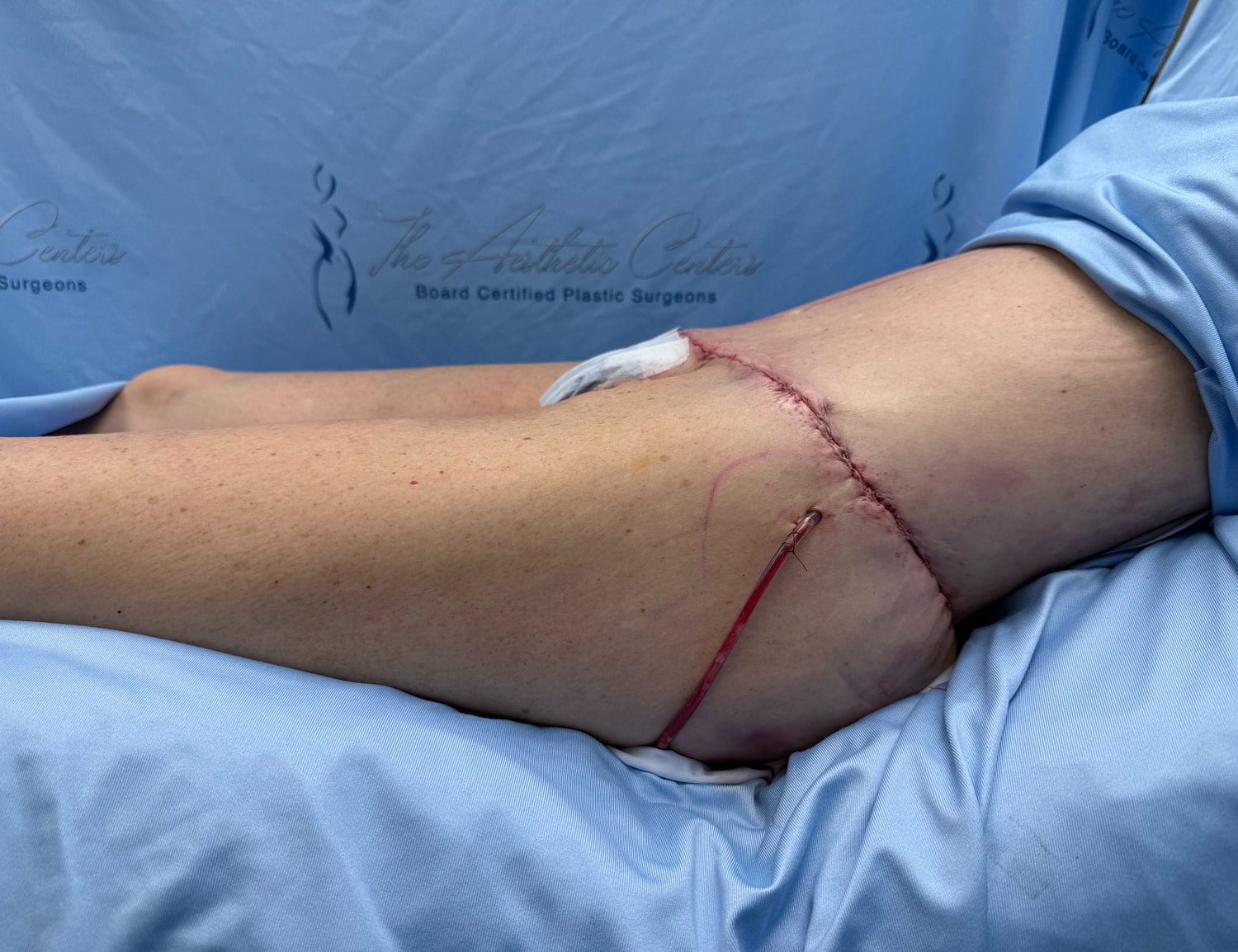
So when it comes to revision plastic surgery, oftentimes I'm constrained by what the previous surgeon has or has not done, and oftentimes I have to follow and utilize their scars and incisions that have been made on the patient. In the case of her lower back, upper buttock incision, I was fortunate enough to be able to remove all of that incision and lift her buttocks by about four inches. The whole buttock unit was elevated and anchored with sutures at a higher position, and I removed about four inches of excess lower back, upper buttock skin. Coming to the posterior or spiral thigh lift, a procedure that we described in 2012, her incision was much lower. It was about an inch and a half lower on this side and one inch lower on this side. When I say it was lower, it was lower than the ideal position, which is the infragluteal crease. Having lifted the buttocks, that incision actually appeared to be even lower than ideal. So I had to elevate the whole posterior thigh unit and anchor suture it at a higher position, and then reconstruct her infragluteal crease. And I had to do all of that utilizing the previous incision that was made in this region, meaning that you can still see the end of that incision. And it's really not ideal. I would have liked to place my incision a little bit lower around here, but unfortunately, because of the previous surgery, I'm compelled to use what has been done and not to make additional scars on our patient. Nevertheless, we have a great correction. This morning, my patient told me that she likes to be more of a linear physique rather than a curvy physique, and I've followed her instructions and tried to make her more square and less curvy.

Live Surgery

TRANSCRIPT

So I'm on the tummy tuck scar revision part. We weren't actually planning to do a tummy tuck revision because she didn't need it. But as we get in there removing the old incisions, what you'll find is this white lining. This is a seroma. So a seroma is essentially serous fluid that gets collected in a bag of membranous tissue, and this is a membranous lining. And this lining continues to produce fluid. And as you can appreciate, the abdominal skin and fat have never had a chance to stick back to the muscle. So this pocket always exists, and the way we prevent this is by putting sutures that suture the fat to the muscle, and that may have been done, or drains. I'm a fan of both. I do some sutures, and I still put my drains because I don't want to have any seromas because it does compromise your results. And now that we have it, I have to actually shave it off so that we can do the right thing for our patient.

Surgery Result - Front

TRANSCRIPT

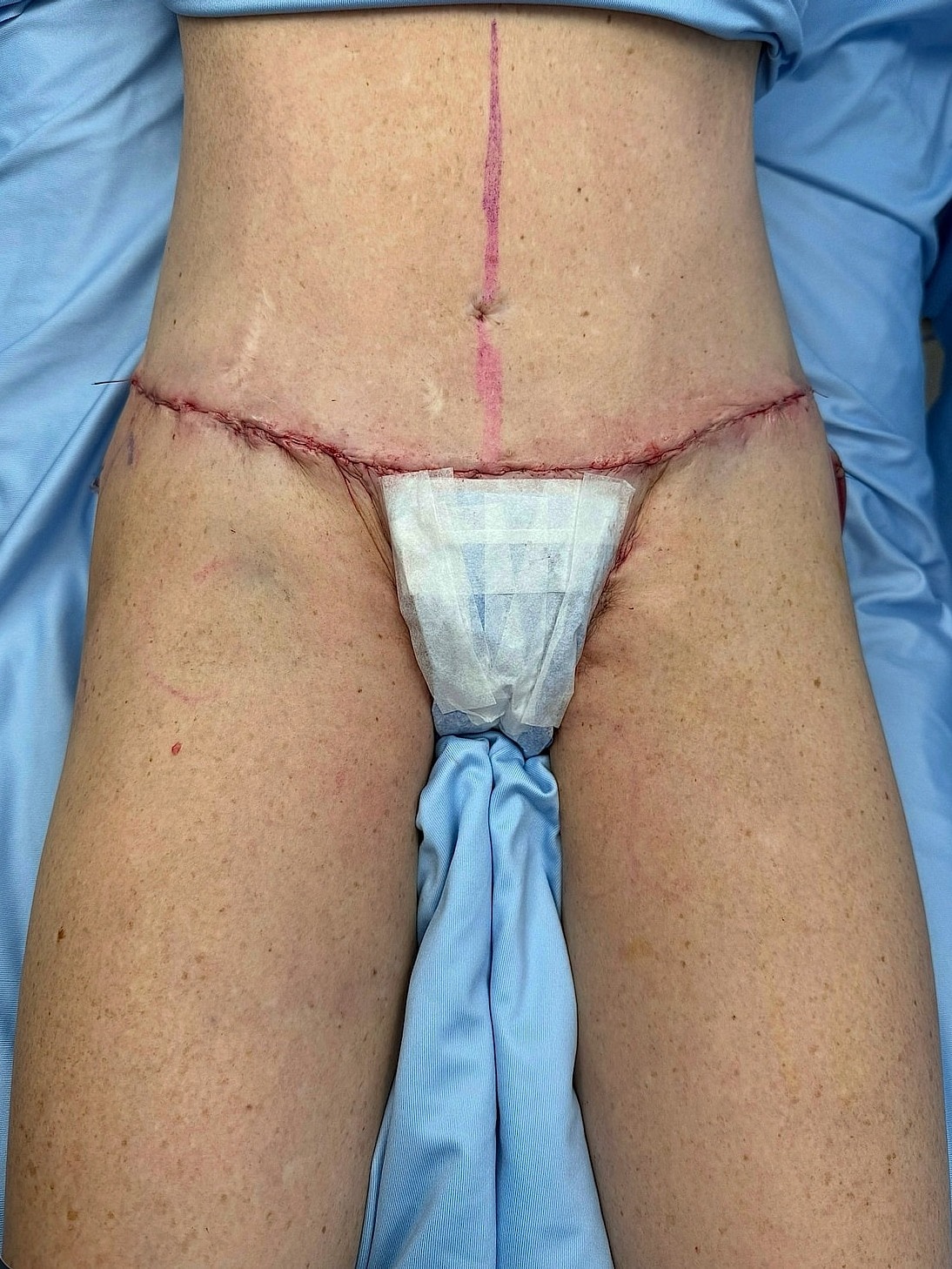
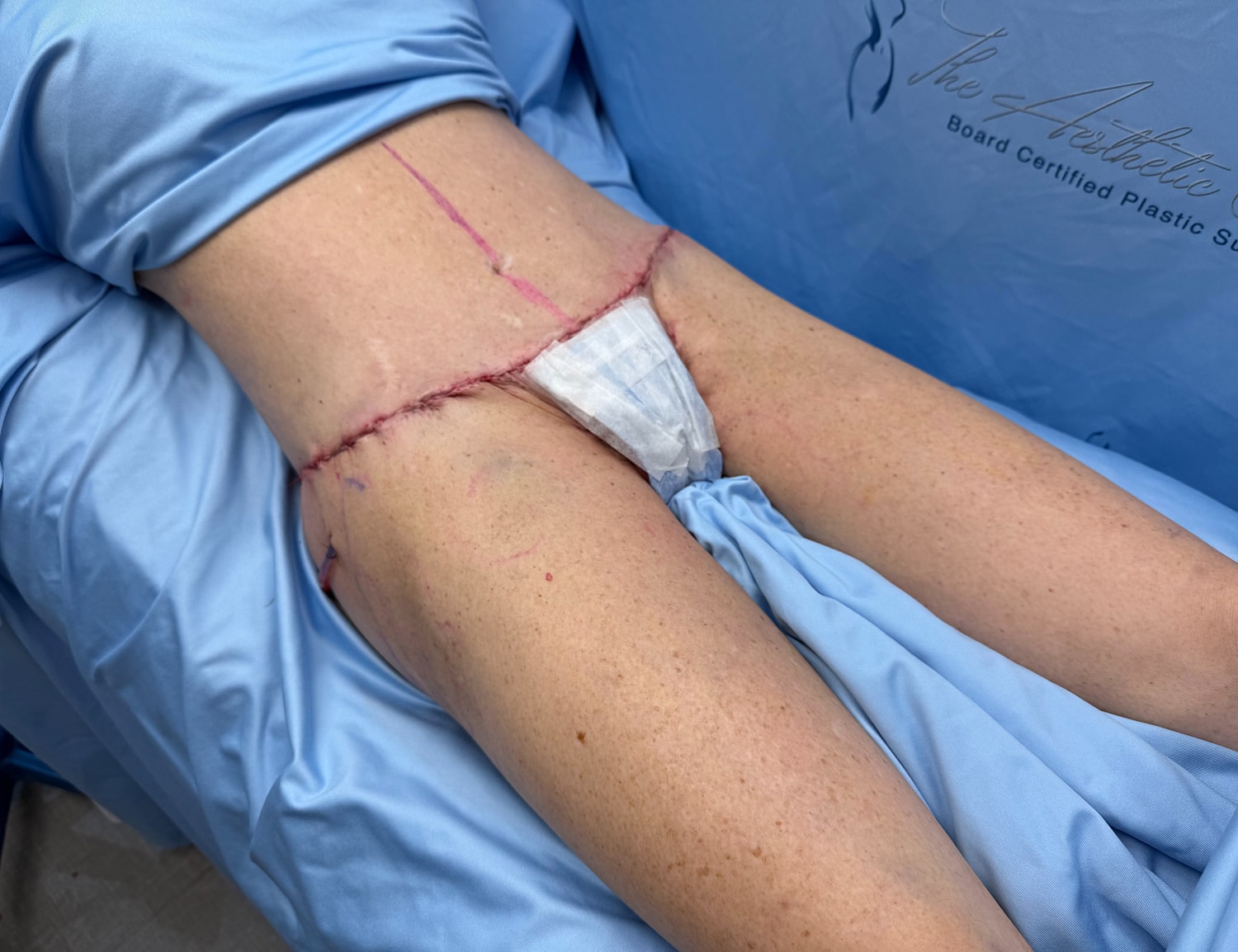
Okay, so finally done. I am truly exhausted. It's been a very hard case, and most of these revisions, the inner thighs and the posterior thighs, or the spiral thigh lift redos, are really, really hard surgeries because invariably too much skin has been removed, and it makes the secondary surgery a much bigger, more comprehensive, more complex surgery. In a nutshell, on the front, we extended with our incision, but what I neglected to tell you is that on the back, we found a huge seroma cavity under her buttock flaps, and we actually had to fix that. On the front, I was meant to do a tummy tuck scar revision, but as we cut this, I also found a big seroma cavity here. The seroma cavity continues to produce serous fluid and prevents the fat from sticking to the muscle. Once you have the membranous linings, you have to either remove them or you have to coagulate them so that you create injury and essentially force the fat to stick back to the muscle. So this was probably a drainless tummy tuck, drainless body lift, and I didn't see any signs of drain placement, so unfortunately these things can happen. So we had to fix the seroma cavity, even though it wasn't planned. We had to do it, obviously. I wasn't going to not do what's right for our patient. And then you can see what we did for the inner thigh lift. So the inner thigh lift incisions are elevated and reconstructed at a higher position. Come on, like this. Look at this one. So you see her groin crease is meticulously reconstructed. Everything is pulled in. Her scar that was here has been pulled up to there. This scar has been pulled up to here and reconstructed. And again, not easy, but we're done.