And how much weight have you lost? Overall, about 100 pounds. 100 pounds. When did you lose the weight? I lost it in 2008. 2008. And then you had the tummy tuck? I had a tummy tuck, yes. And breast augmentation. And a breast augmentation. And why did you decide that you need more than a tummy tuck?
Well, first of all, I have three children and I've had them all with C-sections. Right. And throughout the process with the challenges on the body, it's been very, very evident that I need to do this. That's the first thing. The second thing is there's an illusion. Do you want these? Please. Okay. So yeah. The second thing is that there's like an illusion also with thinking that you need to keep losing more weight, which is not good for my physical and psychological functioning. And so doing something like this gives me not only a realistic view, but an optimistic view.
Okay. And then, so you had... You lost the weight before your tummy tuck, right? Mm-hmm. Okay. And did you realize at that time that you want to get a body lift, or did you... No one ever told me. No one ever told you. You're the first person that told me. That you need a body lift? Yes. Yes. Okay. So you had the tummy tuck and you still weren't happy because of the lower body problems. Exactly. Problems.
Okay. Okay. So this is what I often see, patients not knowing their options, and they lose a lot of weight. They go to their local plastic surgeon, and they end up getting a mommy makeover, whereas they really need a body lift. And the problem is most plastic surgeons don't do body lifts. They do one or two per year. And body lifts are actually difficult procedures, not only in terms of the complexity of the procedure and the amount of work that is needed to be done, but most of it is in terms of holding the patient's hand through their recovery. And that's really the hardest part because patients often do have complications with these surgeries.
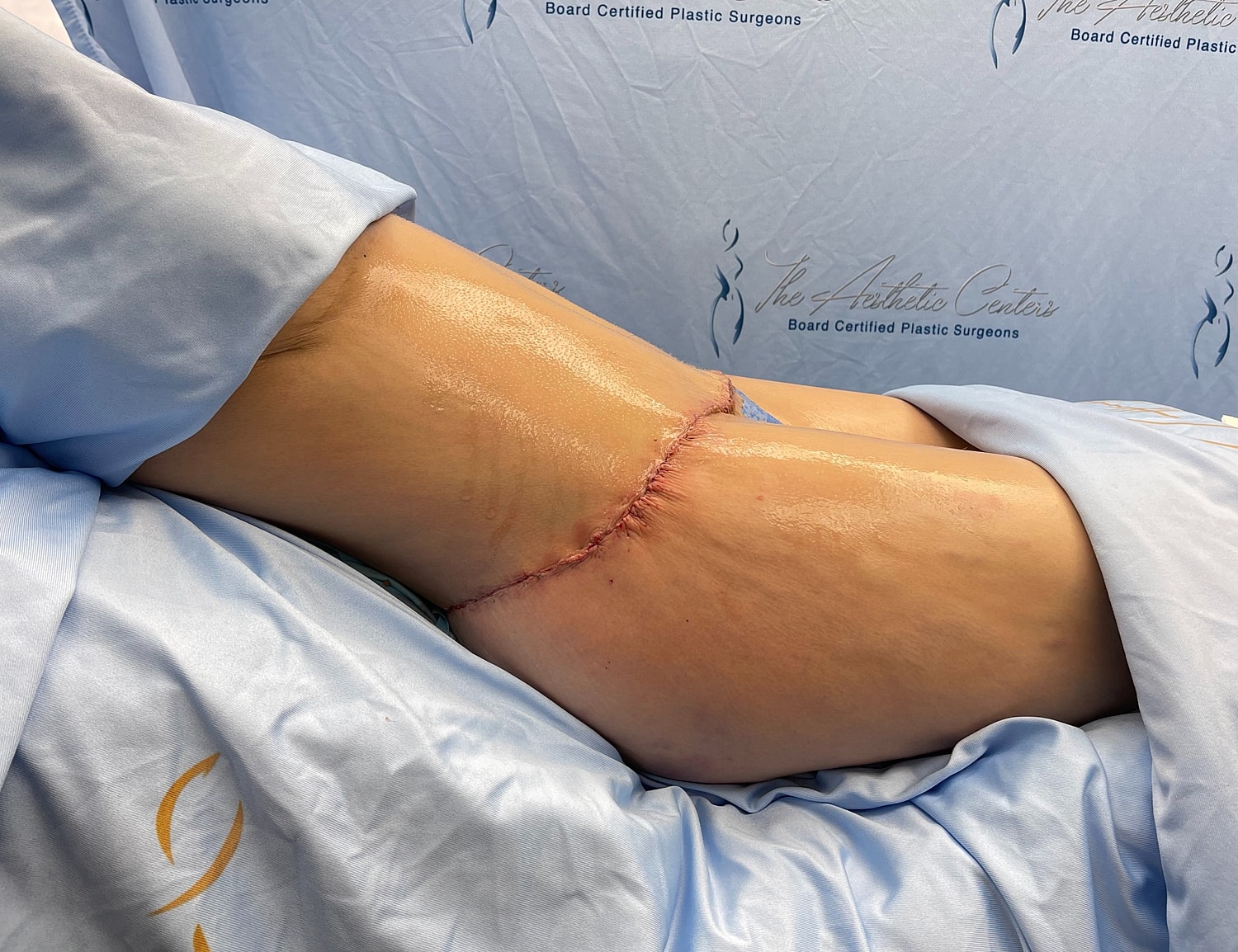
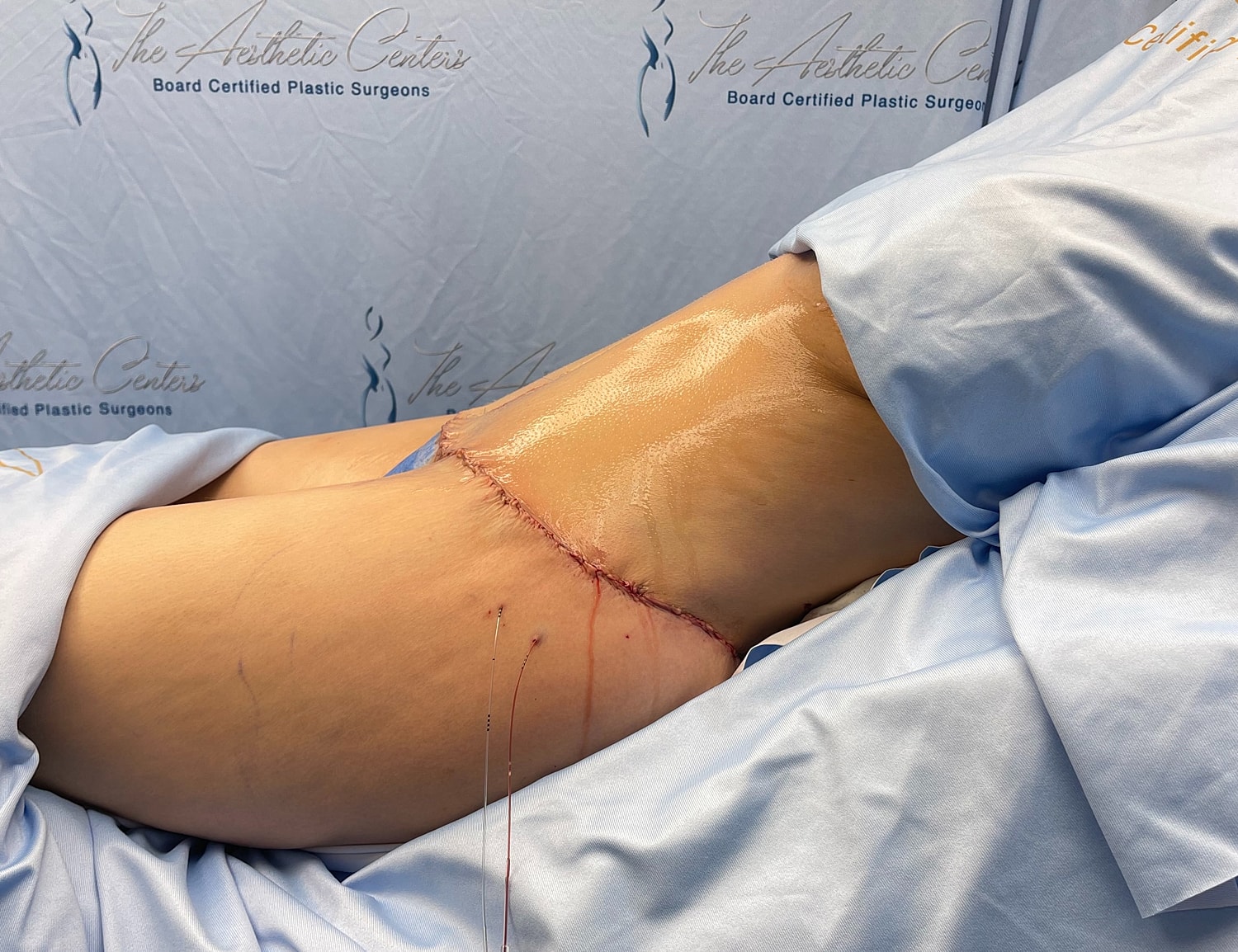
These are big surgeries. We're gonna be placing about four feet of incisions circumferentially on you. Through that incision, we're gonna do a butt lift. We're gonna do liposuction. We're gonna do outer thigh lift. We're gonna do frontal thigh lift, waist reduction, lower back skin excision, tummy tuck, monsplasty. So it becomes like 10 procedures built into one incision when you do it properly. And then that means, well, each procedure has 2 or 3 or 4% potential risks of complication.
Now you amplify that 10 times because you're having 10 procedures. Fortunately, I've been doing it for such a long time that I've learned how to minimize complications, but I can't... No one can avoid them. And most of the times the complications relate to patients healing. Some patients heal great, and you get a great result. Some patients heal slowly, and they get minor complications and minor openings. And that's why many plastic surgeons don't wanna do these procedures because then there's so much resources you have to put into caring for patients, getting them to heal and then revising the scars and so forth.
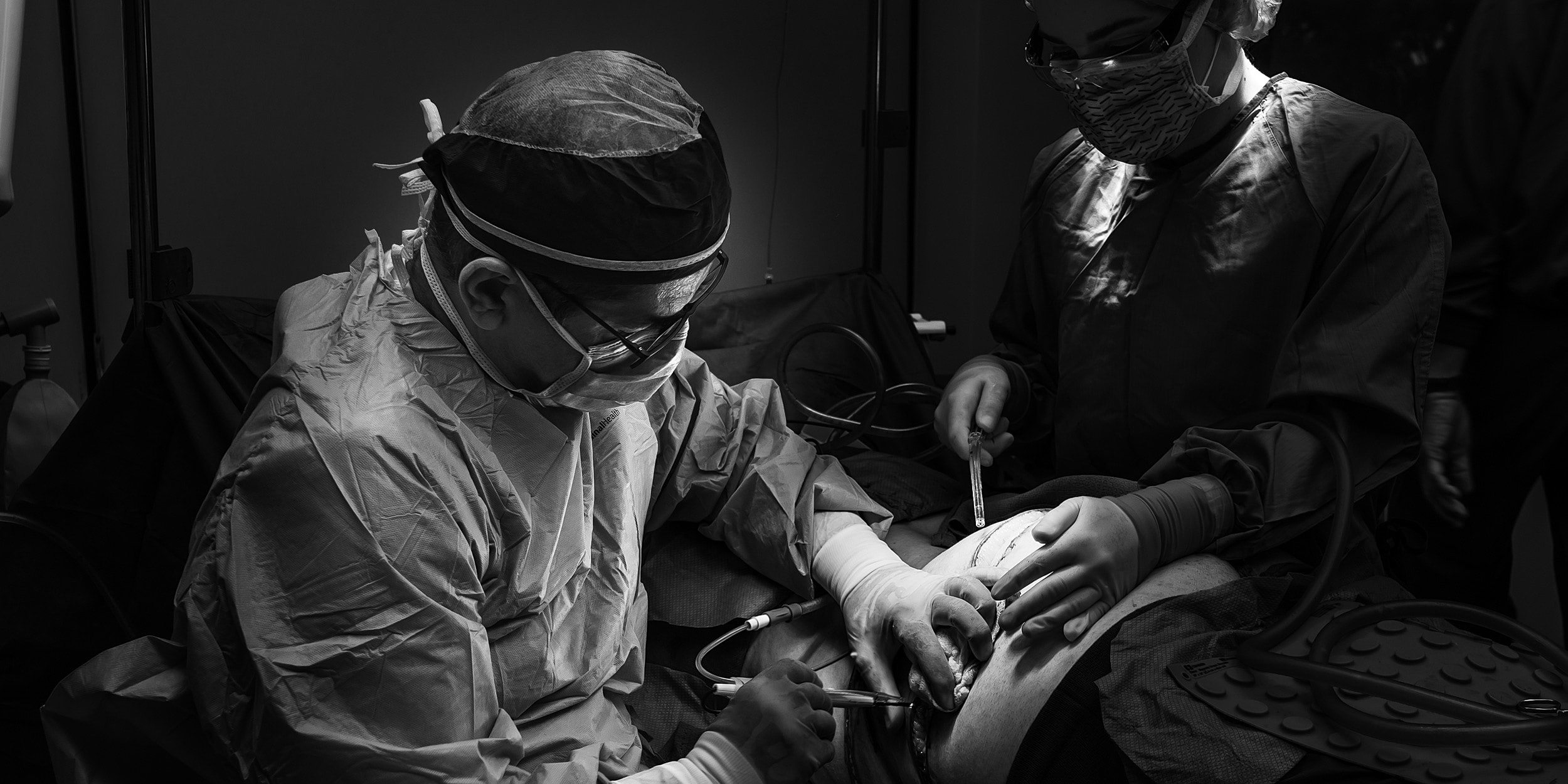
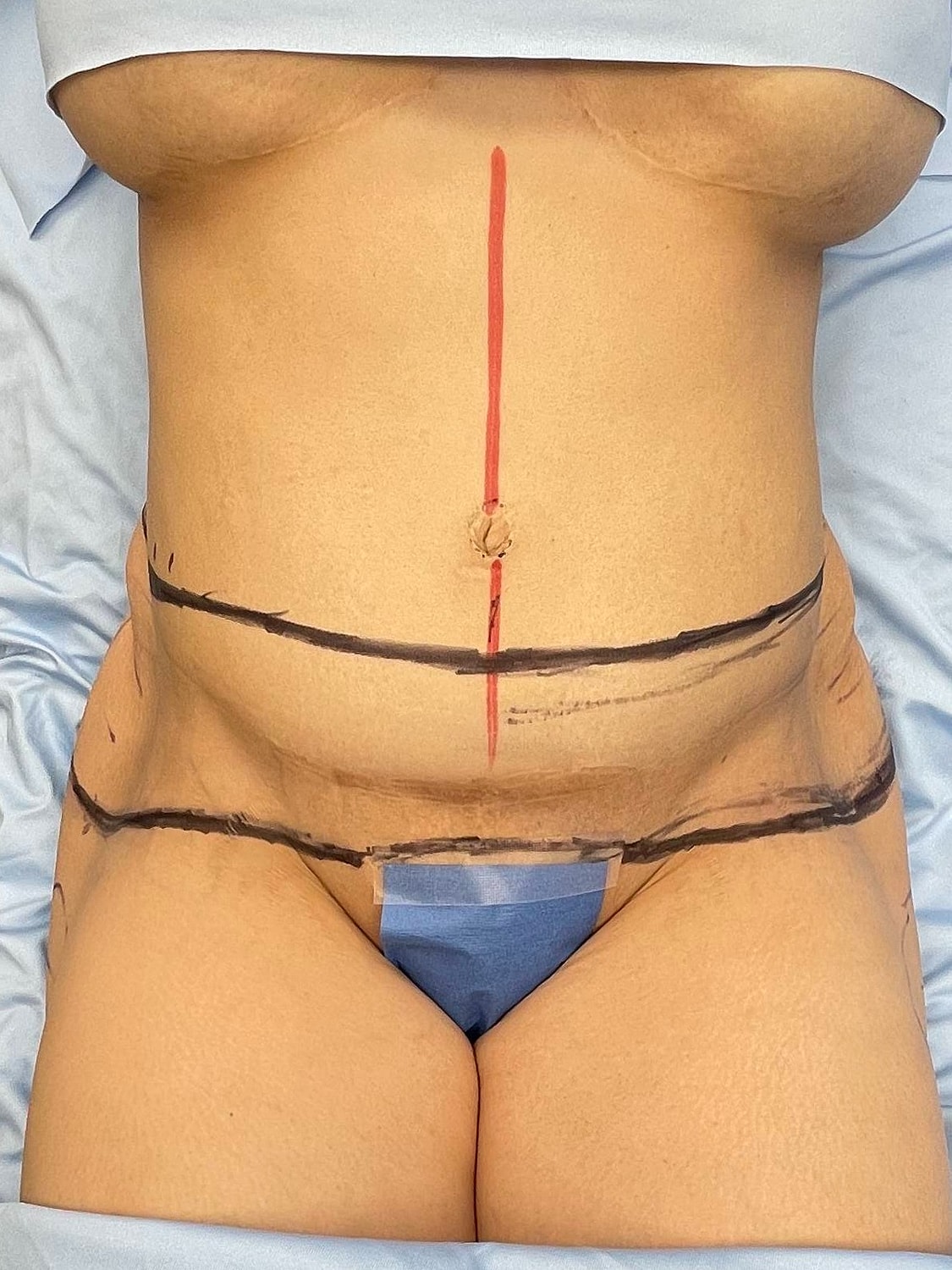
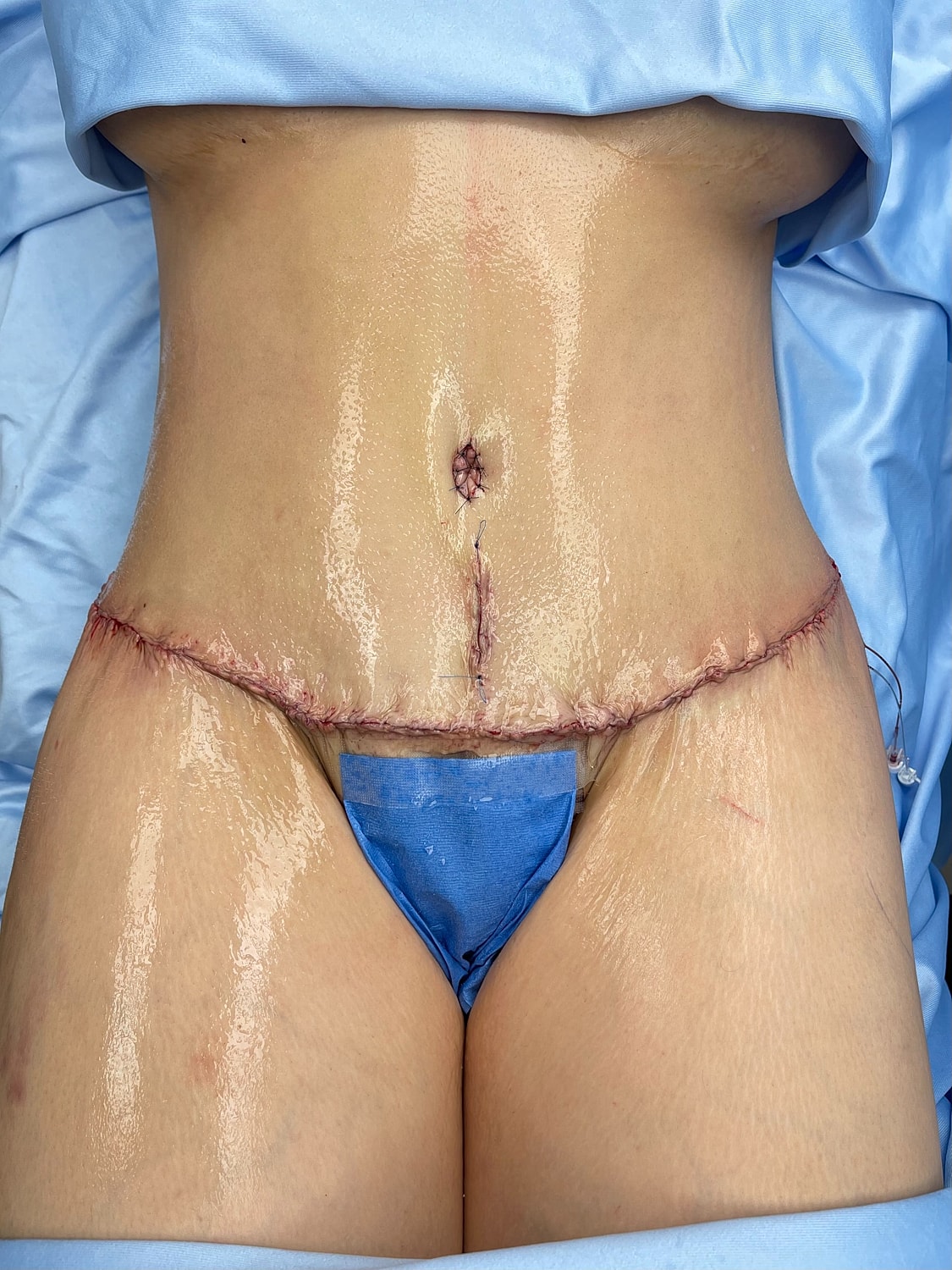
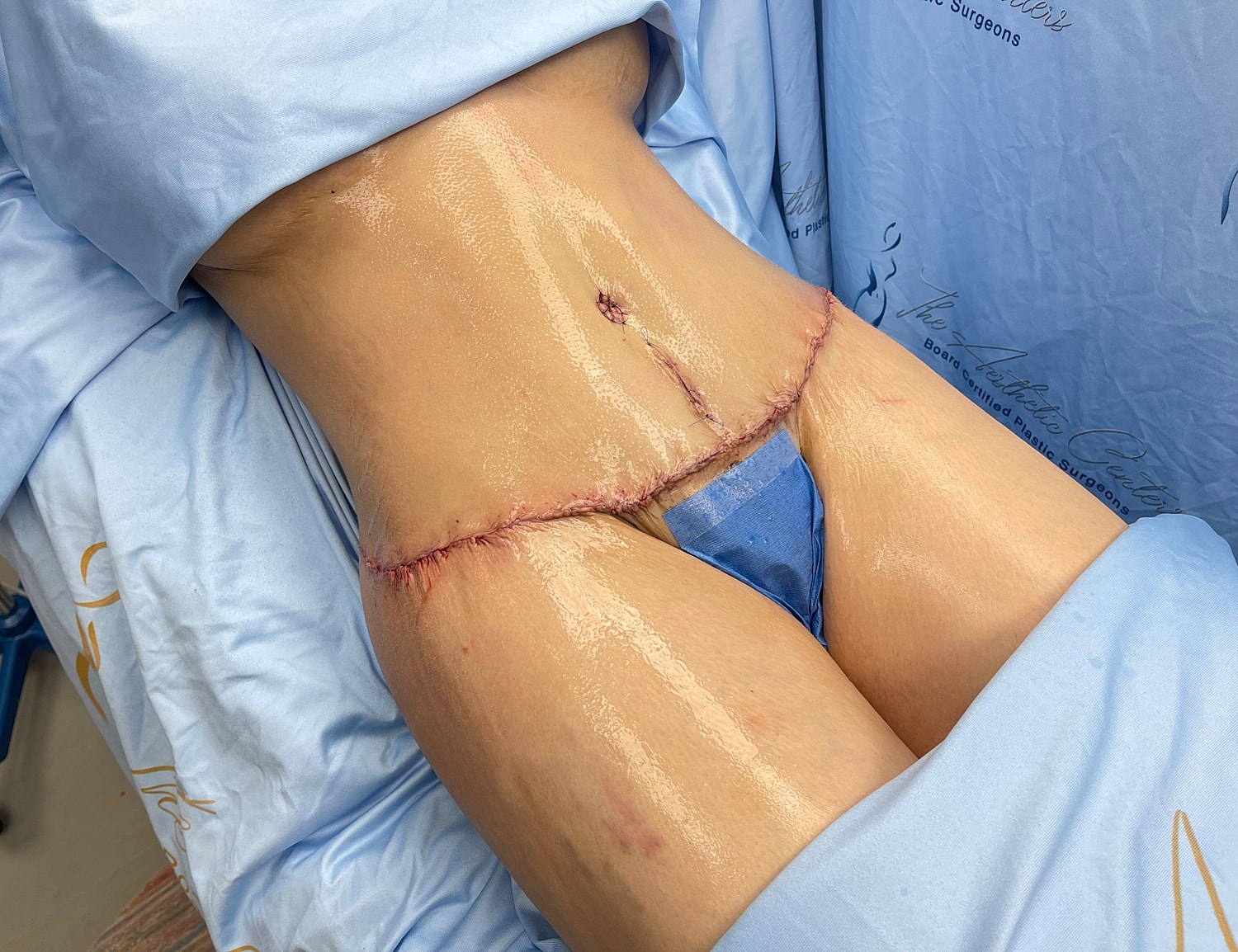
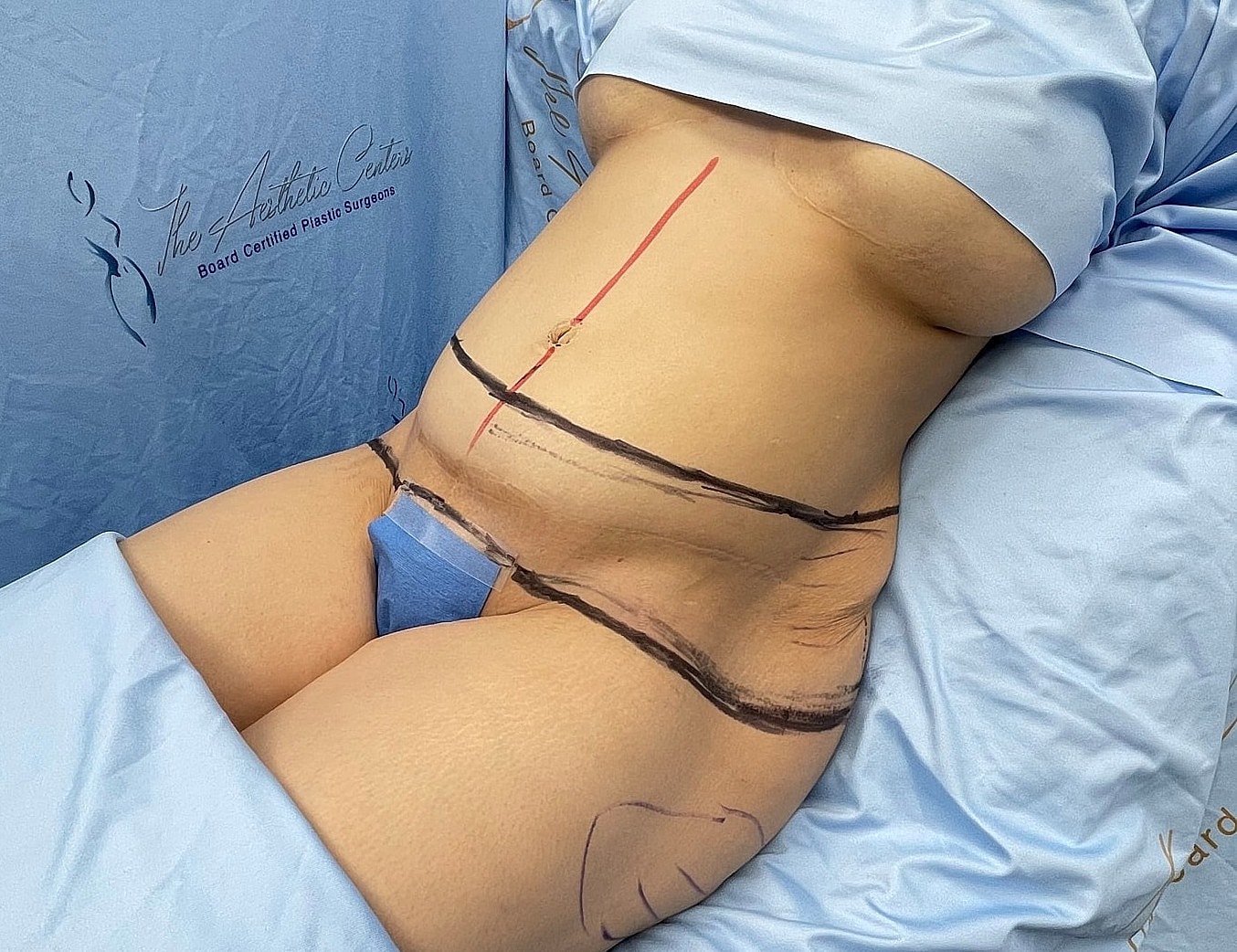
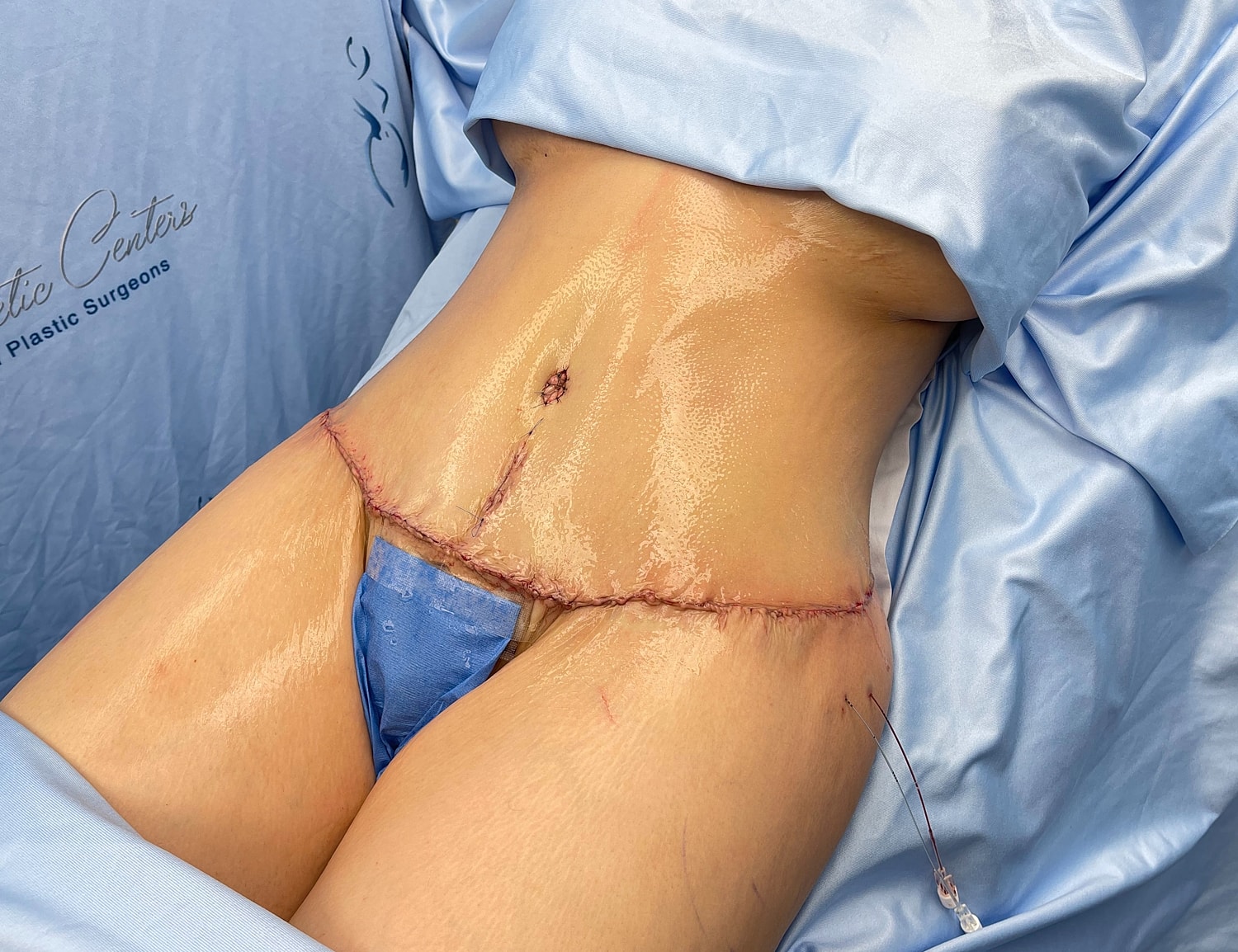
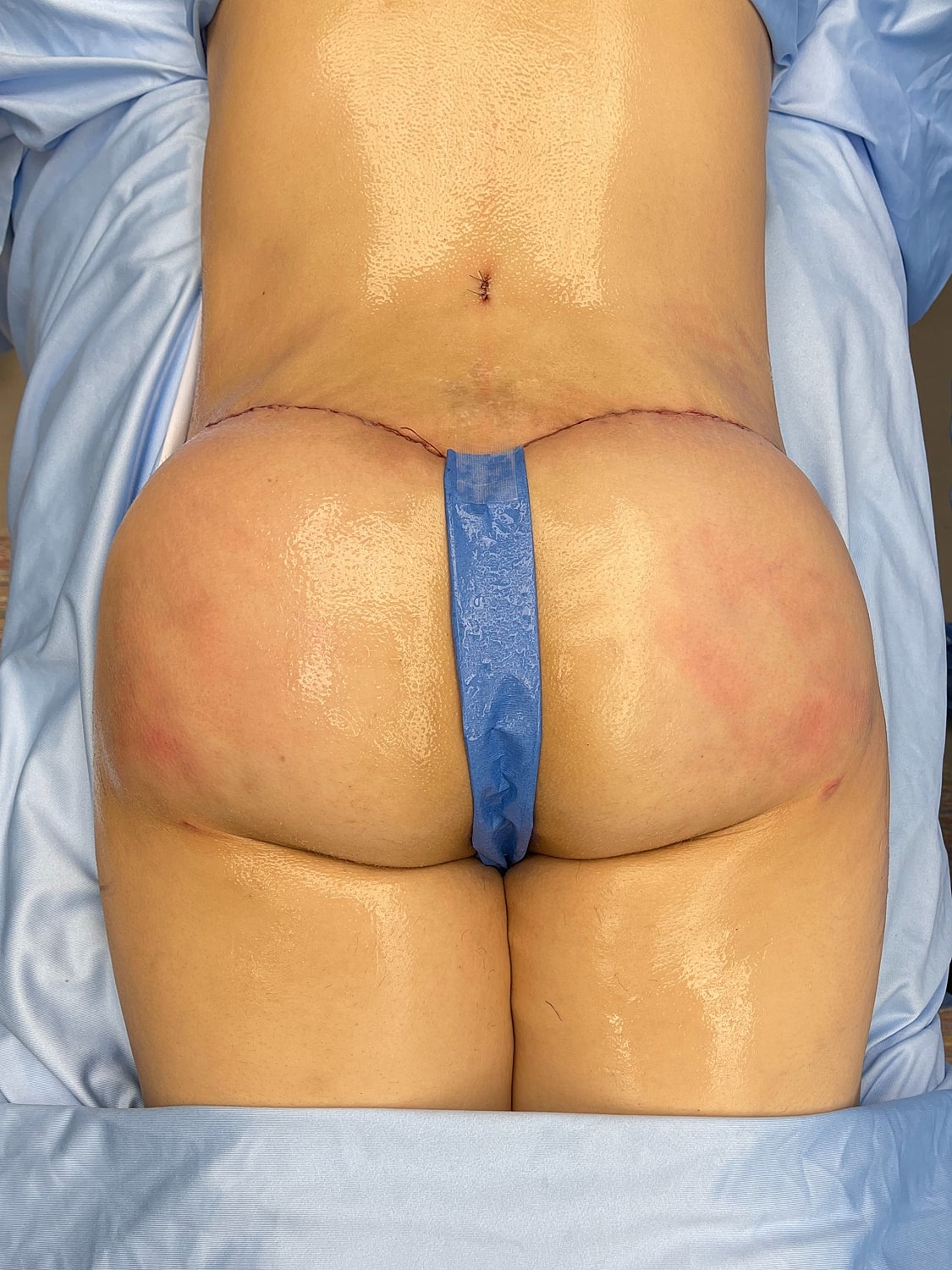
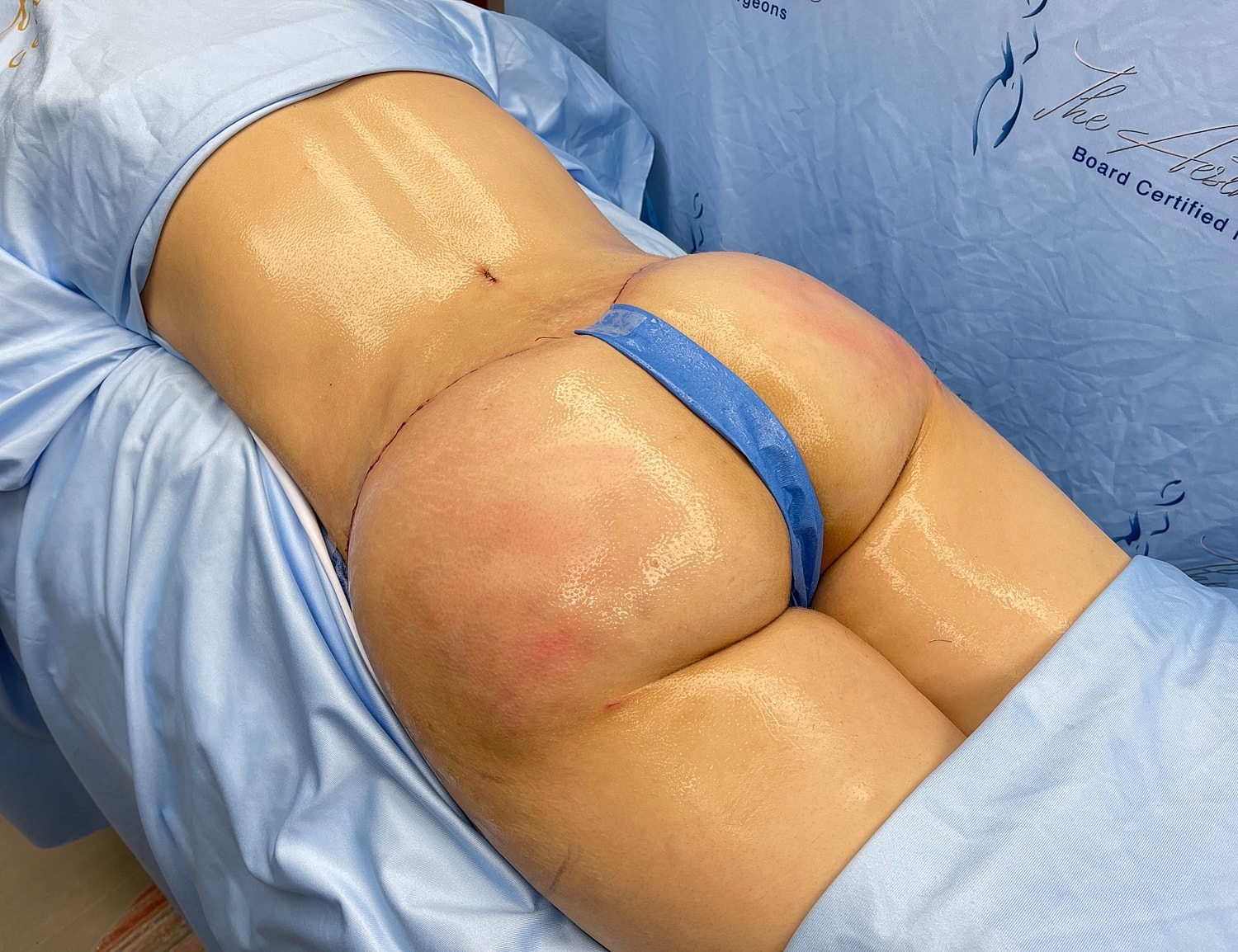
Anyhow, our plan of surgery today will be to revise her tummy tuck, her previous tummy tuck. We're gonna be cutting around the navel, which means I have to close this opening on itself, pull everything down, and then recreate a new opening and pull the navel through it.
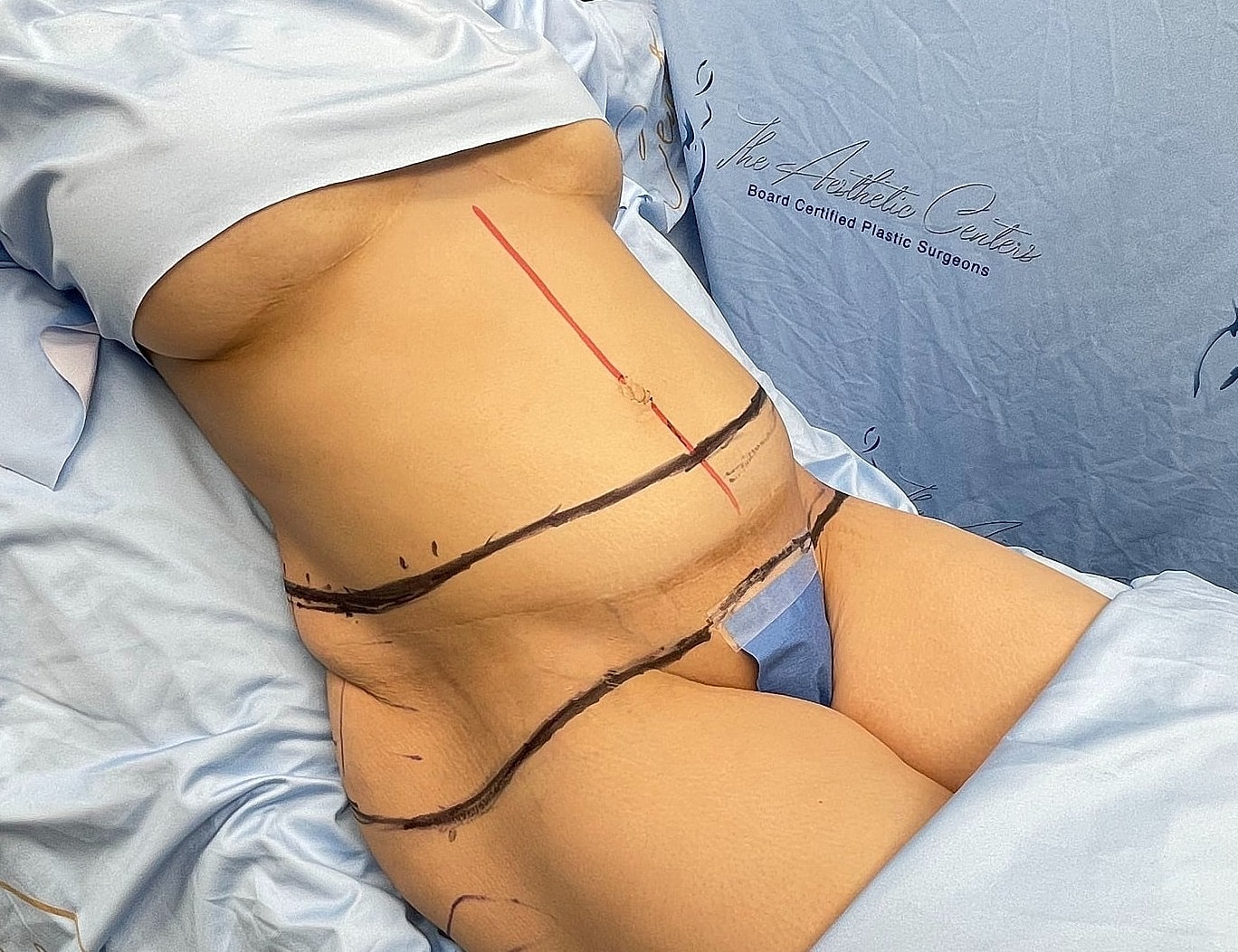
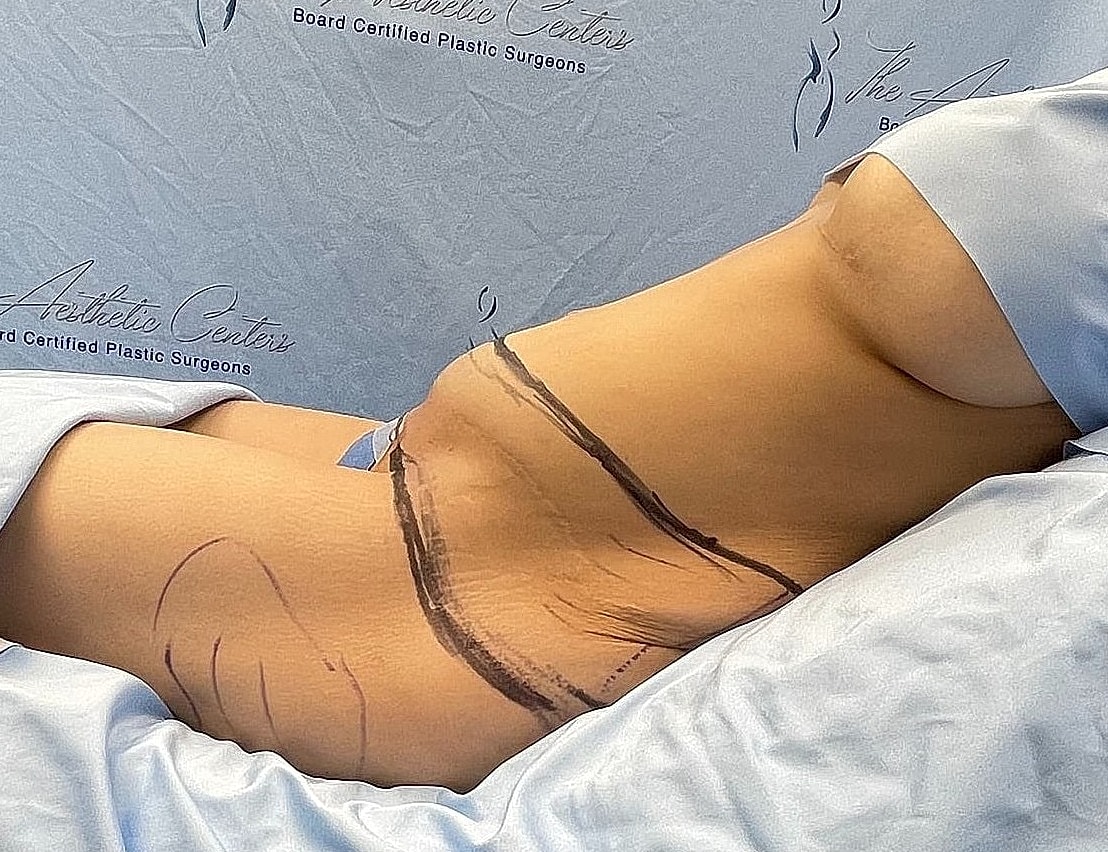
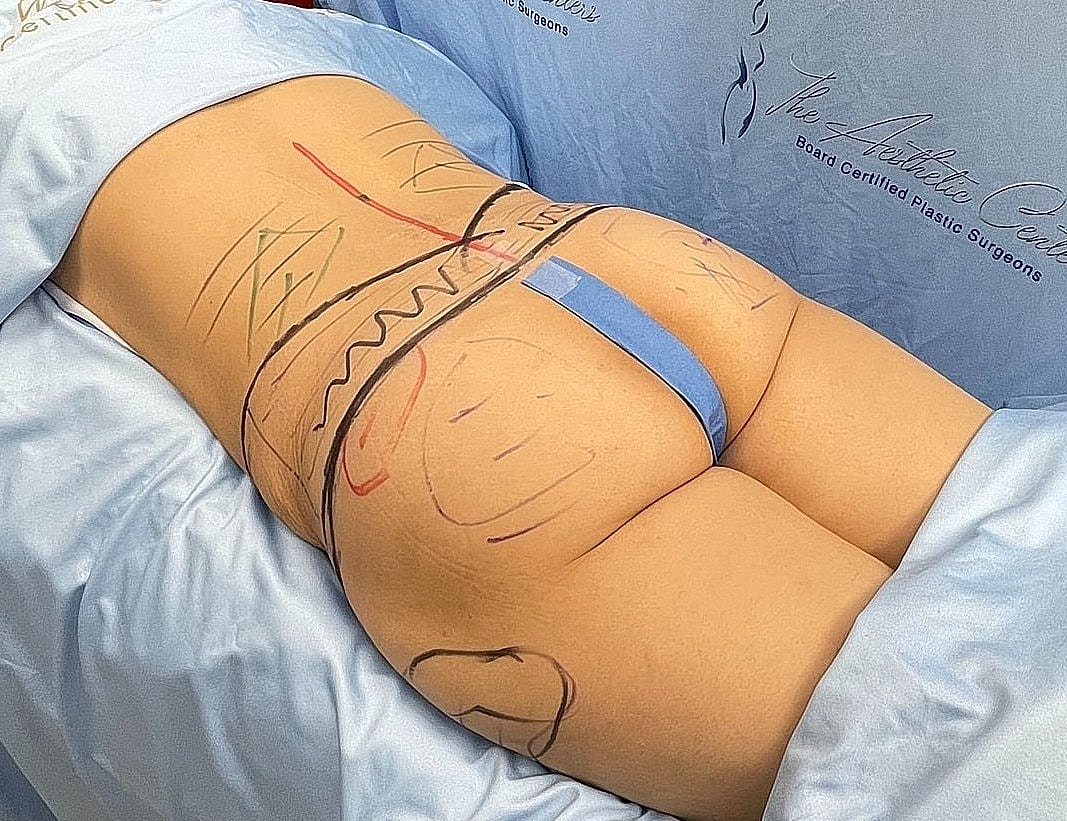
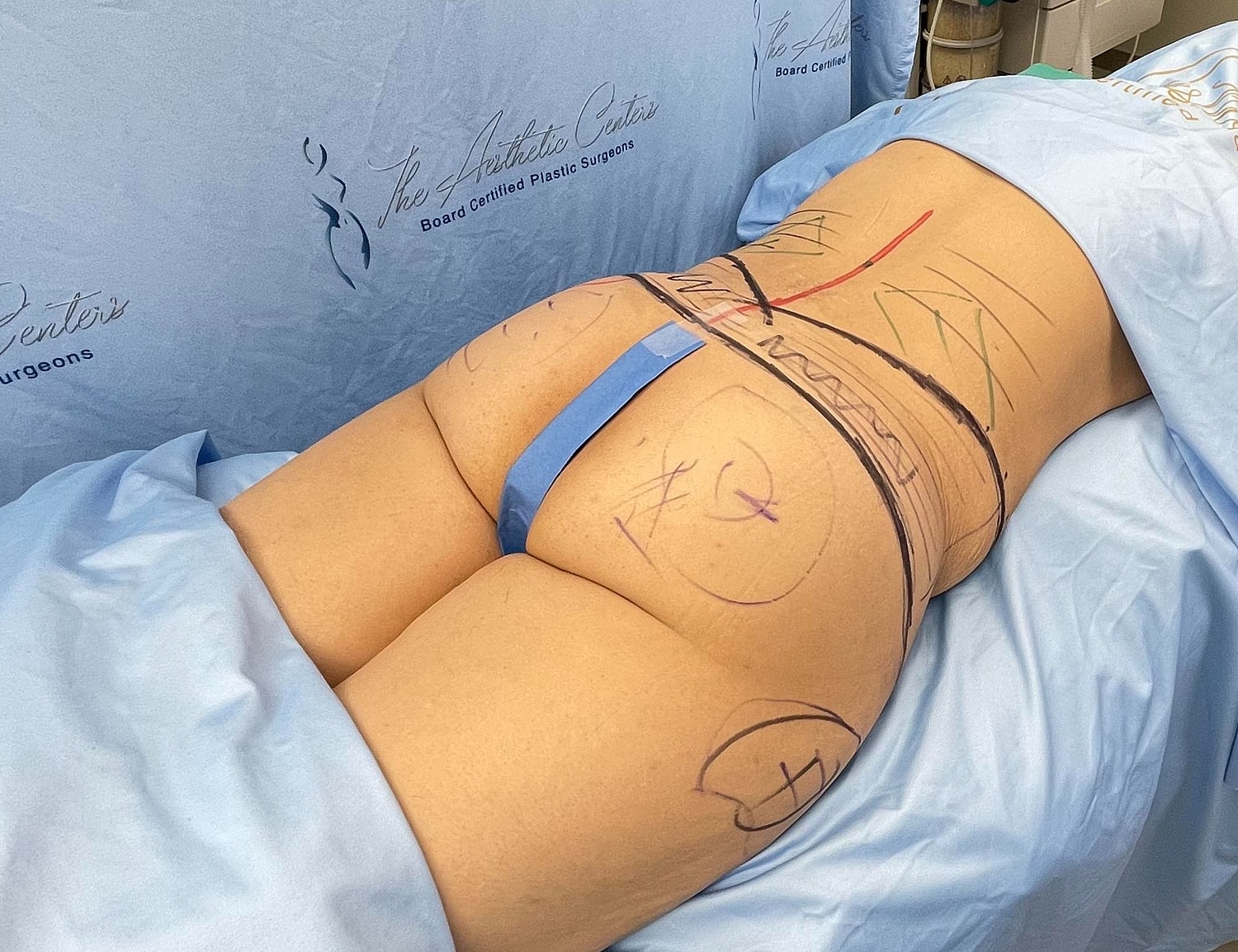
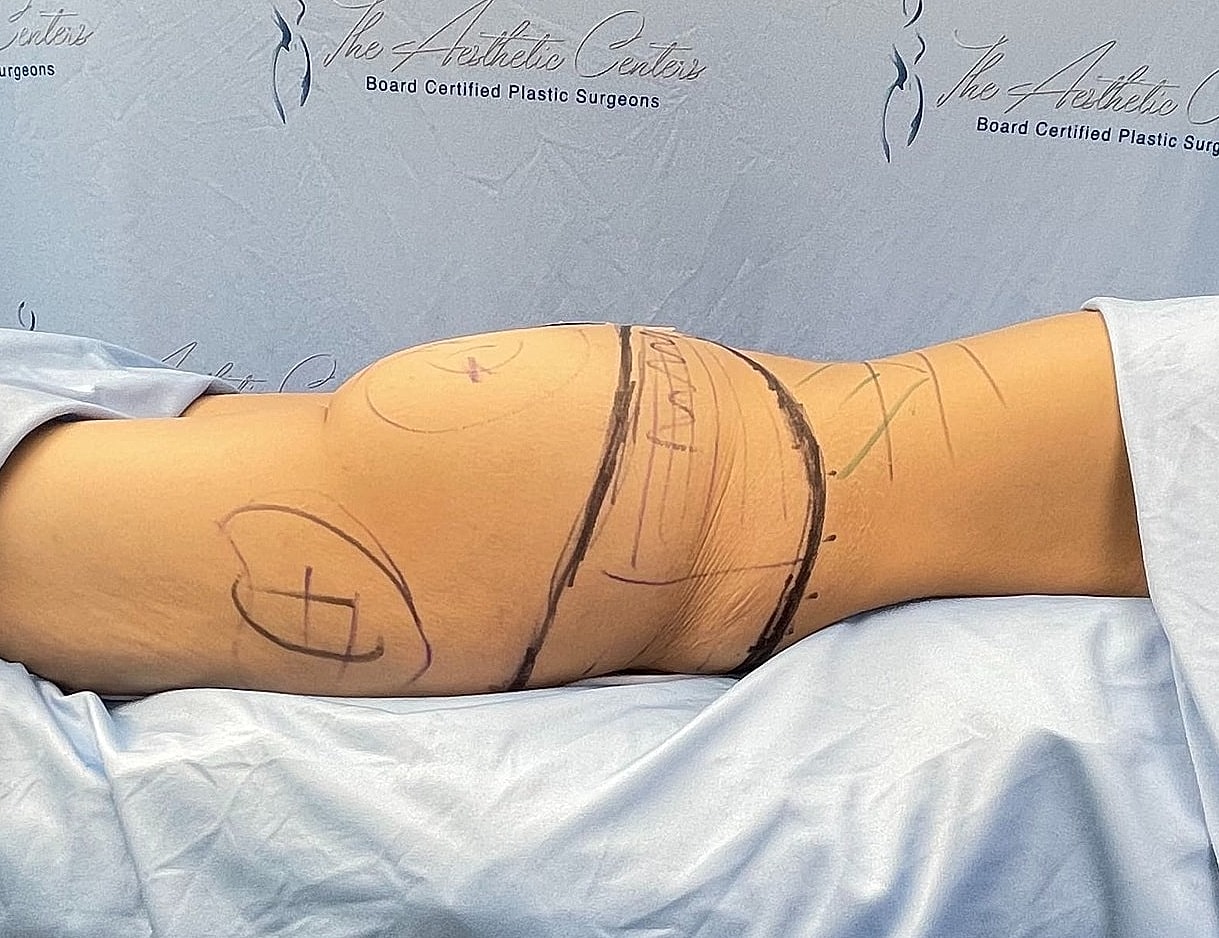
So she's gonna have a small vertical scar lower. We're gonna be trying to remove as much skin as possible. Her previous tummy tuck incision is just below this bulge. Neither of us can figure out why she has this lower abdominal roll after a tummy tuck. But regardless, when I get in there, hopefully I can figure out what's going on and fix this because we don't wanna end up with this.
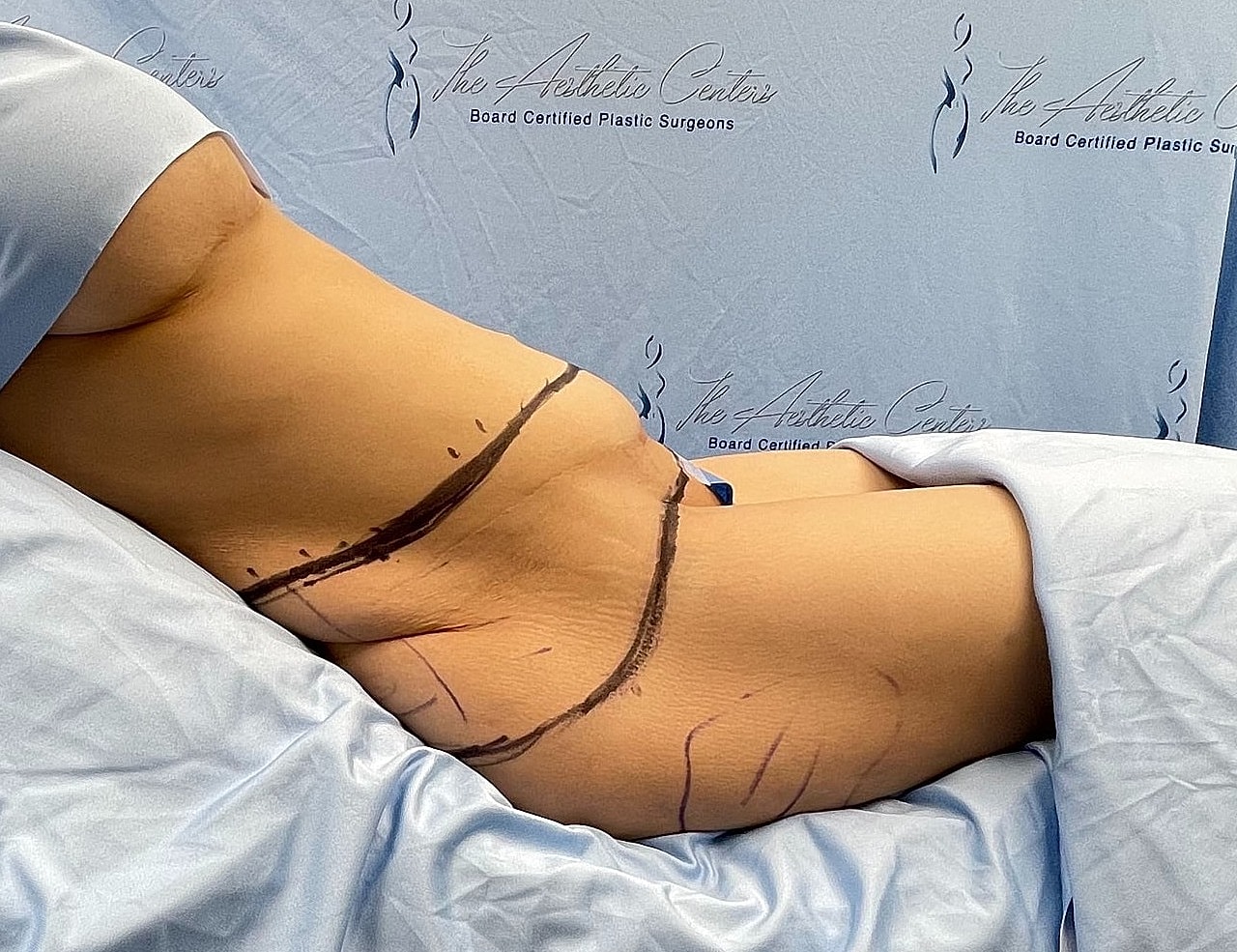
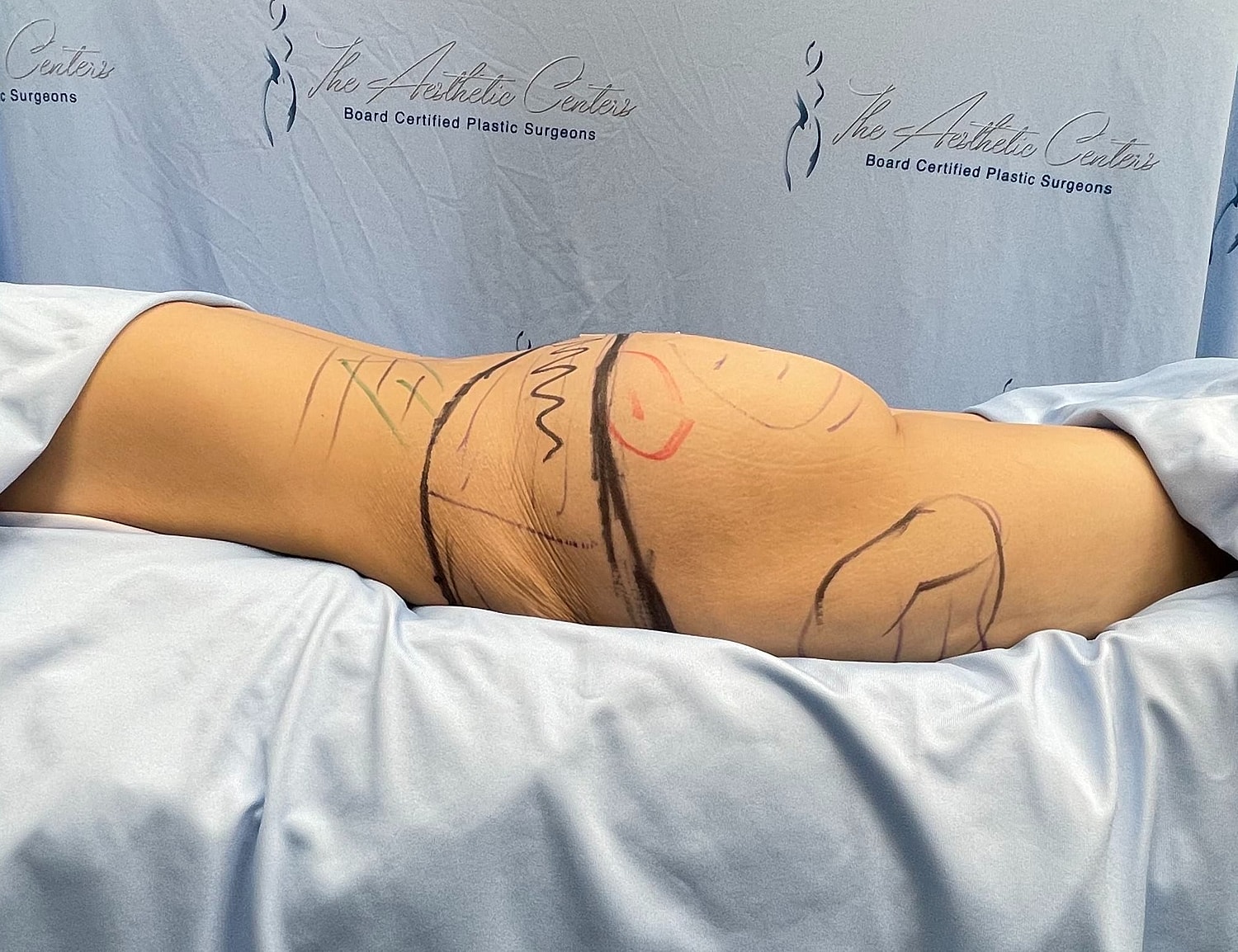
On the front, our lower incision is around here. We're gonna do a pubic lift. We're gonna do a thigh front lift. We're gonna do a waist reduction. And then on the outer thighs, we're gonna do an outer thigh lift. The proof is in the pudding. Look. Yeah. Like that.
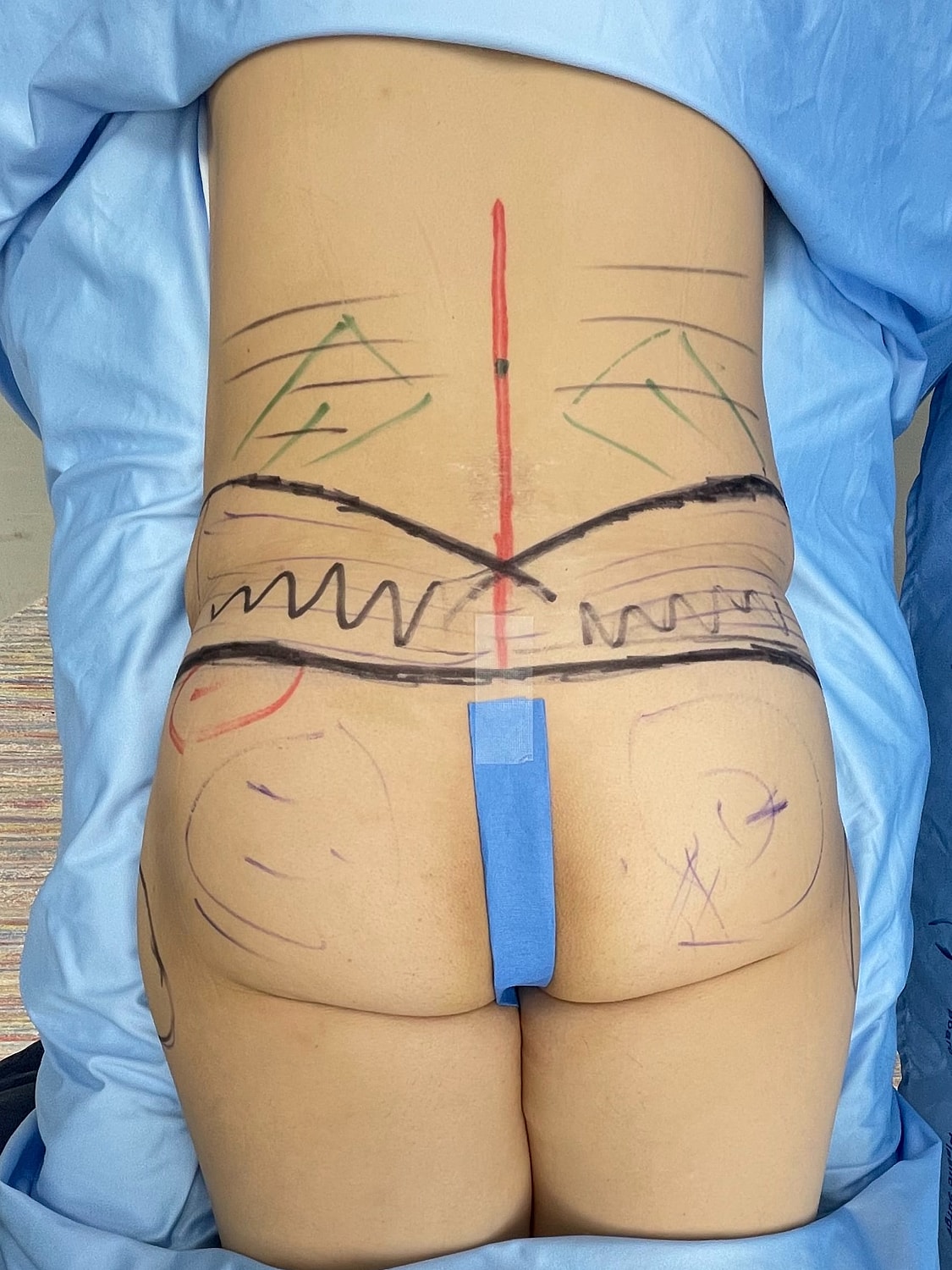
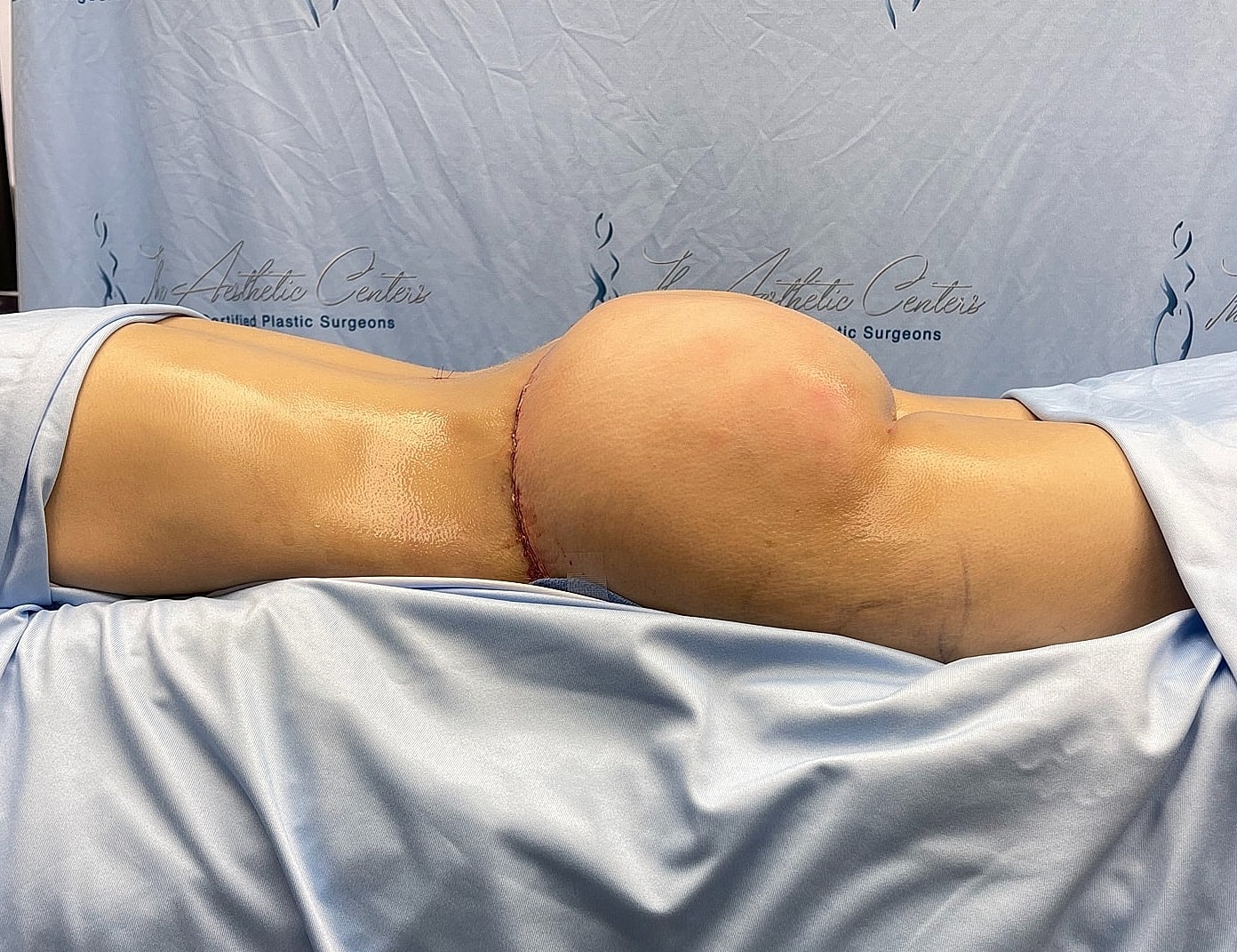
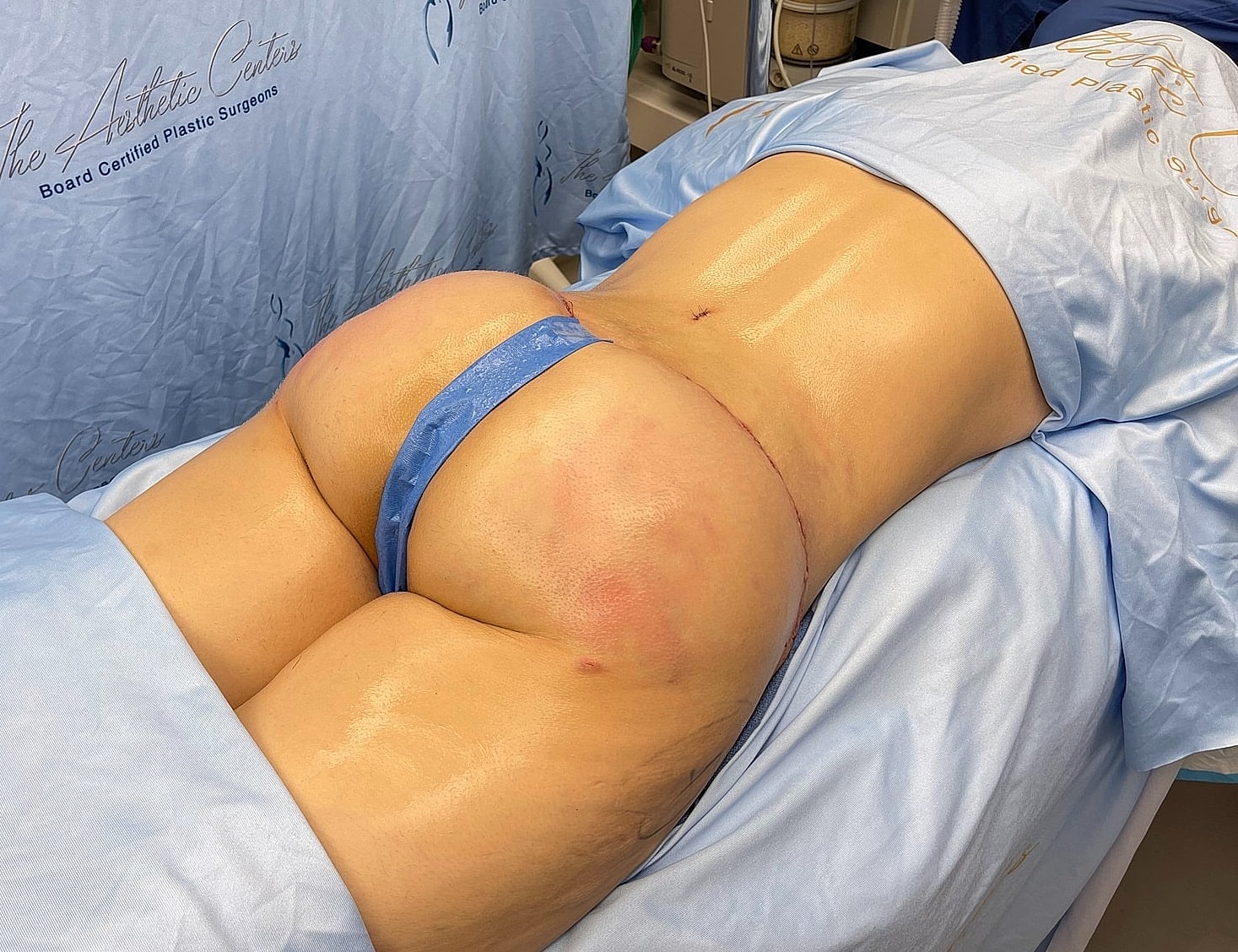
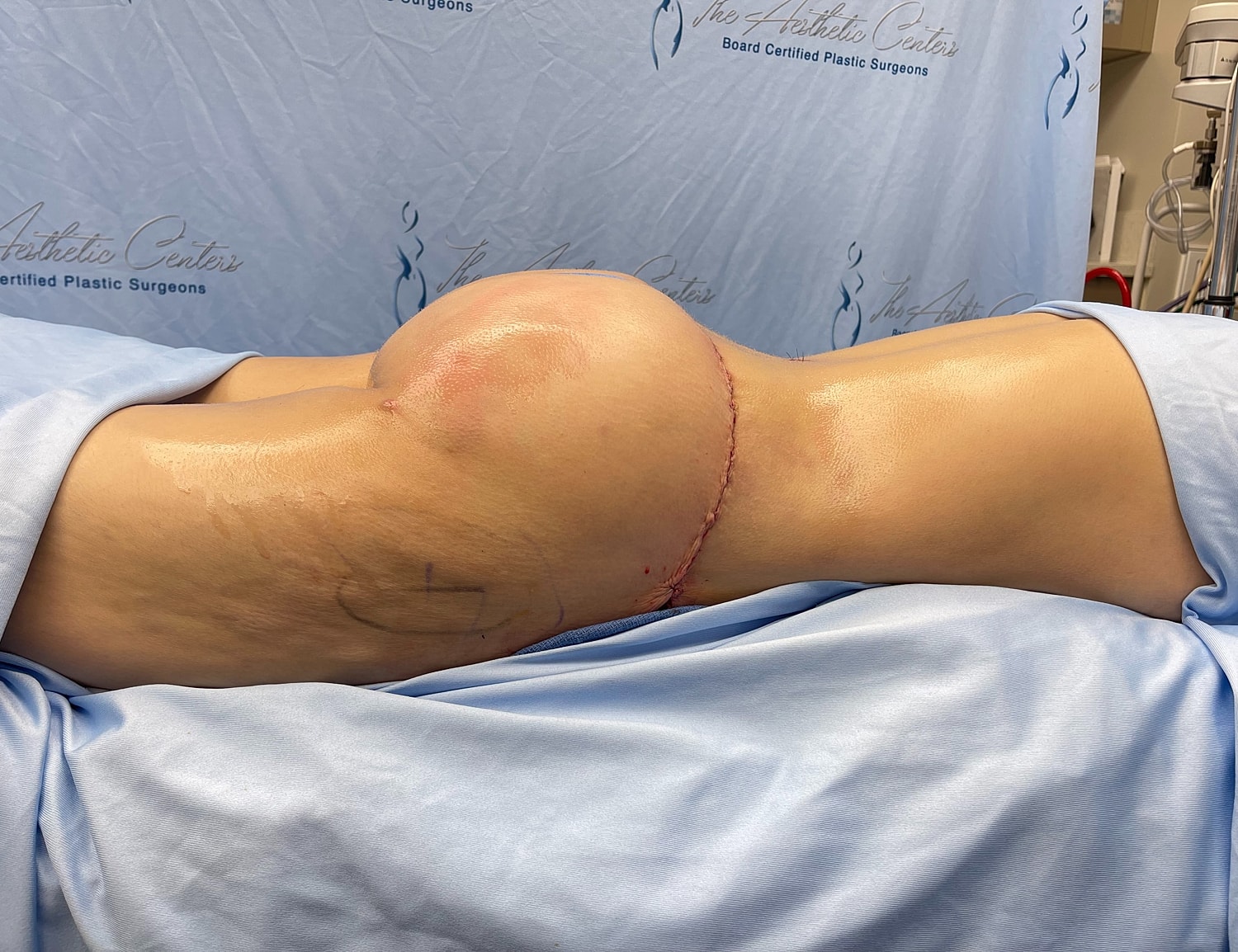
And as we start the surgery, which is always on the back first, we're gonna be doing liposuction, flap augmentation of the buttocks and a buttock lift. So the buttock lift is this incision coming to here. We're gonna be using the fat in between the two incisions. We're just gonna remove the skin to augment her buttocks, and then we're gonna be removing and sculpting some more fat from various areas and use that fat in the lower dimples to actually create roundness of the buttocks.
So this is buttock lift. A buttock lift always results in buttock reduction because you're removing a portion of the butt. But in this case, and in every case, or most of 99% of the cases that I do, I use this lower back fat and place it back into the buttock and augment the buttock. That's called autologous, meaning that it comes from you. And it's not a graft, meaning that this fat is being mobilized based on its blood supply.
So it's a permanent... It's not like a Brazilian butt lift whereby 20 or 30% of the fat dies. This fat, none of it dies because you are mobilizing it based on its blood supply. And it comes with its own oxygen and nutrients. So all of it is gonna become viable and stay there. Some of the grafted fat, meaning the fat that we're gonna transfer like a Brazilian butt lift will die, but not this one. And then we'll do the front. So let's get going. Yeah. I'm excited for you.