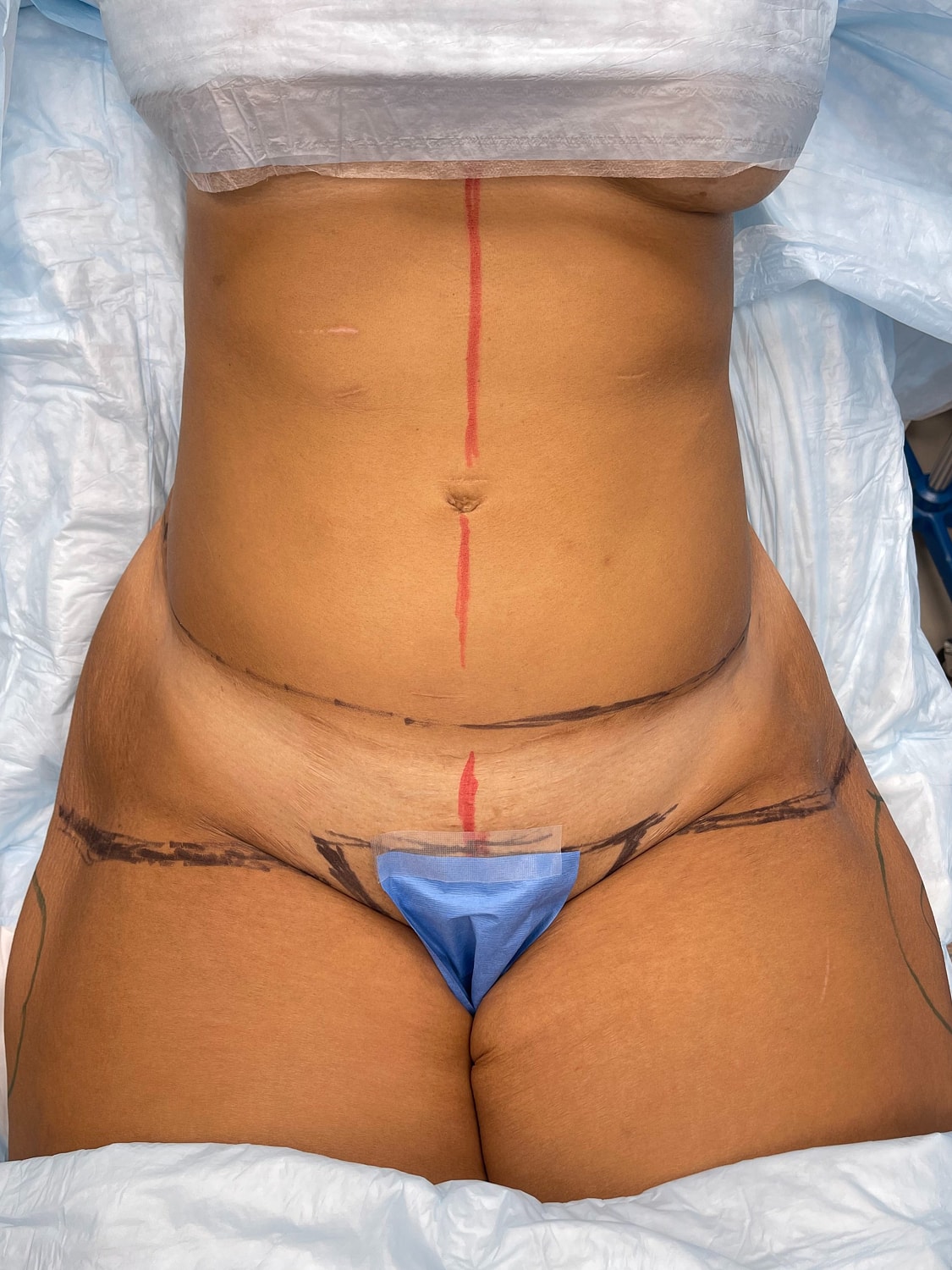
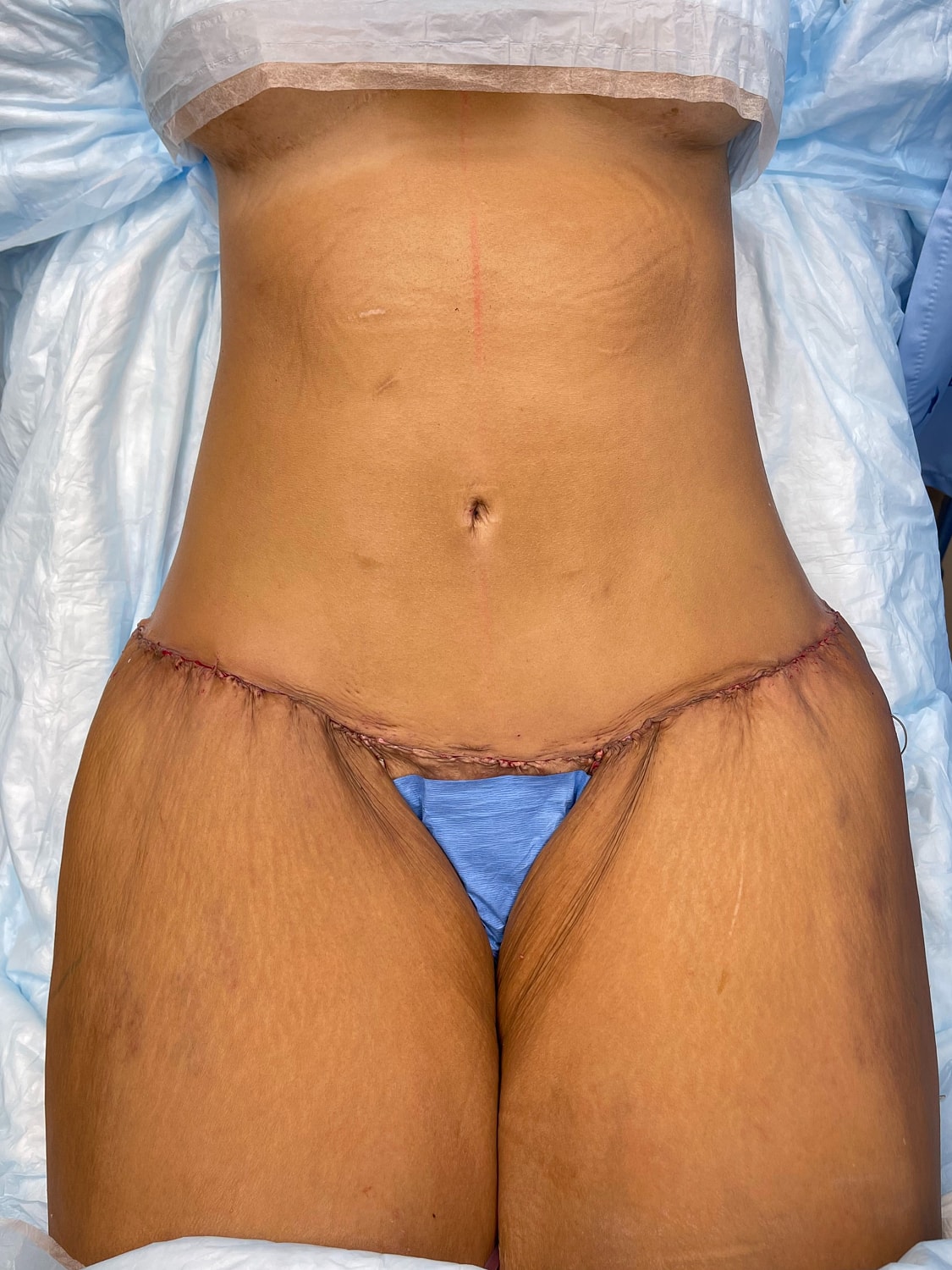
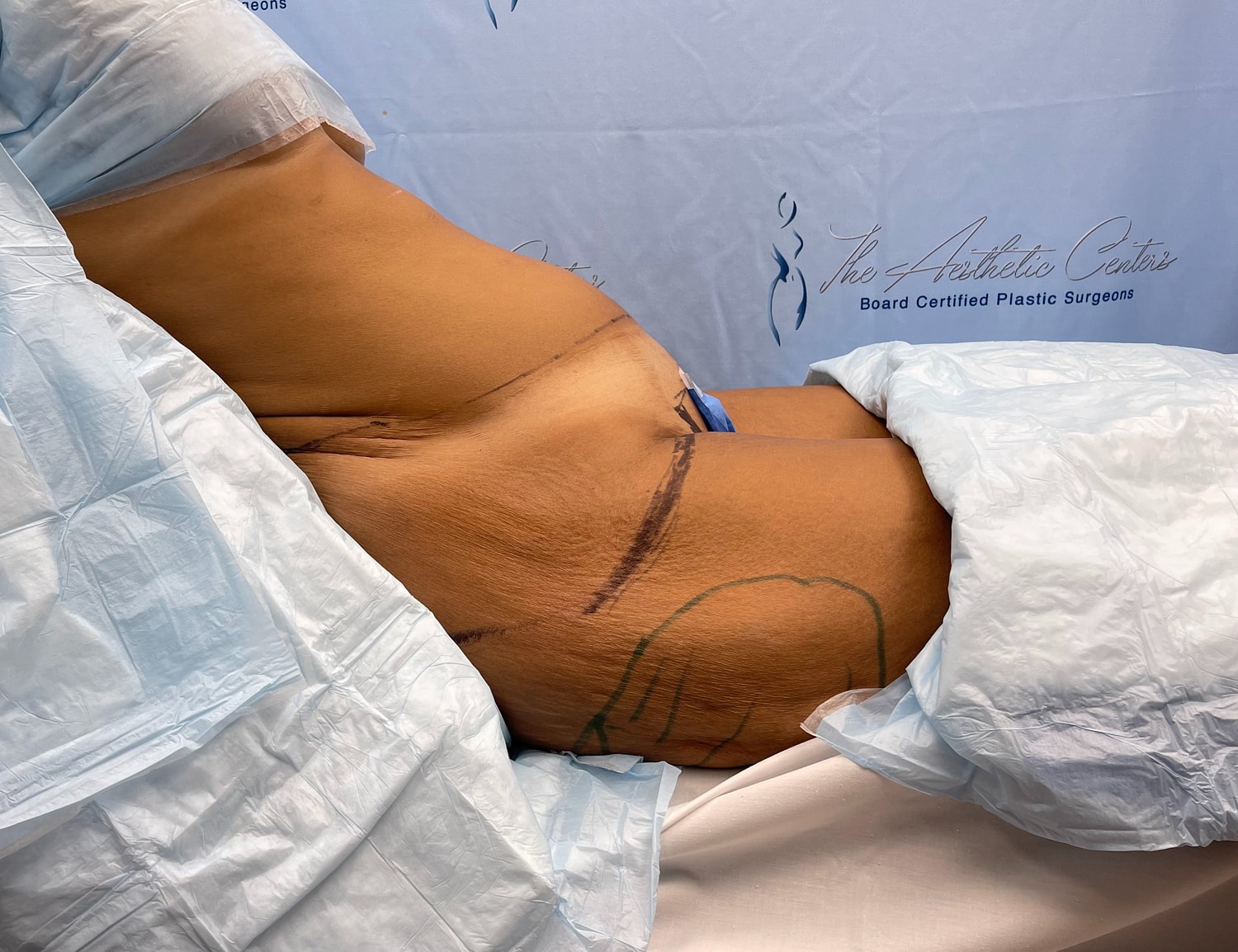
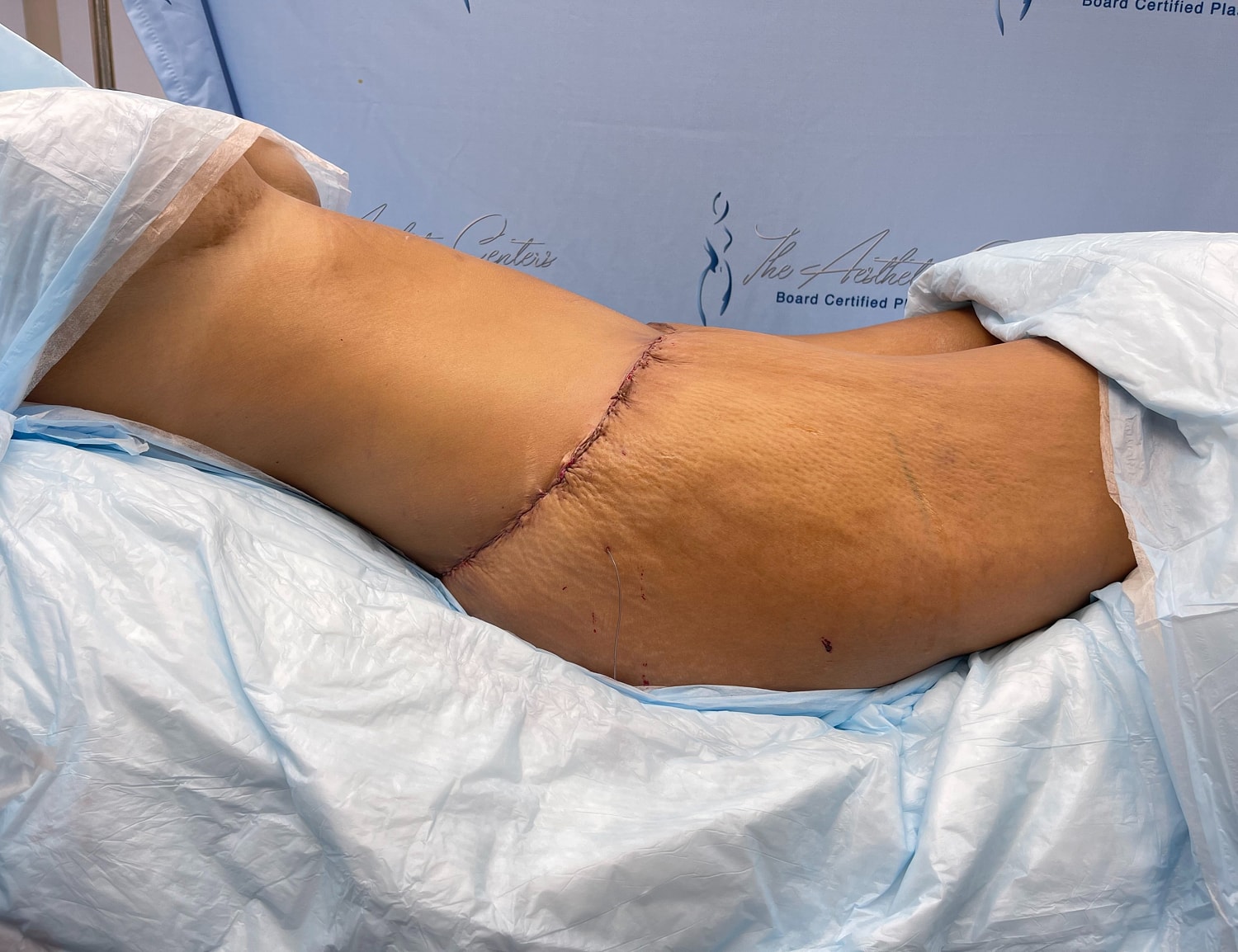
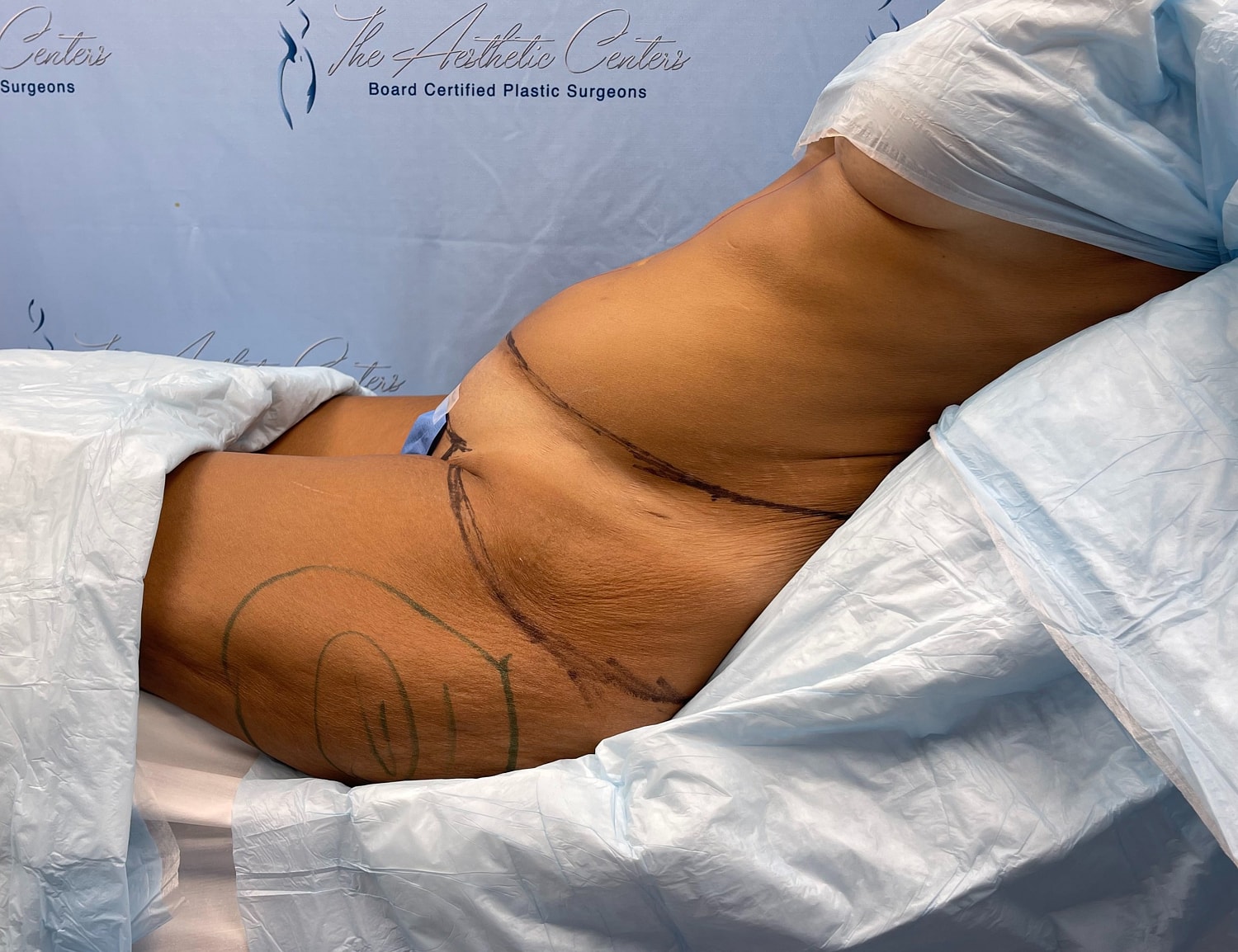
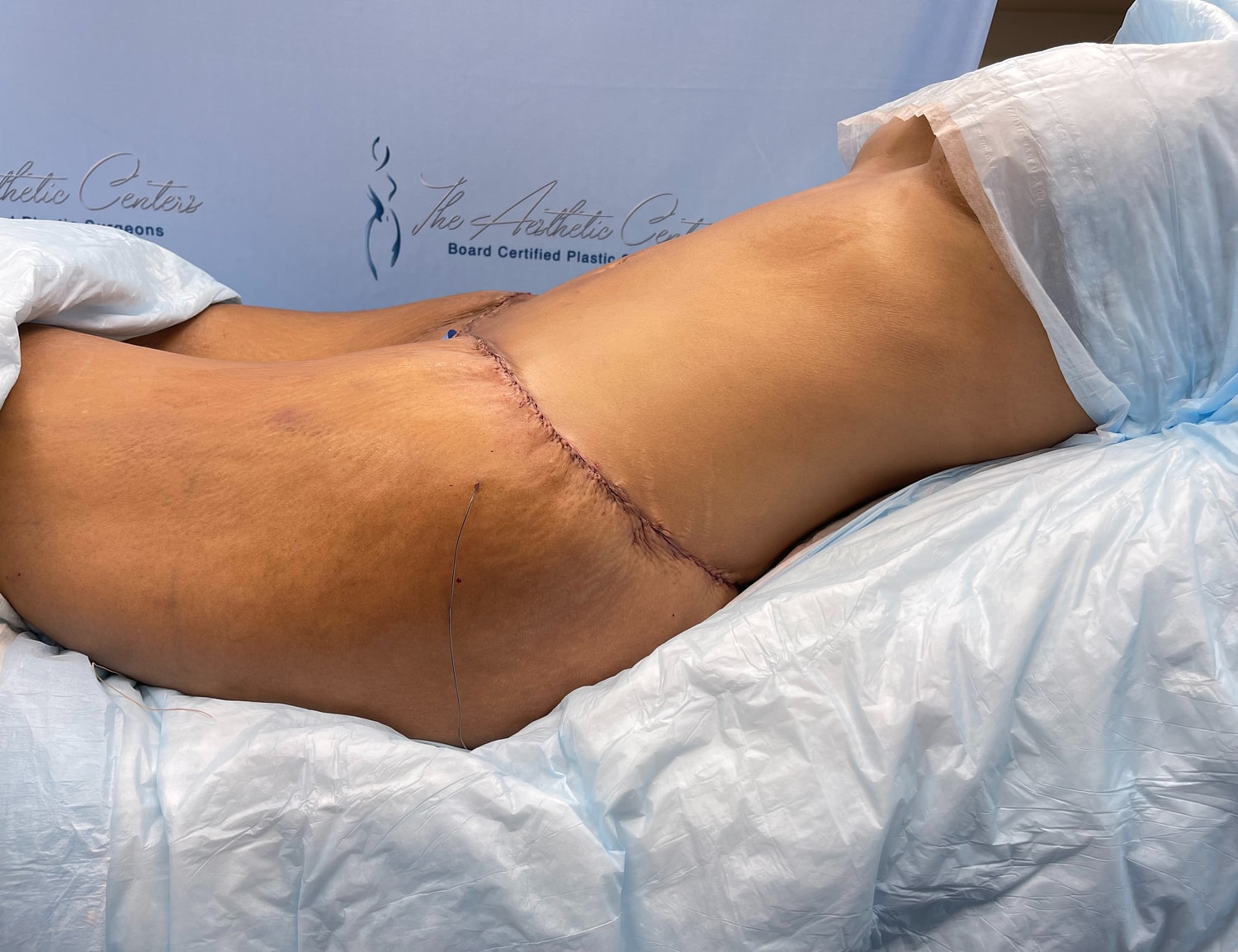
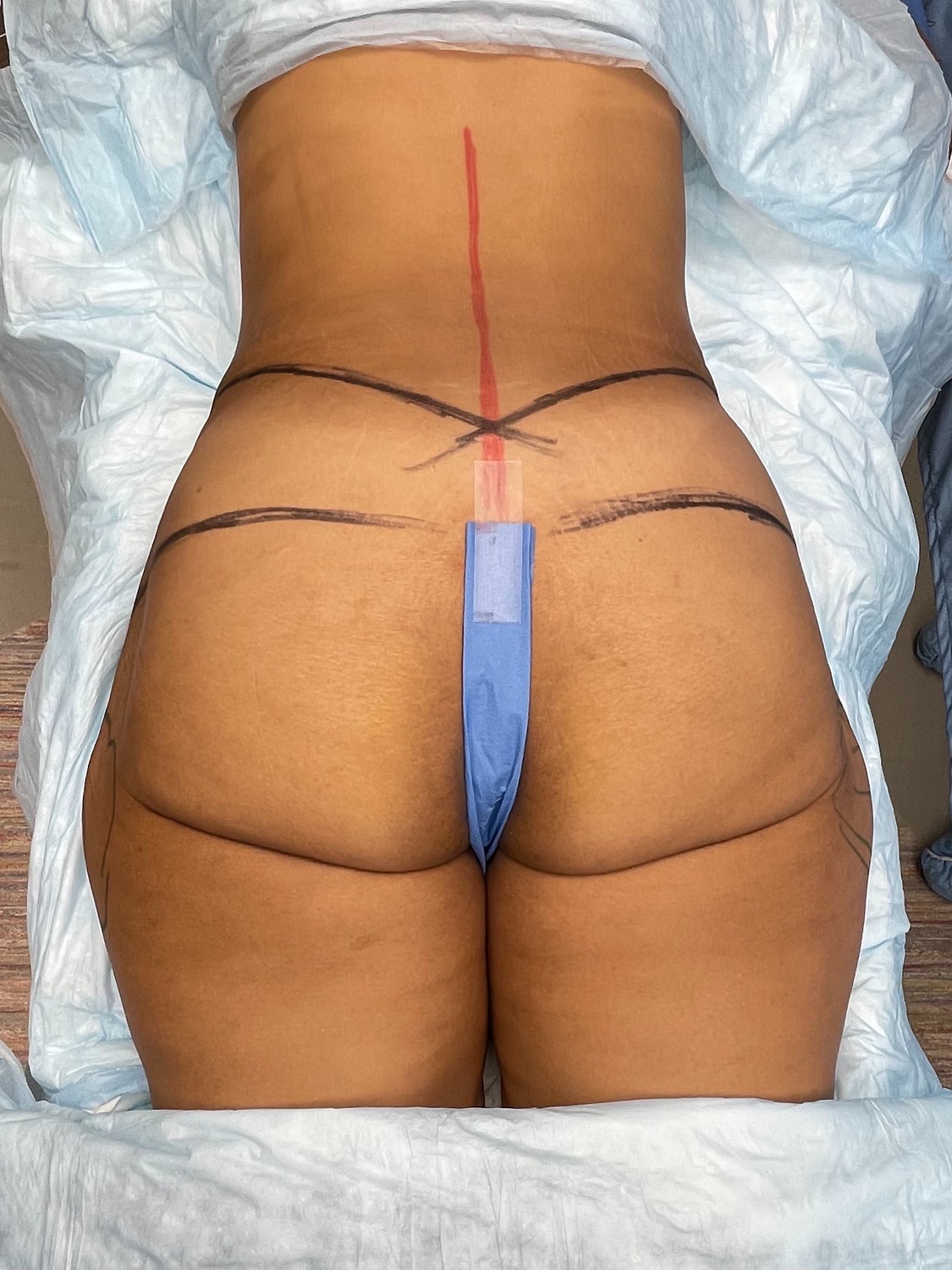
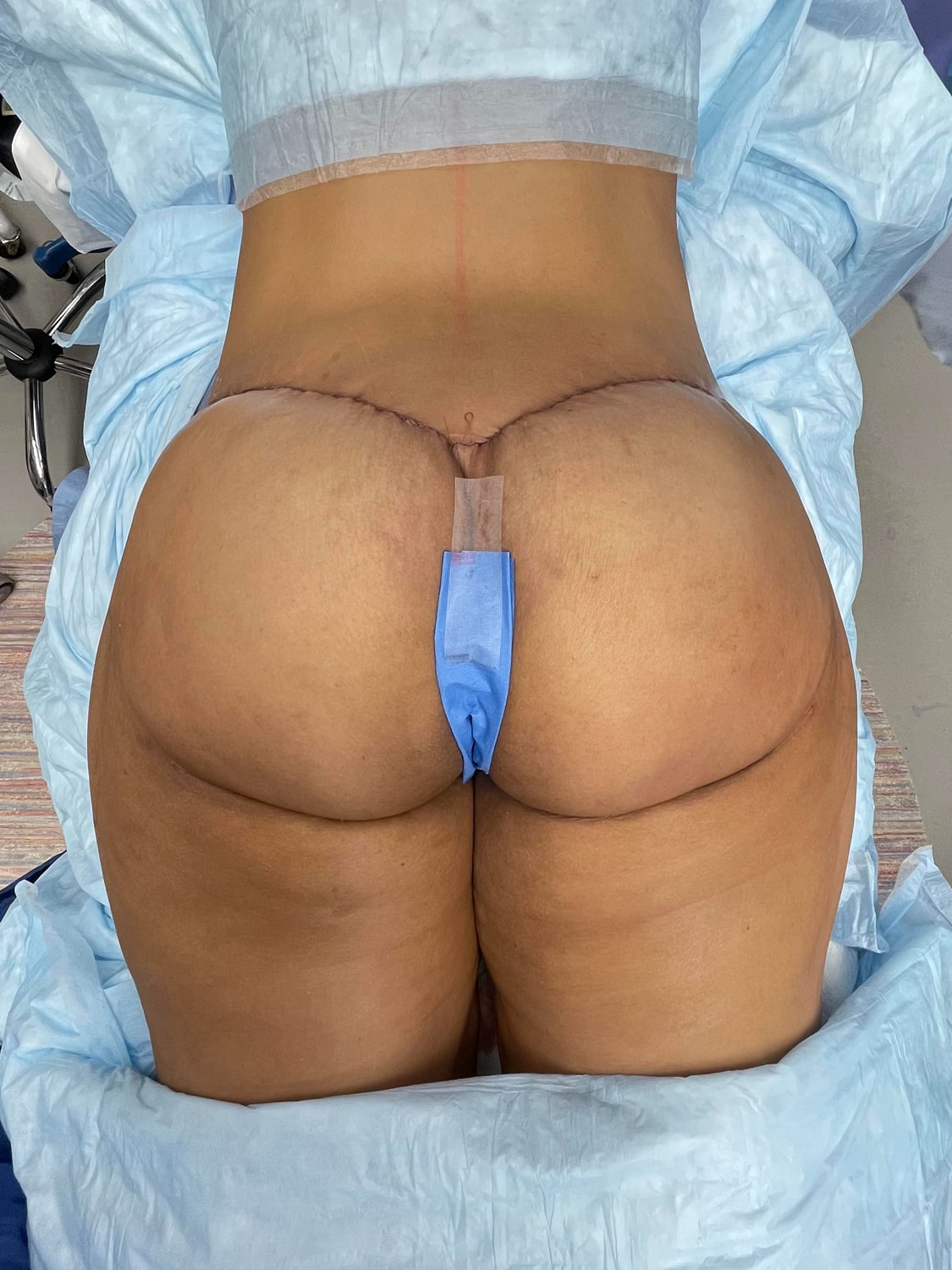
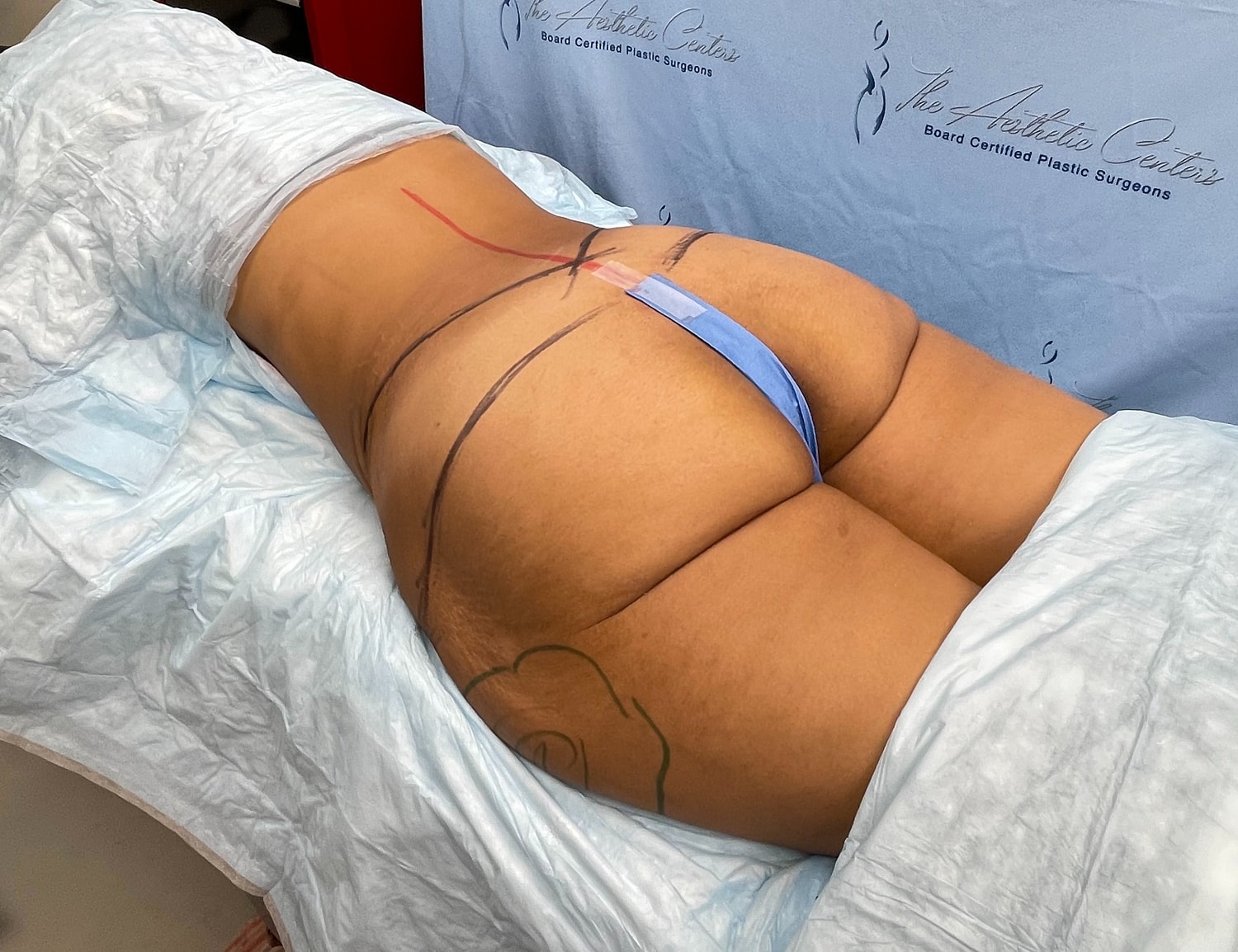
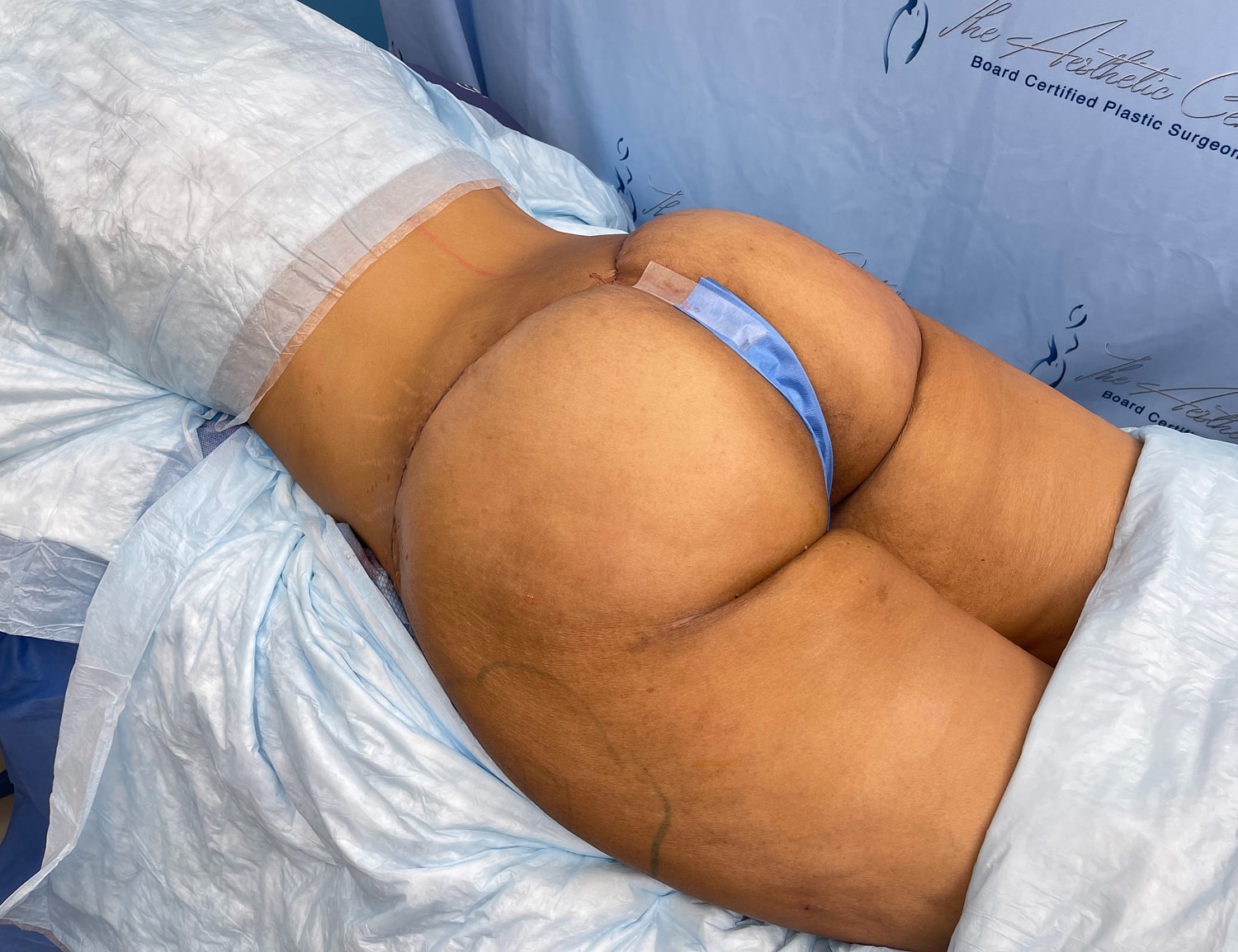
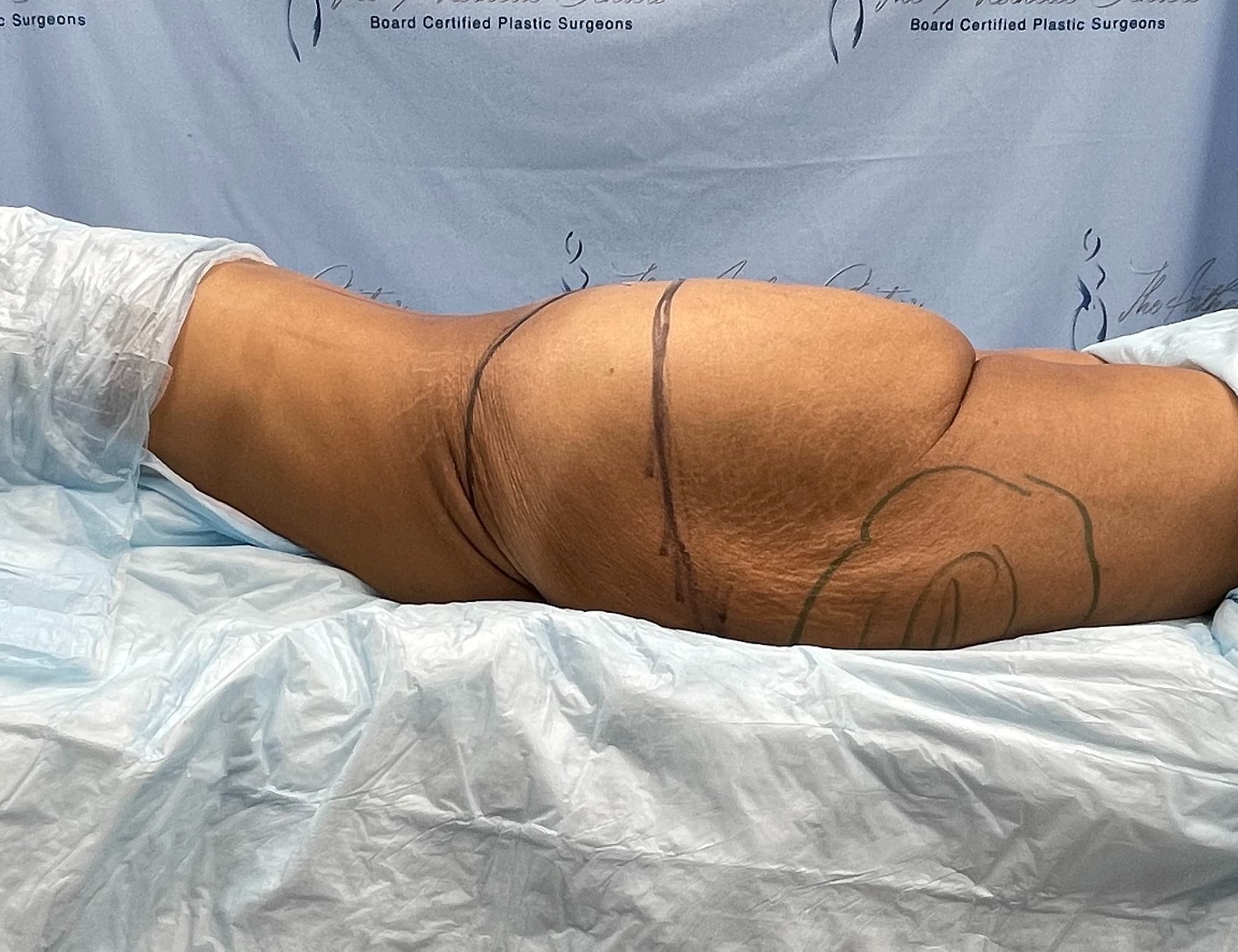
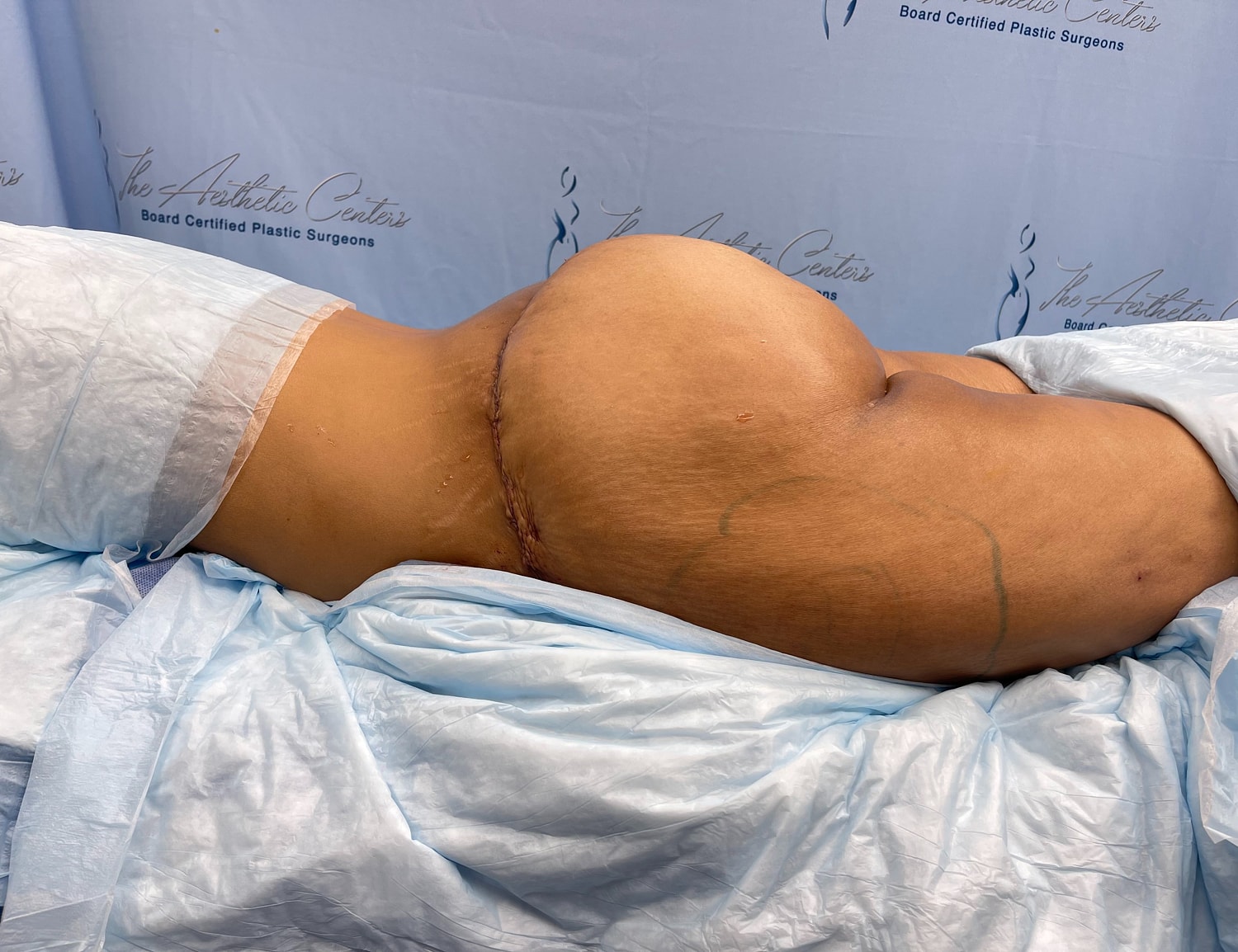
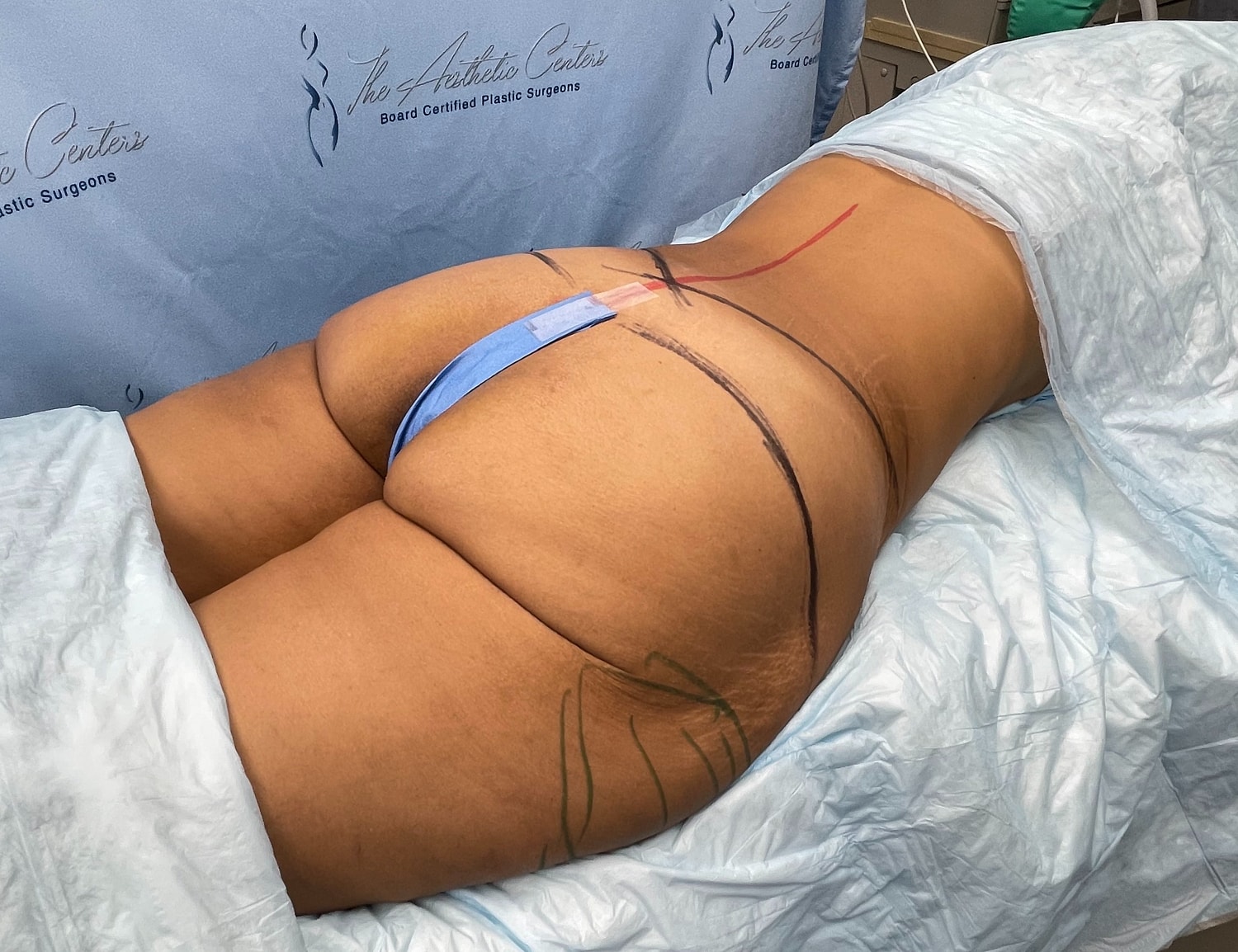
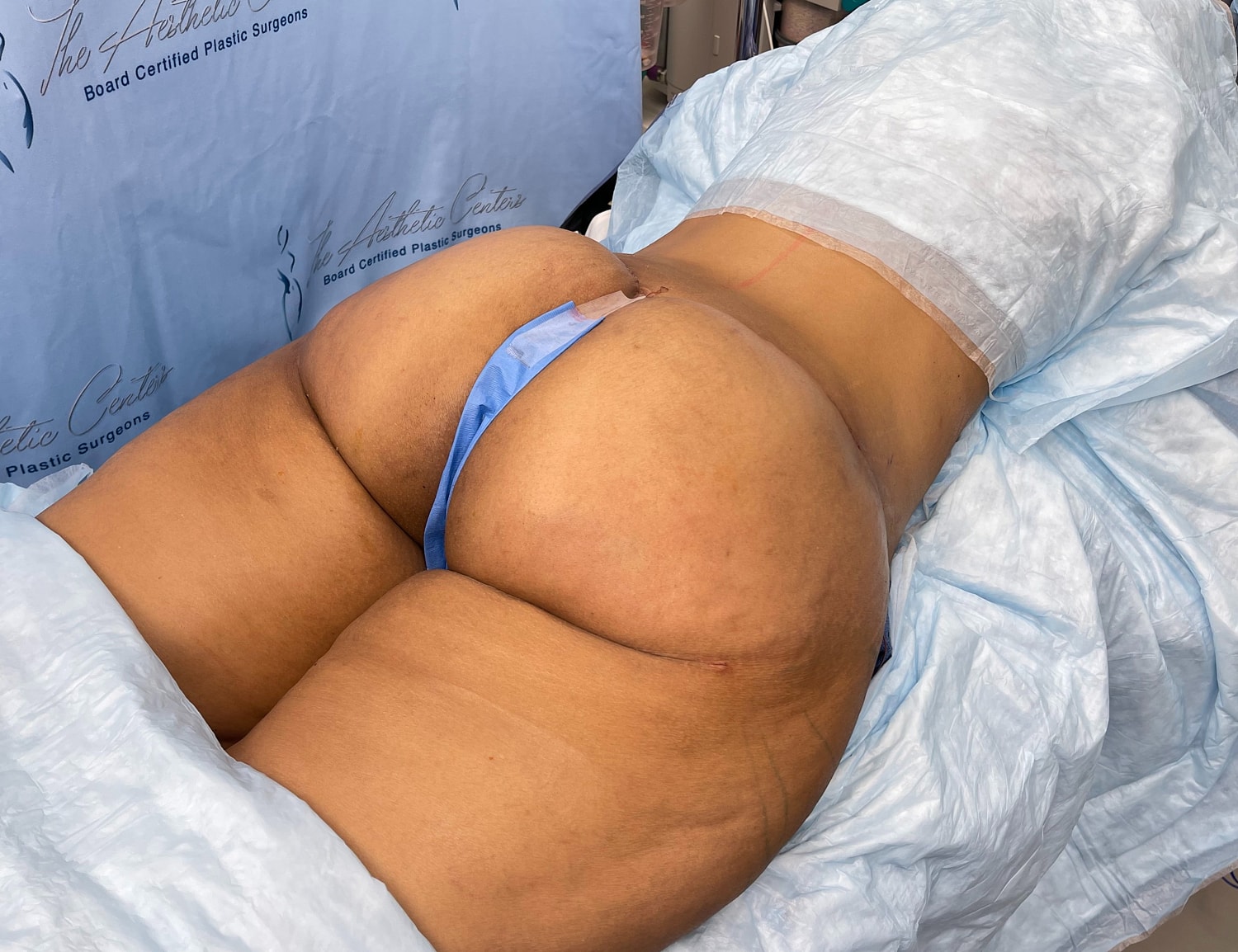
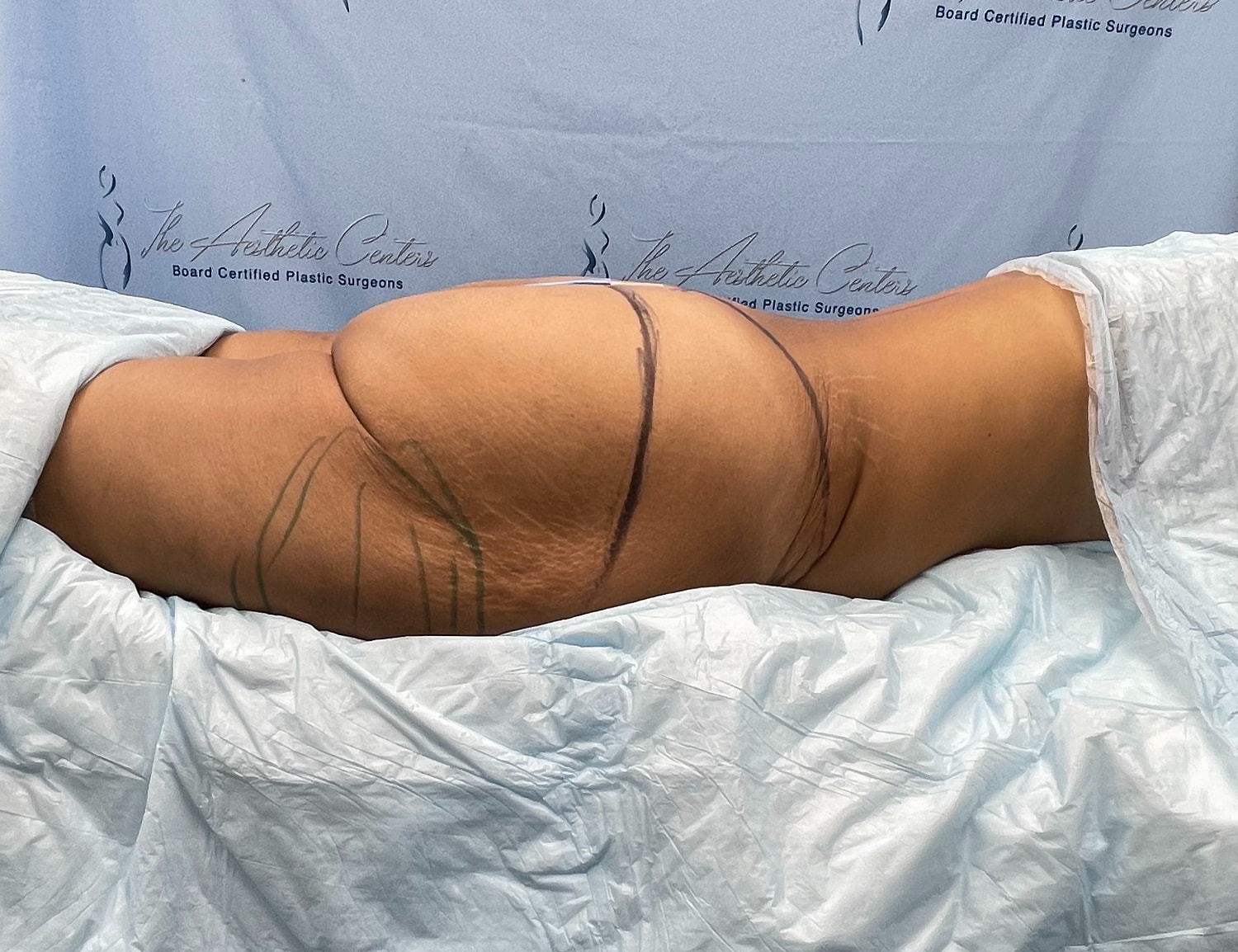
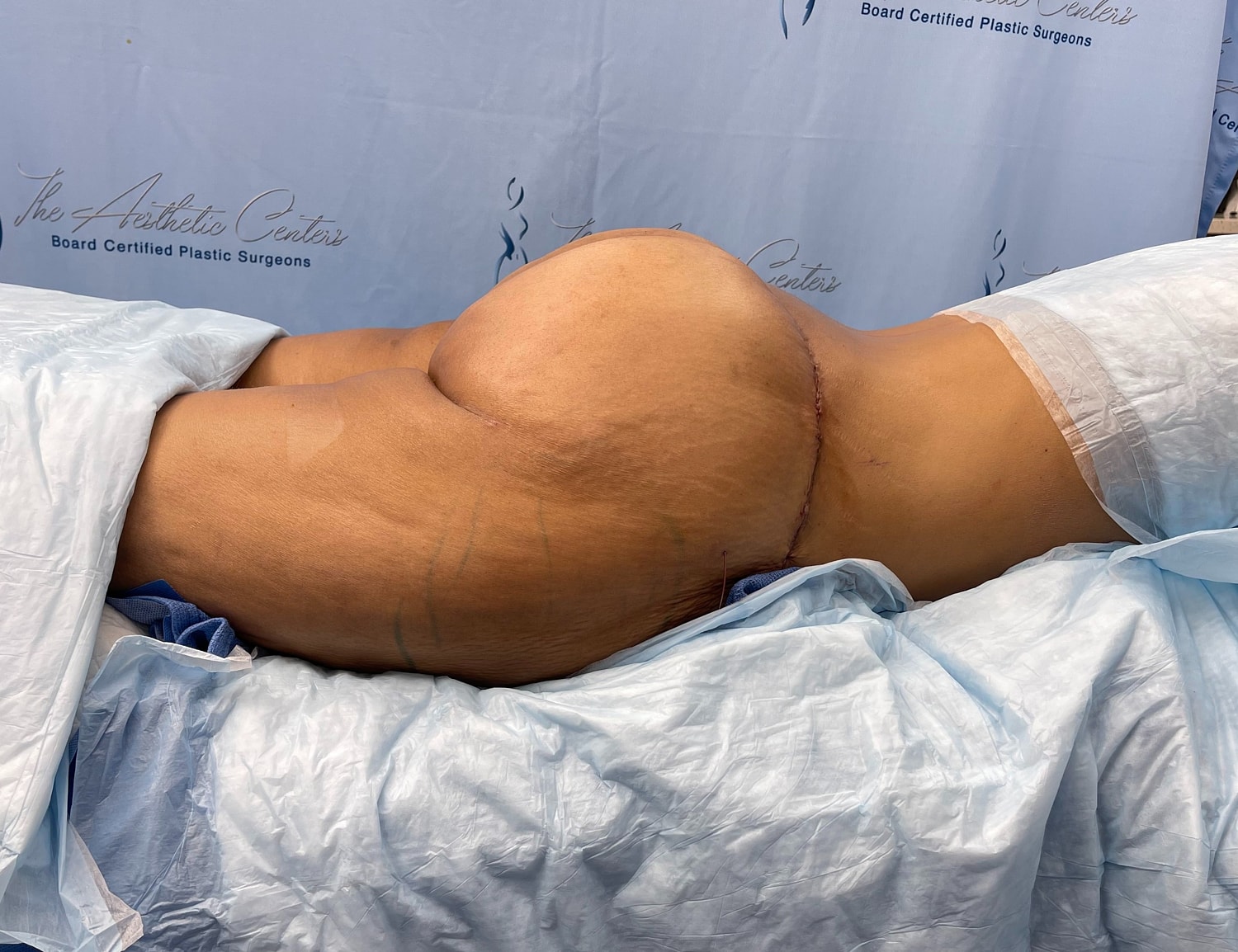
And how did you lose the weight? I did a bariatric mini gastric bypass procedure. Okay. And then you did your arms elsewhere. Yes, my arms and my breasts, and the initial tummy tuck. Oh, and yes, yes, yes. We revised. What do you think? I love it, and my husband loves it. So anyhow, a recap. That was a recap, and I'm speechless myself. She healed immensely well. We had a couple of small areas that needed additional healing, but I mean, just look at her contour. Look how beautiful this abdomen looks. I did a tummy tuck revision on her. I'm going to actually show our future patients your beautiful scars. So a lot of the time I talk about healing and healing and healing, and I think these are the areas that had a little bit of healing problems. Mm-hmm. But look at the rest of her scar. This scar is four months old. Yeah. So it's going to continue to get better and better and better for 18 months. So in 18 months' time, I think you're just going to have two thin lines left. We haven't finished the thigh work, but you can see how much lift there is in the front and the outer thighs. And as we rotate her, may I? Just look at her butt. She's lost... How much have you lost, you said? A total of 155. No, no, no. Since the surgery. Oh, since surgery. Oh, 15 pounds. 15 pounds. So the buttocks were actually fuller, and she's lost some of the volume as a result of the weight loss. We are planning to have her gain a little bit of weight, not for the next surgery, but just because I think she's lost a little bit too much. And this is one of the reasons that I do a lower body lift as my first surgery, because as patients lose weight or gain a little bit of weight, there are areas that we may want to come back during the second surgery and do just minor liposuction. And we may always want to plan to work on the buttocks more. The buttocks are the hardest part of the surgery. That's the reason that I do a lower body lift first, to kind of put this in the right place, to augment it as much as we need to. If the patient is happy, I'm done. If the patient comes back and says, "Hey, I've lost 10 pounds or 15 pounds. I want my buttocks to be a little bit fuller," then when we go back to work on the thighs or the upper body or any other area, then I can harvest fat and start working on the buttocks and making them fuller. Coming back to her shape, I mean, do I need to say anything? I mean, she looks beautiful. That's her buttock lift and buttock augmentation scar, perfectly placed at the junction between the lower back and the upper buttocks. Not too low, not too high. The position of this scar determines the position and the fullness and the roundness and the silhouette and the contour of the buttocks, so it has to be precisely placed. Some people place it high, some people place it low. But honestly, this is what you will see in the future. This is where the thong will reside, or a skimpy bikini that she's going to wear with this hot body. And then, wow. You can't even see anything but a beautifully contoured and defined body. So regarding her thighs, the job is not complete. With the lower body lift, we did an outer thigh lift, and we lifted the front of her thighs as much as possible. But these thighs require a thigh reduction. So with our next planned surgery, we're going to put an incision that starts in the inner aspect of her groin area and comes all the way down, and we're going to remove tissue this way. And as you do that, the thighs get a little bit smaller. So these thighs are actually already small. Their size is good, but there's a lot of skin. So I'm mainly going to remove some skin and a little bit of fat. But first, I'm going to liposuction the fat, harvest the fat, and use it for additional buttock augmentation. Then I'm going to cut the skin out and make the skin tighter. I'm not going to remove a lot of fat because I'm not trying to reduce the thighs too much. I'm trying to just make the skin tighter so it looks less wrinkly. She may also need an inner thigh lift in addition, which is this procedure. But it's not a good idea to combine a vertical thighplasty with that incision, because typically patients will open up.