
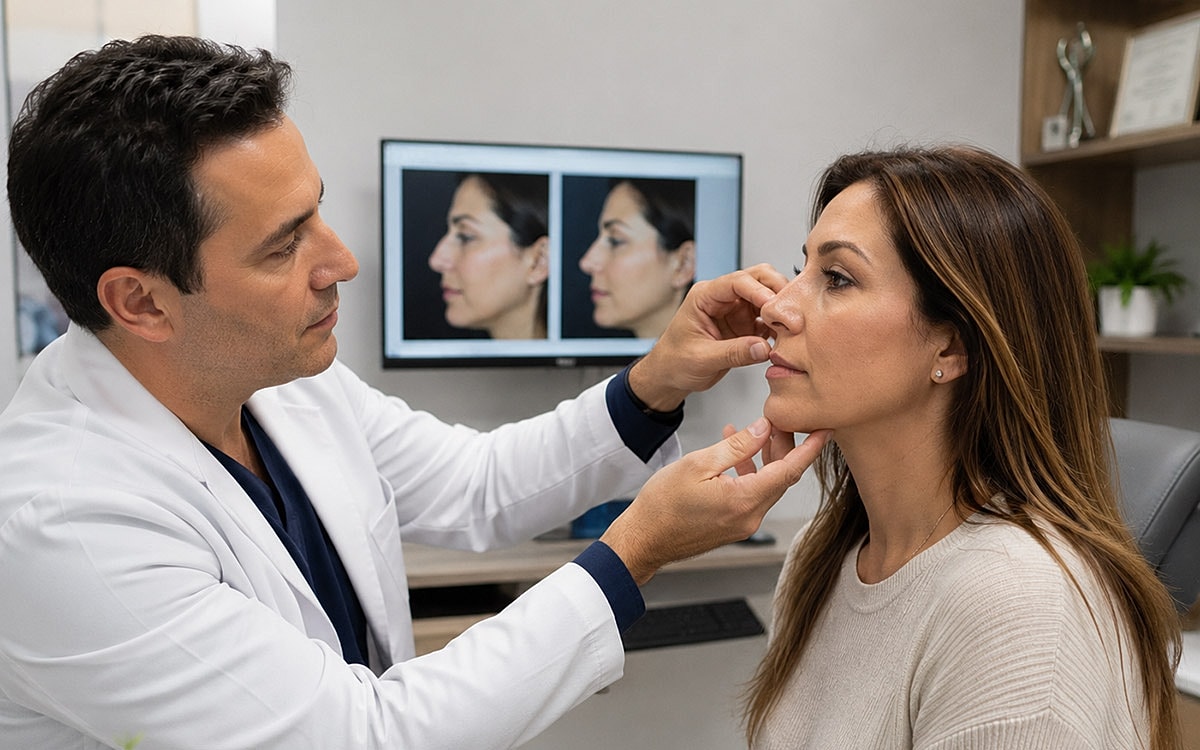
Understanding how revision rhinoplasty can address cosmetic or breathing concerns after a previous nose surgery with careful timing and realistic expectations.
Revision rhinoplasty generally requires waiting 12 to 18 months after your first surgery to allow tissue to fully heal and settle before another procedure is planned. Common reasons for revision include asymmetry, a drooping tip, or breathing issues, and the surgery itself is more technically complex due to existing scar tissue.
If your rhinoplasty results didn't turn out the way you hoped, or new concerns have emerged as your nose healed, revision rhinoplasty may be worth considering, but timing and expectations matter significantly.
Why Waiting Matters So Much
Operating on a nose that hasn't finished healing works against the surgeon, not for them.
Cartilage, bone, and soft tissue continue remodeling for twelve to eighteen months after rhinoplasty, with some subtle changes occurring even beyond that window. Most surgeons recommend waiting at least a year, and often eighteen months, before considering revision surgery, since operating too soon means working with incomplete healing that can compromise precision and final results.
Common Reasons Patients Seek Revision
The most common reasons for revision rhinoplasty include postoperative asymmetry, a drooping or collapsed nasal tip, and ongoing breathing difficulty that wasn't fully resolved by the original surgery. Research suggests that roughly five to fifteen percent of rhinoplasty patients eventually seek a revision procedure for one of these reasons.
Why Revision Surgery Is More Complex
Revision rhinoplasty is technically more demanding than a first-time procedure because the surgeon has to work around existing scar tissue, which is firmer and less elastic than healthy, unoperated tissue. This added complexity is one of the main reasons revision procedures often take longer and require more surgical precision than the original surgery.
Understanding the Added Risks
Because revision surgery involves altered nasal structure and existing scar tissue, it carries somewhat higher risks than a first rhinoplasty, including a longer recovery, increased swelling, and a higher chance of complications like infection or unpredictable healing. A thorough evaluation with an experienced revision surgeon helps set realistic expectations for these added complexities.
Choosing the Right Surgeon for Revision Work
Because of the added technical difficulty involved, revision rhinoplasty benefits significantly from a surgeon with specific experience in secondary nasal surgery, someone who understands how to work with existing scar tissue and altered anatomy to achieve a natural, balanced result.
If your first rhinoplasty didn't deliver the outcome you expected, board-certified plastic surgeon Dr. Siamak Agha has the experience needed for revision rhinoplasty in Newport Beach.
Ready to find out if revision rhinoplasty is right for you? Schedule a consultation with board-certified plastic surgeon Dr. Siamak Agha at The One Plastic Surgery Center in Newport Beach to discuss your goals and options.
Results and candidacy vary by patient. A consultation is required to determine your individual suitability for any procedure discussed in this article.
FAQ
How long should I wait before considering revision rhinoplasty? Most surgeons recommend waiting twelve to eighteen months after the original surgery to allow tissue to fully heal and settle before evaluating whether revision is needed.
What are the most common reasons for revision rhinoplasty? Postoperative asymmetry, a drooping or collapsed nasal tip, and ongoing breathing difficulty are among the most common reasons patients seek revision surgery.
Why is revision rhinoplasty more complicated than a first rhinoplasty? The surgeon has to work around existing scar tissue, which is firmer and less elastic than healthy tissue, requiring greater technical precision and often a longer procedure.
Does revision rhinoplasty carry more risk than a first procedure? Yes, it generally carries somewhat higher risks, including longer recovery, increased swelling, and a higher chance of complications compared with a first-time rhinoplasty.
What percentage of rhinoplasty patients eventually need revision surgery? Research suggests roughly five to fifteen percent of rhinoplasty patients eventually pursue a revision procedure.
Recent Post
-

Mini vs. Full Tummy Tuck: Which Option Is Right for You?
-

How a Tummy Tuck Can Strengthen Your Core and Confidence
-

Tummy Tuck 2026: What’s New in Abdominal Contouring
-

Mini Tummy Tuck vs. Full Tummy Tuck: Understanding the Difference
-

The Ultimate Mommy Makeover Guide: Restoring Confidence After Motherhood