

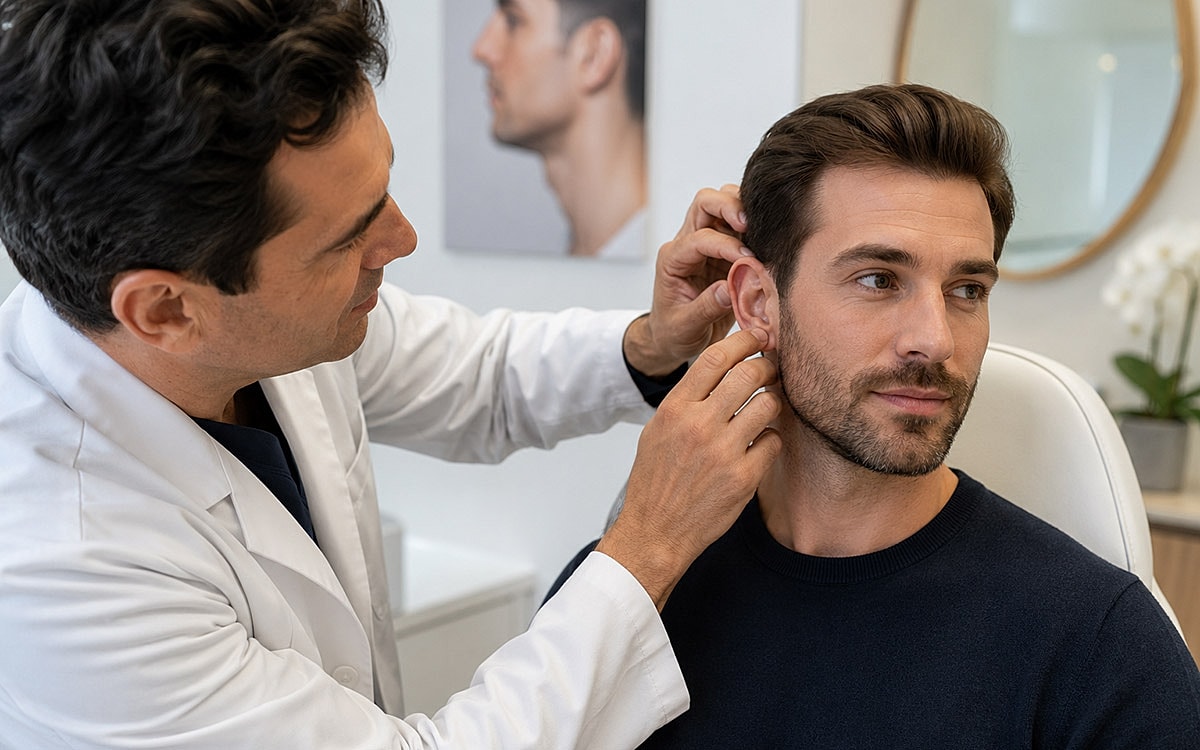
Understanding how adult otoplasty can correct prominent, uneven, or oversized ears with natural-looking, long-lasting results.
Otoplasty isn't just for children. Adults with prominent, large, or asymmetric ears can achieve excellent, natural-looking results at any age, provided they're in optimal general health with realistic expectations. The procedure typically takes one to three hours under local anesthesia with sedation, with most patients returning to work within a week.
Many people assume otoplasty is only performed on children, but adults pursue ear correction surgery just as often, whether it's something they've considered for years or a self-consciousness that's persisted since childhood.
There's No Upper Age Limit for Otoplasty
Ear surgery isn't limited by age; it's limited by overall health and realistic expectations.
As long as a patient is in excellent general health, there's no upper age limit for otoplasty, and experienced surgeons consistently achieve natural-looking results in adult patients using techniques like cartilage scoring and permanent sutures to reshape and reposition the ears. Good candidates typically have prominent or large ears, or another ear-related concern causing self-consciousness, along with realistic expectations about the outcome.
What the Procedure Actually Involves
Otoplasty surgery generally takes between one and three hours and is performed as an outpatient procedure, most often under local anesthesia with sedation for adult patients, avoiding the need for general anesthesia. During the procedure, cartilage is reshaped and repositioned to draw the ears closer to the head or correct their shape, with the surrounding skin tightened over the new contour before closing.
Where Incisions Are Placed
Incisions are typically placed behind the ear within its natural fold, which makes resulting scars inconspicuous and generally unnoticeable once healed. This careful incision placement is part of why otoplasty results can look so natural, without visible evidence of surgery.
What Recovery Typically Looks Like
Most adult patients return to work or school within five to seven days after surgery, though strenuous activity is generally avoided for two to three weeks. Swelling and bruising are expected initially and steadily improve over the following weeks, with most patients seeing their final, settled results between three and six months after surgery.
A Few Practical Recovery Considerations
Patients typically need to avoid wearing glasses that rest directly on the ears for several weeks while healing, and protecting the ears from any pressure or impact during the initial recovery period is important for a smooth outcome.
If prominent or asymmetric ears have been a source of self-consciousness, board-certified plastic surgeon Dr. Siamak Agha can evaluate whether otoplasty is right for you during a consultation in Newport Beach.
Ready to find out if otoplasty is right for you? Schedule a consultation with board-certified plastic surgeon Dr. Siamak Agha at The One Plastic Surgery Center in Newport Beach to discuss your goals and options.
Results and candidacy vary by patient. A consultation is required to determine your individual suitability for any procedure discussed in this article.
FAQ
Is there an age limit for otoplasty? No, there's no upper age limit, as long as the patient is in excellent general health with realistic expectations about the results.
What type of anesthesia is used for adult otoplasty? Adult patients typically receive local anesthesia with sedation, which avoids the need for general anesthesia while keeping them comfortable during the procedure.
Will otoplasty leave a visible scar? Incisions are typically placed behind the ear within its natural fold, making resulting scars inconspicuous and generally unnoticeable once healed.
How long does otoplasty recovery take? Most adult patients return to work within five to seven days, with strenuous activity resumed after two to three weeks and final results visible within three to six months.
Who is a suitable candidate for adult otoplasty? Adults with prominent, large, or asymmetric ears who are in good general health and have realistic expectations about their results are generally good candidates.
Recent Post
-

Mini vs. Full Tummy Tuck: Which Option Is Right for You?
-

How a Tummy Tuck Can Strengthen Your Core and Confidence
-

Tummy Tuck 2026: What’s New in Abdominal Contouring
-

Mini Tummy Tuck vs. Full Tummy Tuck: Understanding the Difference
-

The Ultimate Mommy Makeover Guide: Restoring Confidence After Motherhood