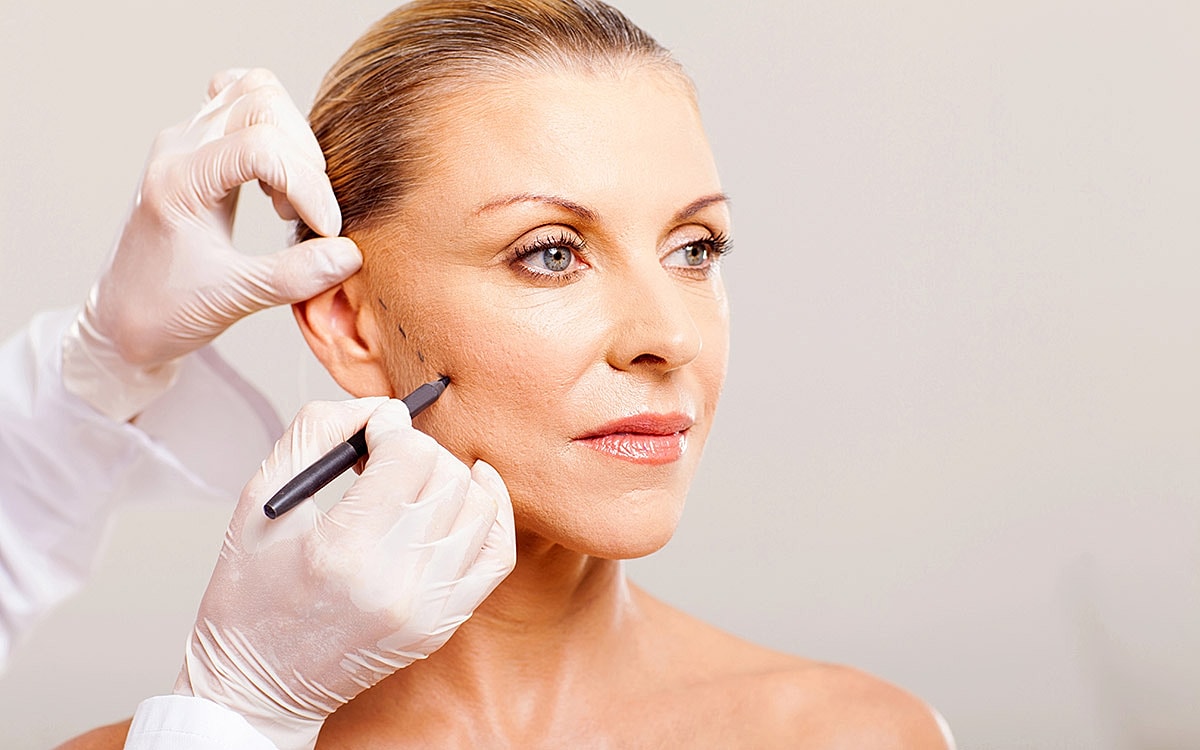


Blepharoplasty removes or repositions excess skin, fat, and muscle around the eyes to correct hooding, puffiness, and under-eye bags that make a well-rested person look perpetually exhausted. It doesn't address every cause of that look. Dark circles from pigment and drooping brows often need separate treatment. Recovery runs roughly one to two weeks for visible bruising, with final results settling over a few months and typically holding for a decade or longer.
Why "Tired Eyes" Often Has Nothing to Do With Sleep
The phrase people reach for is almost always the same: they look worn out, even after a full night's sleep, and no amount of concealer fixes it. That's the misconception worth correcting first, because the heaviness people see in the mirror is frequently structural, not situational. Skin and fat around the eyes change with age and genetics in ways that rest simply can't reverse, and that's precisely the territory blepharoplasty was designed to address.
Patients researching blepharoplasty in Newport Beach usually arrive at a consultation already sensing this distinction, even if they can't name it yet. They know a good night's sleep hasn't changed anything in years. What they're describing, hooded upper lids, puffy pockets under the eyes, and a crease that's disappeared under loose skin, has a name in plastic surgery: dermatochalasis for the skin and steatoblepharon for the fat. Understanding which one is driving the tired look matters more than most people expect, because it determines whether surgery will actually solve the problem in front of them.
Board-certified plastic surgeon Dr. Siamak Agha at The One Plastic Surgery Center in Newport Beach often starts these conversations by separating what a patient sees from what's actually causing it. That separation is the real starting point for anyone deciding whether eyelid surgery belongs in their plan.
What Blepharoplasty Can and Can't Change
Eyelid surgery treats a specific set of structural issues, not the general impression of fatigue. On the upper lid, it removes excess, sagging skin that folds over the crease and, in some cases, fat that adds heaviness above the eye. According to the American Society of Plastic Surgeons, upper eyelid surgery addresses loose skin that disturbs the natural eyelid contour and can, in more advanced cases, interfere with peripheral vision. On the lower lid, it targets fat that has pushed forward into visible pouches, along with excess skin and fine wrinkling that catches shadow and reads as exhaustion in photos and mirrors alike.
What it doesn't do is just as important. Blepharoplasty won't lighten the bluish or brown discoloration caused by thin skin and visible blood vessels, since that's a pigment and vascular issue rather than a skin-and-fat one. It won't lift a brow that has descended over time and is pushing the upper lid down, a common source of hooding that gets mistaken for eyelid skin alone. And it won't erase the fine crinkling at the outer corners of the eyes, which responds better to neuromodulators or skin treatments than to surgical excision. A thorough evaluation sorts out which of these factors, sometimes more than one at once, is actually responsible for a given patient's appearance.
Who Actually Qualifies for Blepharoplasty
Good candidates are generally healthy adults with realistic expectations about what the surgery changes, not a specific age. Some patients in their thirties pursue lower lid surgery for genetic under-eye bags that have nothing to do with aging, while others wait until their fifties or sixties, when upper lid skin has accumulated enough to visibly hood the eye. What matters more than the number on a birth certificate is tissue quality, eye health, and whether any underlying condition, such as significant dry eye disease or uncontrolled thyroid eye disease, needs to be addressed first.
There's also a meaningful split between cosmetic and functional blepharoplasty that shapes both the surgical plan and, sometimes, insurance coverage. When excess upper eyelid skin actually blocks part of a patient's field of vision, documented through a formal visual field test, the American Society of Plastic Surgeons notes that insurance may cover the procedure as medically necessary rather than purely cosmetic. Most patients seeking a more rested appearance without a documented vision obstruction fall into the cosmetic category instead, which is paid out of pocket. Either way, the ASPS candidacy guidance points to the same core requirements: stable overall health, no serious eye disease that would complicate healing, and clear goals discussed openly with a surgeon before scheduling anything.
Inside the Procedure: How Surgeons Rebuild the Eye Area
Upper eyelid surgery typically places its incision directly along the natural crease of the lid, which is why the resulting scar tends to fade into a line that's already there rather than sitting somewhere conspicuous. Through that opening, a surgeon removes the excess skin and, when needed, a small amount of fat, then closes the incision with fine sutures designed to minimize visible scarring as it heals.
Lower eyelid surgery has more variation depending on what's causing the puffiness. When the primary issue is fat pushing forward with relatively little excess skin, a transconjunctival approach works from the inside of the lid, leaving no visible external scar at all. When there's also meaningful excess skin, a subciliary incision just below the lash line allows the surgeon to remove skin and reposition or remove fat. Many surgeons now favor conservative fat repositioning over outright removal in the lower lid, smoothing the transition between the lid and cheek rather than hollowing it out, since an overly aggressive lower lid result can end up looking more aged, not less. The procedure is usually done on an outpatient basis under local anesthesia with sedation, and most patients are home the same day.
Some patients need more than eyelid surgery alone to get the result they're picturing. If a descended brow is contributing to the heaviness, pairing blepharoplasty with a brow lift addresses both structures at once, rather than leaving the brow to press down on freshly tightened lids. That's a decision best made in person, since photographs alone can make brow ptosis and eyelid skin excess look nearly identical.
Recovery: The Weeks That Matter Most
Swelling and bruising are heaviest in the first three to five days, which is why most surgeons recommend blocking out at least a week away from work and social obligations before the eyes look presentable in public. Cold compresses and keeping the head elevated, even while sleeping, help move that early swelling along faster. The ASPS recovery overview notes that stitches, when used, typically come out within about a week and that patients can generally return to reading or watching television within a few days once eye
Blepharoplasty doesn't erase a decade overnight. It removes the specific tissue that made the eyes look heavier than the rest of the face.
By the two-week mark, most bruising has faded enough that makeup can cover what's left, and many patients feel comfortable resuming normal routines. Contact lens wearers usually need to stick with glasses for one to two weeks while the lids finish healing, and any strenuous exercise typically waits three to four weeks to avoid raising blood pressure around the healing incisions. Full settling, where residual puffiness resolves and the final contour becomes clear, takes closer to three months, sometimes longer for the lower lids.
What Results Look Like, and How Long They Hold
Once healing is complete, the change is usually described less as dramatic and more as quietly corrective, eyes that finally match how rested a patient actually feels. The ASPS results guidance points out that upper eyelid results tend to be long-lasting, since the skin that's removed doesn't grow back the way it did before surgery, though the eye area continues to age normally afterward. Lower eyelid correction, particularly fat repositioning, also tends to hold well over time, though new fat prominence or skin laxity can eventually develop years down the line as part of ongoing aging.
None of this makes blepharoplasty permanent in the sense of stopping time, and the ASPS safety information is clear that, like any surgery, it carries real risks, including temporary dry eye, asymmetry, or, rarely, changes in vision, all reasons a qualified surgeon and an honest preoperative conversation matter as much as the technique itself. What most patients notice instead is that a look they'd stopped questioning, because it had crept in slowly over years, suddenly has an obvious explanation and a real solution.
Deciding If Blepharoplasty Is Right for You
The patients who end up happiest with eyelid surgery in Newport Beach are the ones who went in with a clear picture of what was actually causing their tired appearance, rather than a general wish to look less exhausted. That's why the consultation matters as much as the operating room. A careful exam separates skin from fat from brow position, flags anything that needs medical attention first, and sets expectations that match what surgery can realistically deliver.
For some patients, that conversation ends with blepharoplasty alone. For others, it means pairing eyelid surgery with a brow lift or recognizing that dermal fillers or laser treatments would address their concern better than a scalpel ever could. Either outcome is good, because it comes from an accurate diagnosis instead of a guess.
Conclusion
Tired-looking eyes are rarely about how much sleep someone got the night before. More often, they trace back to specific, treatable changes in eyelid skin, fat, or surrounding structure, changes that blepharoplasty was built to correct with a fairly quick recovery and results that tend to hold for years. The procedure isn't a universal fix for every cause of a heavy-eyed look, which is precisely why an accurate diagnosis has to precede deciding on surgery.
Ready to find out if blepharoplasty is right for you? Schedule a consultation with board-certified plastic surgeon Dr. Siamak Agha at The One Plastic Surgery Center in Newport Beach to discuss your goals and options.
Results and candidacy vary by patient, and a consultation is required to determine what's realistic for your eyes and goals.
FAQ
Will blepharoplasty make me look less tired even if I sleep well already?
If the heaviness around your eyes comes from excess skin or fat rather than genuine fatigue, yes, blepharoplasty addresses the structural cause directly. It won't help with dark circles from pigment or vascular issues, which need separate treatment.
What's the difference between upper and lower eyelid surgery?
Upper eyelid surgery removes excess skin and sometimes fat that hoods the eye, using an incision hidden in the natural crease. Lower eyelid surgery addresses puffiness and bags, either through an incision inside the lid with no visible scar or one just below the lash line when more skin needs to be removed.
How long does recovery from eyelid surgery take?
Visible bruising and swelling typically resolve within one to two weeks, and most patients feel comfortable in public by then. Full results, including any residual subtle swelling, usually settle over about three months.
Will insurance cover my eyelid surgery?
Insurance generally only covers blepharoplasty when excess upper eyelid skin measurably obstructs vision, confirmed through a formal visual field test. Procedures done purely to improve appearance are considered cosmetic and are paid out of pocket.
How long do blepharoplasty results last?
Upper eyelid results tend to be long-lasting since the removed skin doesn't return the way it did before surgery, though the eye area keeps aging normally afterward. Lower eyelid correction also tends to hold well, though new changes can develop over many years as part of that continued aging process.