
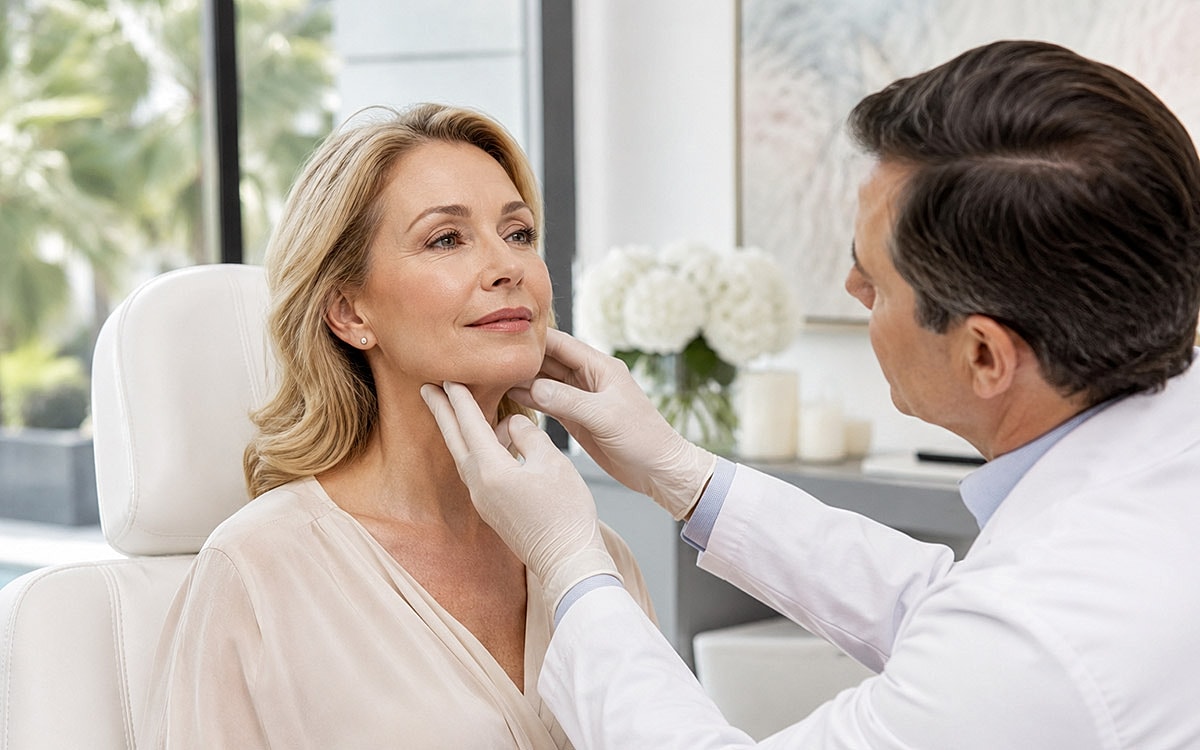
Understanding how revision facelift surgery can address unnatural results, scar tissue, and facial imbalance after a previous procedure.
If your facelift results feel uneven or overly tight or show visible signs like a pulled "windswept" appearance or a pixie ear deformity, a revision facelift may be able to correct it.
Revision surgery is more technically demanding than a first facelift and requires a surgeon experienced with scar tissue and altered facial anatomy.
Not every facelift delivers the natural, balanced result a patient was hoping for, and when that happens, it's worth understanding both the common causes and what a revision procedure can realistically address.
Common Signs a Revision May Be Needed
A "windswept" or overly pulled look is one of the clearest signs something needs correcting.
Some of the most common reasons patients seek revision facelift surgery include an unsatisfactory overall appearance once healing is complete, visible or asymmetric scarring, and a face that looks stretched or unnaturally pulled rather than genuinely lifted. If your results simply don't match what was discussed before your original surgery, that's a valid reason to explore revision options.
Uneven or Asymmetric Results
Uneven results can happen when a facelift doesn't address all areas of the face proportionally or when skin tension isn't distributed evenly during the original procedure. This can leave one side of the face appearing different from the other, or specific areas like the jawline or neck looking under-corrected compared to the rest of the face.
The Pixie Ear Deformity
A specific and well-documented complication called the pixie ear deformity occurs when excess tension pulls the earlobe out of its natural position and shape, typically resulting from improper tissue handling during the original surgery. This is a recognizable, correctable issue that experienced revision surgeons address specifically as part of a corrective procedure.
When Complications Are the Cause
In some cases, a revision is needed to address actual surgical complications from the original procedure, such as excessive scarring, infection, or nerve-related issues affecting facial movement or sensation. These situations require a careful evaluation to determine exactly what went wrong before planning a corrective approach.
Why Revision Surgery Is More Complex
Revision facelift surgery is meaningfully more technically demanding than a first-time procedure, since the surgeon has to work around existing scar tissue and altered tissue planes from the original surgery. This complexity is one of the reasons the risk of certain complications, including nerve-related issues, is reported to be higher in revision surgery, which makes surgeon experience especially important.
Timing a Revision Consultation
If you're unhappy with your results, it's generally recommended to wait until all bruising and swelling have fully resolved, typically around two to three months, before evaluating whether revision surgery is the right path. This gives your face time to settle into its true healed result before you make any further decisions.
If your first facelift didn't deliver the results you expected, board-certified plastic surgeon Dr. Siamak Agha has the specialized experience needed for facelift revision surgery in Newport Beach.
Ready to find out if a revision facelift is right for you? Schedule a consultation with board-certified plastic surgeon Dr. Siamak Agha at The One Plastic Surgery Center in Newport Beach to discuss your goals and options.
Results and candidacy vary by patient. A consultation is required to determine your individual suitability for any procedure discussed in this article.
FAQ
What are common signs that I might need a revision facelift? An unsatisfactory overall appearance, visible or asymmetric scarring, and a stretched or "windswept" look rather than a natural lift are common signs worth discussing with a surgeon.
What is the pixie ear deformity? It's a complication where excess tension during a facelift pulls the earlobe out of its natural position, typically caused by improper tissue handling during the original surgery.
Why is revision facelift surgery more complex than a first facelift? The surgeon must work around existing scar tissue and altered tissue planes from the original procedure, which requires more profound experience and more technical precision.
How long should I wait before considering revision surgery? It's generally recommended to wait until all bruising and swelling have fully resolved, typically around two to three months, before evaluating your truly healed results.
Does revision facelift surgery carry higher risks than a first facelift? Some risks, including certain nerve-related complications, are higher in revision surgery because of the added complexity of working with existing scar tissue.
Recent Post
-
Mini Facelift vs. Full Facelift: Which Is Right for You?
-

The Art of the Modern Facelift: Subtle Enhancements for Natural Results
-

Tummy Tuck 2026: What’s New in Abdominal Contouring
-

Mini Tummy Tuck vs. Full Tummy Tuck: Understanding the Difference
-

The Ultimate Mommy Makeover Guide: Restoring Confidence After Motherhood