
How modern planning tools, imaging, surgical techniques, and patient communication are reshaping cosmetic surgery in Newport Beach.
Plastic surgery has always combined medical science with aesthetic judgment. What has changed recently is the role technology plays in planning, precision, communication, and recovery. Today’s patients are more informed, more visual, and more involved in the decision-making process than ever before. They want to understand what is possible, what is realistic, and how a procedure may align with their natural anatomy.
Technology does not replace surgical expertise. It supports it. The most advanced tools are only as valuable as the surgeon interpreting them. In plastic surgery, technology can help improve consultation clarity, pre-operative planning, patient education, and surgical strategy, but the final outcome still depends on anatomy, judgment, technique, and safety.
At The One Plastic Surgery in Newport Beach, Dr. Siamak Agha approaches cosmetic surgery with a focus on personalization. Technology can help support that process by making planning more precise and communication more visual. From digital imaging to improved patient education, modern plastic surgery is becoming more customized, transparent, and data-informed.
Digital Imaging and Better Consultation Planning
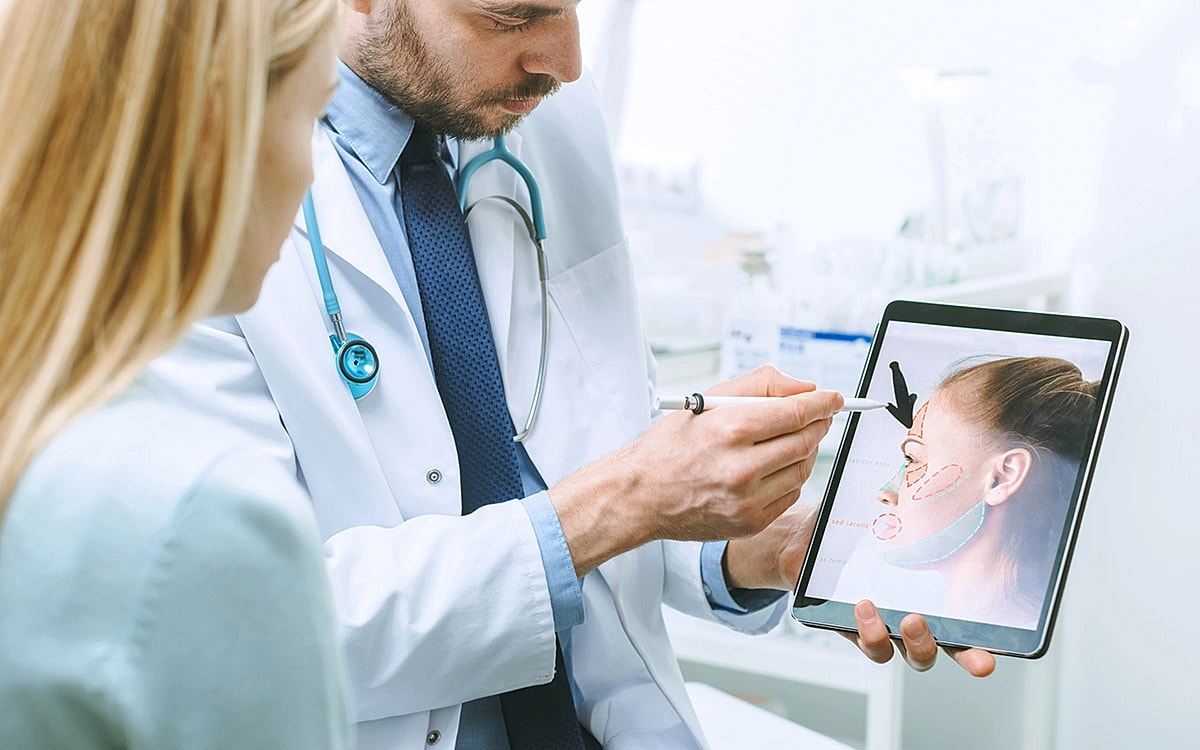
One of the most important ways technology is changing plastic surgery is through improved visual communication. Patients often know what bothers them, but they may have difficulty describing exactly what they want. Digital imaging and consultation tools can help bridge that gap by allowing patients and surgeons to discuss proportions, contours, and realistic goals in a more visual way.
This is especially helpful because plastic surgery is not simply about changing one feature. It is about harmony. A breast augmentation consultation may involve discussion of implant size, profile, chest width, tissue coverage, and body proportion. A facelift consultation may involve evaluating the cheeks, jawline, neck, skin quality, and facial balance. Body contouring may require analysis of skin elasticity, fat distribution, muscle tone, and scar placement.
Technology can support these conversations by helping patients better understand their anatomy. However, it is important to remember that simulations or imaging tools are educational aids, not guarantees. The body is not a static image. Skin elasticity, tissue healing, swelling, scarring, and anatomy all affect the final result. A skilled plastic surgeon uses technology as one part of the planning process, not as a promise of an exact outcome.
Technology can improve the conversation, but surgical judgment still determines the plan.
3D Imaging, Virtual Consultations, and Patient Education
Three-dimensional imaging and virtual consultation tools have become more common in aesthetic medicine. These tools may help patients understand shape, symmetry, and proportion more clearly. In some settings, they can also make consultations more convenient, especially for patients traveling or deciding whether they are ready for an in-person evaluation.
The American Society of Plastic Surgeons has discussed the growth of telehealth in plastic surgery, including its use from consultation through follow-up care. Research has also continued to explore patient satisfaction and safety in telemedicine and 3D telehealth applications. While virtual tools can be helpful, they do not replace a full physical examination when planning surgery.
This distinction matters. A photograph or video cannot always fully show skin laxity, tissue thickness, muscle separation, scar quality, or the way tissues behave with movement. For many procedures, an in-person examination remains essential before we make final recommendations. Technology can make the early stage more accessible, but surgical planning still requires careful medical evaluation.
Patient education has also improved through digital platforms. Patients can now review procedure information, recovery expectations, before-and-after examples, and safety guidelines before consultation. This helps create more productive conversations. A patient who understands the basics can ask better questions and participate more actively in planning.
Technology in Surgical Precision and Safety
Technology also influences what happens in the operating room. Advances in anesthesia monitoring, surgical instruments, imaging, energy-based devices, and planning systems can support safer, more precise care when used appropriately. However, technology should never be viewed as a shortcut. The surgeon’s training and decision-making remain central.
In body contouring, for example, surgical planning may involve understanding fat distribution, skin quality, muscle anatomy, and the patient’s desired shape. In facial surgery, precision depends on respecting facial nerves, tissue layers, support structures, and natural expression. In breast surgery, planning involves implant selection, tissue support, incision placement, symmetry, and long-term stability. Technology can assist, but it cannot replace a surgeon’s understanding of anatomy.
Patient safety remains the foundation. The FDA regulates many medical devices and provides public health information about safety, efficacy, and risks. Patients should be cautious of marketing that presents technology as a guarantee of perfect results. The presence of advanced equipment does not automatically mean a provider is qualified to perform surgery.
The safest approach combines modern tools with appropriate credentials, accredited facilities, careful screening, and honest patient education. A responsible surgeon considers whether a procedure is appropriate, whether the patient is a suitable candidate, and whether the expected benefit justifies the risk.
How Technology Improves Recovery Communication
Recovery is another area where technology has changed the plastic surgery experience.
Digital communication can make it easier for patients to receive instructions, ask questions, schedule follow-ups, and understand what is normal during healing. Some post-operative concerns can be discussed virtually when appropriate, while others require in-person evaluation.
This can be especially helpful during the early recovery phase, when patients may have questions about swelling, bruising, incision appearance, compression garments, activity restrictions, or medication instructions. Clear communication can reduce anxiety and help patients avoid mistakes that may interfere with healing.However, patients should understand that online communication has limits. Serious symptoms should not be managed casually through messages or photos alone. Sudden swelling, increasing pain, fever, unusual drainage, chest pain, shortness of breath, or other concerning symptoms should be addressed promptly through proper medical channels.
Technology works best when it supports a strong surgeon-patient relationship. The goal is not to make care less personal. The goal is to make care more accessible, organized, and responsive while preserving the importance of medical judgment.
The Future of Personalized Plastic Surgery
The future of plastic surgery will likely continue moving toward personalization. Patients are not looking for generic results. They want procedures that match their anatomy, lifestyle, age, and goals. Technology can help support these needs by improving assessment, planning, communication, and follow-up.
Artificial intelligence, digital imaging, 3D modeling, and advanced analytics may continue to influence aesthetic medicine. These tools may help with measurements, planning, education, and workflow. Still, the human element remains essential. Plastic surgery is not just a technical service. It involves trust, judgment, artistry, ethics, and patient safety.
For patients in Newport Beach, the implication is that the best technology is not necessarily the newest device or trend. It is the technology used thoughtfully by an experienced plastic surgeon who understands both surgical science and aesthetic proportion. Tools should support individualized care, not replace it.
At The One Plastic Surgery, Dr. Siamak Agha’s approach centers on customized planning and careful evaluation. Technology may help patients better understand their options, but the surgical plan must still be based on anatomy, goals, safety, and realistic expectations.
The future of plastic surgery is not just more advanced. It is more personalized.
FAQs
Can technology show exactly how I will look after plastic surgery?
No. Imaging and simulation tools can help guide discussion, but they cannot guarantee an exact result. Healing, anatomy, swelling, and tissue behavior all affect the final outcome.
Are virtual plastic surgery consultations useful?
Yes, virtual consultations can be helpful for early discussions and follow-up in certain cases. However, many surgical plans still require an in-person examination.
Does advanced technology make plastic surgery safer?
Technology can support safety, but it does not replace surgeon training, proper credentials, accredited facilities, and careful patient screening.
What matters more: technology or surgeon experience?
Both matter, but surgeon experience and judgment are more important. Technology is a tool, not a substitute for expertise.
If you are interested in modern cosmetic surgery in Newport Beach, schedule a consultation with The One Plastic Surgery and Dr. Siamak Agha. A personalized consultation can help you understand how advanced planning, careful technique, and patient-focused care can support your aesthetic goals safely and realistically.
Recent Post
-

Mini vs. Full Tummy Tuck: Which Option Is Right for You?
-

How a Tummy Tuck Can Strengthen Your Core and Confidence
-

Tummy Tuck 2026: What’s New in Abdominal Contouring
-

Mini Tummy Tuck vs. Full Tummy Tuck: Understanding the Difference
-

The Ultimate Mommy Makeover Guide: Restoring Confidence After Motherhood